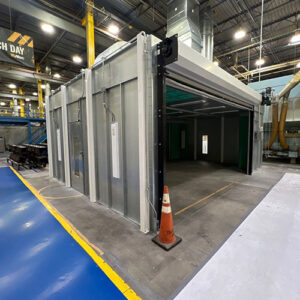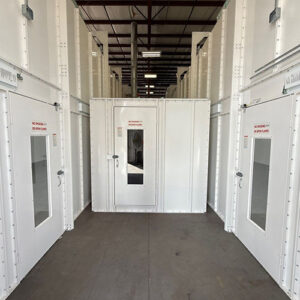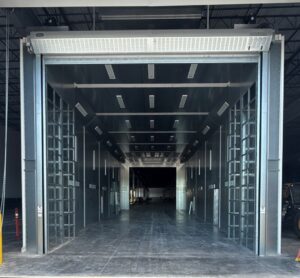
Paint booth exhaust systems are often discussed too late in the buying process. Buyers compare booth sizes, doors, lighting, and price, then discover that exhaust routing, fan placement, building penetrations, make-up air, and local review can affect the entire installation plan. The exhaust system is not a minor accessory. It is part of how the booth controls overspray, moves air, protects finish quality, and interacts with the building. For related planning context, compare this with paint booth air balance warning signs y make-up air unit ROI.
That does not mean every buyer needs to become a ventilation engineer. It does mean you should understand the basic questions before you buy. A booth that cannot be exhausted properly in your facility may require layout changes, added mechanical work, or a different configuration than expected.
This guide explains what buyers should know about paint booth exhaust systems before installation begins.
The exhaust system supports airflow through the booth
Bottom line: choose the booth setup around the work you actually run, the finish quality you need, and the installation constraints your facility has to satisfy.
A paint booth works by moving air through a controlled path. The exhaust system helps pull contaminated air and overspray away from the work area and through the appropriate filtration before discharge. The exact airflow path depends on the booth design, such as crossdraft, semi-downdraft, side-downdraft, or downdraft.
Because exhaust is tied to airflow, it should be planned with the booth configuration. Fan capacity, filter area, duct routing, intake design, and make-up air all influence how the booth performs. If one part of the system is mismatched, the booth may not perform as expected.
This is why exhaust planning should happen early. It is not enough to ask where the fan goes after the booth is ordered. The exhaust approach can influence where the booth should sit in the building and what installation work will be required.
Exhaust filters are part of the system, not an afterthought
Exhaust filters capture overspray before air leaves the booth. The filter type, placement, access, and maintenance schedule affect booth performance and operating cost. Clogged or poorly maintained exhaust filters can reduce airflow, increase pressure issues, and contribute to finish problems.
Buyers should ask how filters are accessed and changed. If filter service is awkward, it is more likely to be delayed. That can create performance problems over time. For high-volume operations, filter replacement cost and downtime should be included in the ownership calculation.
The right filter plan depends on the coating process, booth type, production volume, and applicable requirements. Follow manufacturer guidance and consult qualified professionals where required.
Fan location and duct routing affect installation cost
- Confirm the largest part, vehicle, or product envelope before sizing the booth.
- Check airflow, exhaust, replacement air, lighting, and utility assumptions early.
- Use local code and authority-having-jurisdiction input before treating any layout as final.
The exhaust fan and ductwork must be placed in a way that works for the booth, the building, and the discharge location. In some facilities, the shortest duct route may be straightforward. In others, structural obstacles, roof design, neighboring equipment, or exterior constraints can make exhaust routing more complex.
Duct length, turns, transitions, penetrations, and support requirements can all affect installation. A route that looks simple from the booth location may become difficult when roof structure, wall construction, or outdoor discharge location is reviewed.
Before finalizing the booth location, identify possible exhaust paths. Ask whether the exhaust can go through the roof or an exterior wall, where the fan will be located, how the duct will be supported, and whether the route creates service or access issues.
Discharge location should be reviewed early
Where exhaust air leaves the building matters. Discharge planning may involve roof height, wall location, distance from air intakes, neighboring buildings, property lines, pedestrian areas, and local requirements. These factors can influence the duct route and the final booth location.
Do not assume that the nearest exterior wall or roof area is automatically acceptable. A discharge location that creates conflicts with air intakes, adjacent properties, or building equipment may need to be changed. That can affect cost and schedule.
PaintBooth can help buyers understand equipment and layout options, but final discharge requirements should be reviewed with qualified mechanical professionals and the authority having jurisdiction for the specific facility.
Make-up air must be considered with exhaust
Every cubic foot of air exhausted from the booth must be replaced somehow. If make-up air is not planned, the building may pull air through doors, cracks, adjacent rooms, or other unintended paths. That can create negative pressure, uncomfortable working conditions, poor booth performance, or problems with other building systems.
Make-up air can be one of the most important parts of the project. Depending on climate and production needs, it may need to be heated, tempered, filtered, or otherwise conditioned. For shops in cold or hot climates, make-up air can also affect energy use and production comfort.
Ask whether the booth quote includes make-up air equipment or assumes it will be handled separately. Also ask what information is needed to determine the correct approach. Building size, existing ventilation, heating systems, door openings, and production volume may all matter.
Exhaust design can influence booth placement
Buyers sometimes choose a booth location based only on available floor space. Exhaust planning may change that decision. A booth placed far from a practical discharge point may require longer duct runs, more installation labor, added structural support, or more complicated coordination.
The best booth location balances production flow with mechanical practicality. It should support loading and unloading while also allowing a reasonable exhaust path, service access, utility connections, and make-up air planning.
If you are comparing two possible booth locations, include exhaust routing in the comparison. The location with slightly less convenient workflow may still be better if it allows a cleaner mechanical installation. The opposite can also be true if production flow is the bigger constraint.
Exhaust and building pressure are connected
A paint booth exhaust system can change how air moves through the building. If the booth exhaust creates too much negative pressure, doors may become difficult to open, dust may be pulled into the building, or air may move from areas where it should not. In some cases, building pressure problems can affect other equipment or comfort.
These issues are not always obvious before installation. That is why mechanical review can be valuable, especially for larger booths, high-volume facilities, truck booths, or buildings with existing ventilation constraints.
The goal is balanced planning. The booth should have the air it needs without creating avoidable problems elsewhere in the facility.
Maintenance access should be designed in
Exhaust systems need maintenance. Filters must be changed. Fans may need inspection or service. Ductwork may require access depending on the system and local practices. If the exhaust components are difficult to reach, maintenance becomes more disruptive and more likely to be deferred.
When reviewing a layout, ask how a technician will reach the filters, fan, motor, controls, and any service points. Also ask whether maintenance can be performed without blocking production areas or creating unnecessary downtime.
A slightly better service layout can pay off over the life of the booth. Paint booth buyers often focus on purchase price, but maintenance access affects long-term cost and reliability.
Safety and compliance review are part of the project
Paint booth exhaust systems can involve fire safety, electrical considerations, ventilation requirements, environmental review, and building permits. The exact requirements depend on the location, coating materials, booth design, building use, and authority having jurisdiction.
This article is not legal, engineering, or code advice. It is a planning overview for buyers. Final exhaust design and approval should be coordinated with qualified professionals, the booth supplier, installers, mechanical contractors, fire protection professionals, and local officials as applicable.
A good supplier can provide equipment specifications and layout guidance. They can also help identify the questions that need to be answered before installation. But final compliance decisions should be made through the proper project review process.
Questions to ask before buying a booth
Before you sign off on a booth, ask practical exhaust questions. Where will the exhaust leave the booth? Where will the fan be located? What is the planned duct route? Will exhaust go through the roof or wall? Are there exterior conflicts near the discharge point? How will filters be accessed? What make-up air is required? Does the booth location support a reasonable exhaust path? Who is responsible for mechanical installation? What documentation is available for permit review?
These questions do not replace engineering or code review, but they help reveal whether the booth quote is aligned with the facility. They also help prevent surprises after equipment is ordered.
Avoid treating exhaust as a commodity item
Two paint booth exhaust systems may look similar in a simplified quote, but they can perform very differently depending on the booth, filters, fan selection, duct route, discharge location, and make-up air plan. Choosing only on price can be risky if the system does not support the airflow and installation requirements.
The better approach is to evaluate exhaust as part of the complete booth package. Ask how the proposed system supports the booth style, production volume, coating process, building layout, and maintenance needs. If the answer is unclear, the plan may need more detail before purchase.
Bottom line: plan exhaust before installation starts
Paint booth exhaust systems affect airflow, filtration, finish quality, building pressure, installation cost, maintenance, and compliance coordination. They should be discussed before the booth is ordered, not solved after the fact.
If you are planning a new booth or replacing an existing system, PaintBooth can help you review exhaust layout questions, make-up air considerations, booth placement, and documentation needs. Contact PaintBooth before installation planning begins so your exhaust system is considered as part of the full booth design.
What to do next
If you are comparing booth options, the safest next step is to match the equipment to your work mix, facility constraints, airflow needs, and approval path before you commit to a layout. PaintBooth.com can help you review sizing, configuration, and installation questions before the project gets expensive. Contact the team to request a quote or talk through the right booth direction for your shop.