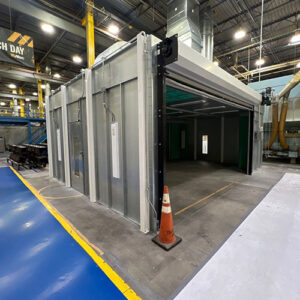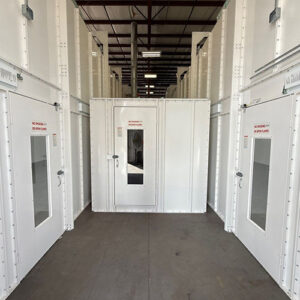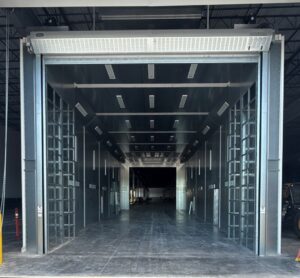
Buying a truck paint booth is not the same decision as buying a standard automotive booth at a larger size. A truck paint booth has to fit bigger vehicles, longer repair cycles, heavier movement around the booth, different loading patterns, and often more complicated facility constraints. If you only ask, “What size booth do I need?” you may miss the details that determine whether the booth actually works in daily production. For related planning context, compare this with paint booth cost of ownership y permit and installation mistakes.
The better question is how the booth needs to support the work. A shop painting box trucks, buses, service bodies, commercial fleets, or large equipment needs to think about vehicle envelope, door access, airflow path, lighting, technician clearance, exhaust routing, and future growth before choosing a model. Those choices affect finish quality, installation cost, permitting conversations, and how easily the booth fits into the existing building.
This guide walks through the practical planning questions to answer before you quote or buy a truck paint booth.
Start with the largest work you actually need to paint
Bottom line: choose the booth setup around the work you actually run, the finish quality you need, and the installation constraints your facility has to satisfy.
The first sizing input is the real work mix, not the biggest vehicle you can imagine. A booth sized for occasional oversized work may cost more, take more facility space, and require more air volume than the business can justify. A booth sized only for today’s average job may become a constraint as soon as fleet or commercial work increases.
List the vehicles or parts you expect to process most often. Include length, width, height, mirror extensions, ladder racks, bumpers, service bodies, lift gates, and any accessories that change the true outside envelope. For commercial vehicles, the accessory package can matter as much as the chassis.
Then separate regular work from edge-case work. A booth should comfortably handle the jobs that drive revenue. If a one-off vehicle requires a specialty arrangement, that should not automatically define the whole project unless those jobs are part of the growth plan.
Plan working clearance, not just vehicle clearance
A common mistake is treating the booth interior like a parking space. The vehicle may technically fit, but technicians still need room to move, spray, mask, inspect, and work safely around the job. If the booth is too tight, productivity drops and finish consistency can suffer.
Working clearance should account for spray gun distance, hose movement, staging carts, masking access, and the need to move around corners without scraping the vehicle or booth walls. Larger jobs also make lighting and sightlines more important because missed coverage or uneven inspection can become expensive rework.
For truck booths, height is especially important. The tallest point of the vehicle should not be the only height question. You also need to think about how technicians will access high panels, whether platforms or lifts are used, and whether rooflines or upper body panels can be sprayed comfortably.
Match booth length to loading and door strategy
- Confirm the largest part, vehicle, or product envelope before sizing the booth.
- Check airflow, exhaust, replacement air, lighting, and utility assumptions early.
- Use local code and authority-having-jurisdiction input before treating any layout as final.
A truck paint booth can use different door configurations depending on the facility and production flow. Some shops need drive-in/drive-out movement. Others can work with a single entrance if traffic flow and staging allow it. The right door strategy affects booth placement, building circulation, and the amount of open space needed outside the booth.
Before choosing a door layout, map how trucks will enter the building, approach the booth, align with the opening, and exit after curing or drying. The turning radius outside the booth matters. A booth that looks properly sized on paper can become awkward if vehicles cannot be lined up without repeated maneuvering.
Door height and width should also reflect the real vehicle envelope. Mirrors, service bodies, racks, and specialty upfits may change the clearance requirement. If a driver has to inch a vehicle through the door every time, the booth will feel undersized even if the interior is adequate.
Choose airflow based on finish goals and work type
Airflow is one of the most important decisions in a truck paint booth. The airflow pattern influences overspray movement, contamination control, filter loading, finish consistency, and how comfortable the booth is to use. Common options include crossdraft, semi-downdraft, side-downdraft, and downdraft configurations, depending on the booth design and facility requirements.
There is no universal best airflow style for every truck operation. A shop focused on high-value finishes may have different needs than a fleet maintenance operation. A facility with limited pit options or floor constraints may have different design choices than a new building planned around finishing.
What matters is that airflow decisions are made early. Exhaust location, intake design, duct routing, building penetrations, and mechanical space can all change depending on the airflow style. If airflow is treated as a late detail, the installation plan may become more expensive or less efficient than expected.
Think about lighting before the booth is installed
Truck work exposes lighting weaknesses quickly. Large vertical panels, high rooflines, long sides, and curved body surfaces can hide coverage problems if the booth is poorly lit. Good lighting is not only about brightness. It is about placement, coverage, fixture type, and the ability to inspect the finish from multiple angles.
Ask how light will reach the lower panels, upper panels, rear corners, and roofline areas. Wall lights, ceiling lights, and fixture layout should support the actual work being sprayed. If technicians routinely use portable lights to compensate, the booth lighting plan may not be doing enough.
Lighting also has safety and compliance considerations. Paint booth lighting should be selected and installed for the booth environment and reviewed with qualified professionals where required.
Leave room for access equipment and workflow
Many truck jobs require platforms, ladders, lifts, scaffolding, or other access equipment to reach upper surfaces. Those tools need space inside or around the booth, and they must be considered during sizing.
If the booth interior is sized only around the vehicle, access equipment can create congestion, slow the job, and force awkward spraying angles. The same applies to detached panels, bumpers, racks, or accessories. Decide early whether those items will be painted with the vehicle, in a separate parts booth, or in a different workflow.
Check facility footprint and mechanical space early
The booth itself is only part of the footprint. A truck paint booth may require space for intake, exhaust, ductwork, fans, filters, make-up air equipment, control panels, fire suppression coordination, and service access. The building also needs enough clear space for vehicle approach, staging, and post-paint movement.
This is where many projects get surprised. The booth dimensions may fit, but the full installation package may conflict with ceiling height, roof structure, neighboring walls, utilities, drains, compressed air routes, electrical service, or exterior discharge locations.
A qualified booth supplier can help translate those constraints into realistic layout options.
Do not ignore make-up air and building pressure
A truck paint booth can move a significant amount of air. If the exhaust system removes air without proper replacement air planning, the building can experience negative pressure, door problems, comfort issues, poor booth performance, or interference with other mechanical systems.
Make-up air is not simply an add-on. It is part of the booth performance conversation. Depending on climate, coatings, process requirements, and building conditions, heated or tempered make-up air may be important for consistent production and operator comfort.
Talk through make-up air early with the booth provider and any mechanical professionals involved. The right approach depends on the facility and local requirements. The goal is not to guess; it is to design the booth as part of the building’s air system.
Ask compliance questions before the quote is final
Truck paint booth projects can involve fire protection, electrical classification, ventilation, exhaust discharge, permitting, and environmental review. Requirements vary by location, coating type, building use, and authority having jurisdiction. A booth quote should not be treated as a substitute for code review or professional design guidance.
Before buying, ask what information the supplier can provide for permit conversations. This may include drawings, equipment specifications, airflow information, filter details, fan data, and installation requirements. Also ask which responsibilities belong to the booth supplier, the installer, the building owner, the mechanical contractor, and local officials.
The safest approach is to involve the right professionals early. PaintBooth can help buyers understand booth configuration and documentation needs, but final compliance decisions should be reviewed with qualified professionals and local authorities.
Plan for growth without oversizing blindly
A truck paint booth is a major investment, so it is reasonable to think beyond today’s work. The challenge is balancing future flexibility against cost and facility limitations. Oversizing can increase equipment cost, installation complexity, energy use, and space requirements. Undersizing can limit revenue and force another capital project sooner than expected.
Before requesting pricing, gather the core information that shapes the design: typical and maximum vehicle dimensions, coating types, finish expectations, entry and exit flow, ceiling height, floor space, exhaust options, make-up air needs, and any known fire protection or permit concerns. These answers help turn a generic booth price into a practical layout recommendation.
Bottom line: a truck paint booth is a facility decision
A truck paint booth should be planned as part of the whole operation, not as a standalone box. Size matters, but so do clearance, airflow, lighting, access, door layout, exhaust routing, make-up air, and compliance coordination.
If you are comparing truck paint booth options, PaintBooth can help you think through the vehicle envelope, facility footprint, airflow style, and installation questions before you commit to a configuration. Contact PaintBooth to discuss your work mix and request guidance on a booth layout that fits your shop, your vehicles, and your growth plan.
What to do next
If you are comparing booth options, the safest next step is to match the equipment to your work mix, facility constraints, airflow needs, and approval path before you commit to a layout. PaintBooth.com can help you review sizing, configuration, and installation questions before the project gets expensive. Contact the team to request a quote or talk through the right booth direction for your shop.