Laser cutting fume looks lighter than blasting debris or grinding dust, but it usually creates a harder filtration job. The visible haze is only the start. What matters is the fine particulate moving with that haze: smoke, metal oxides, and dust small enough to stay airborne, drift into nearby equipment, and load filters differently than heavier shop dust.
That is why buyers get in trouble when they treat a laser table like one more dry process and ask for a generic collector. A laser system needs collection built around fine fume, spark exposure, service access, and the layout of the table itself. If that part gets skipped, the result is predictable. The air may still look dirty near the machine, filters may load faster than expected, and maintenance ends up cleaning places the collector was supposed to protect.
Paintbooth carries a broad line of colectores de polvo, but laser cutting deserves its own review because the contaminant behaves differently. A collector that works well on coarse dust is not automatically the right answer for smoke and ultra-fine particulate coming off a laser table.
Fine fume changes the whole buying conversation
Coarse dust falls out of the air fairly fast. Laser fume doesn’t. It hangs there longer, follows air currents, and reaches surfaces that may not look connected to the cutting area at all. That is a buying problem, not just a housekeeping problem, because the collector has to deal with what the process actually produces instead of what the shop happens to call it.
The practical effect shows up in four places:
- operator exposure near the table
- residue on nearby machine surfaces and electronics
- filter loading and service frequency
- cleanup labor that keeps returning after each shift
A shop can ignore that pattern for a while, especially if the machine still cuts parts on schedule, but the cost shows up anyway. Fine fume doesn’t stay politely above the cutting bed. It moves through the room, settles on ledges, and works into areas that take time to clean.
That is also why the dust-versus-mist distinction matters. Laser cutting usually belongs in a dry particulate and fume discussion, not a liquid overspray one. If a team is still sorting out equipment categories, the comparison on dust collectors vs. mist collectors helps clarify the line before a quote goes sideways.
Scenario one: a single enclosed fiber laser starts leaving haze around the machine
Imagine a fabrication shop with one enclosed fiber laser cutting most of the day. The owner does not see piles of debris around the table, so the first assumption is that the existing collector is close enough. Then the complaints start showing up in a more familiar way: a light film on nearby surfaces, more frequent cleanup, a smell that hangs in the area after long runs, and operators asking why the machine zone never seems fully clear.
That situation points to the real issue. The problem is not the lack of “dust collection” in the broad sense. The problem is that the contaminant is fine enough to behave like fume and smoke instead of falling out like heavier dust. A collector chosen for a different particle profile can miss the mark even if its cabinet size or motor spec looked respectable during the buy.
For that buyer, the right questions are concrete. What material is running through the laser most often? How many hours per shift? Where is the collector relative to the table? Is the duct route clean or awkward? How easy is it for maintenance to reach filters and service components? Once those answers are in the room, the collector discussion gets more honest fast.
Scenario two: a new laser table gets paired with the cheapest generic collector on the shortlist
The second common case shows up during expansion. A shop buys a new CO2 or fiber laser, then treats collection as an accessory line item and compares low bids from whatever dust equipment is already familiar. On paper, every option may sound acceptable because each one promises air movement and filter media. In practice, that is not enough.
Laser cutting introduces two issues that push this out of the generic category. First, the particulate is extremely fine. Second, the process can send sparks and hot material into the air stream. Those two facts affect the filtration package and the inlet protection strategy, which means a collector for ordinary shop dust may look cheaper at purchase and still cost more once downtime, filter changes, and cleanup show up.
This is usually where a laser-focused package starts making more sense than a generic cabinet. Not because every laser shop needs the same machine, and not because one model solves every application, but because the collector should be built around laser cutting from the start.
What buyers should define before comparing collectors
A good quote request for laser cutting dust collection does not start with horsepower. It starts with the table and the contaminant.
Bring these details into the discussion:
- laser type: fiber or CO2
- number of tables and whether one collector will serve more than one source
- primary materials being cut
- rough production schedule or hours of operation
- machine enclosure and duct connection details
- available floor space for the collector
- access needs for filter changes and service
- whether the shop has seen haze, odor, residue, or repeated cleanup around the machine
Photos help more than most buyers expect. A few shots of the table, the surrounding area, and the likely collector location can answer layout questions that a simple spec sheet misses.
It also helps to say what pain the shop is trying to stop. Some buyers want cleaner air around operators. Some want less residue on equipment. Some are replacing a collector that never felt right from the start. Those are different problems, even when the title on the quote says “laser dust collector.”
Filtration and spark protection deserve close attention
Laser fume collection lives or dies on details that are easy to wave past in a quick sales conversation. Filter media matters because the particulate is so fine. Spark handling matters because laser cutting can send hot material into the airstream. Service access matters because a technically correct collector still becomes a bad purchase if routine maintenance turns into a disruption every time filters need attention.
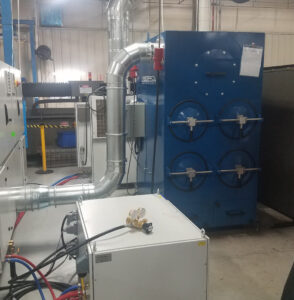
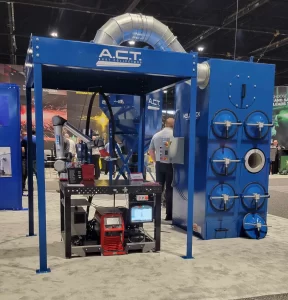
The Paintbooth LaserPack dust collector line is built around that kind of application. The LaserPack family is offered with Nano-Elite cartridge filters, standard and flame-retardant filter configurations, published MERV 15 efficiency, and an integrated cyclonic spark trap at the inlet. Side-mounted controls, prewired hookup, and a compact footprint also matter in real installations where floor space is tight.
That list matters because it reflects the way laser cutting actually behaves in a shop. Fine particulate demands serious filtration. Spark exposure has to be addressed at the collector inlet. Service access and footprint matter because many laser rooms already feel tight once the table, raw stock, finished parts, and operator space are accounted for.
None of that means a buyer should pick a model from a paragraph. It does mean the shortlist should include equipment designed for laser smoke, fume, and ultra-fine particulate rather than a collector borrowed from a different process.
A laser collector is also protecting the machine, not just the room
This point gets missed when buyers look only at air cleanup. Laser tables are expensive production equipment. Fine particulate that escapes capture does not disappear. It settles on nearby surfaces, enters maintenance areas, and adds contamination around assets the shop depends on every day.
That makes collection part of machine protection. Better capture can reduce the film that builds up around the table, cut down on repeated wipe-down work, and help the area stay more stable during long runs. The savings are not always dramatic in a single afternoon, but they become obvious over months of production when the shop is no longer fighting the same residue in the same places.
For maintenance teams, this is usually where the argument becomes easy. If the current setup leaves cleanup behind every shift, the collector is not finished doing its job just because it runs.
Questions worth asking before you buy
Before choosing a collector, push past the generic brochure language and ask a few direct questions.
- Is this collector being quoted specifically for laser cutting fume, or for dry dust in general?
- What filter package is being proposed for the materials we cut most often?
- How is spark and hot particulate exposure handled at the inlet?
- How difficult will filter changes be in the space we actually have?
- Is the system intended for one table, or can it support future expansion?
- What table details, photos, or duct information does the supplier need before finalizing the recommendation?
Those questions tend to separate real application review from box-comparison selling.
The right next step
If your shop is planning a new laser install, replacing a collector that never handled the fume well, or trying to stop haze and residue around an existing table, start with the process details rather than a generic equipment request. Paintbooth can review the laser type, table layout, material mix, production schedule, and collector location to help narrow the right path.
Use the quote request form and include photos of the table, available collector space, duct path, and the issue you are trying to fix. That gives the team enough context to sort whether a LaserPack configuration or another collection approach makes sense for your shop.