
Marine Paint Booths & Finishing Systems
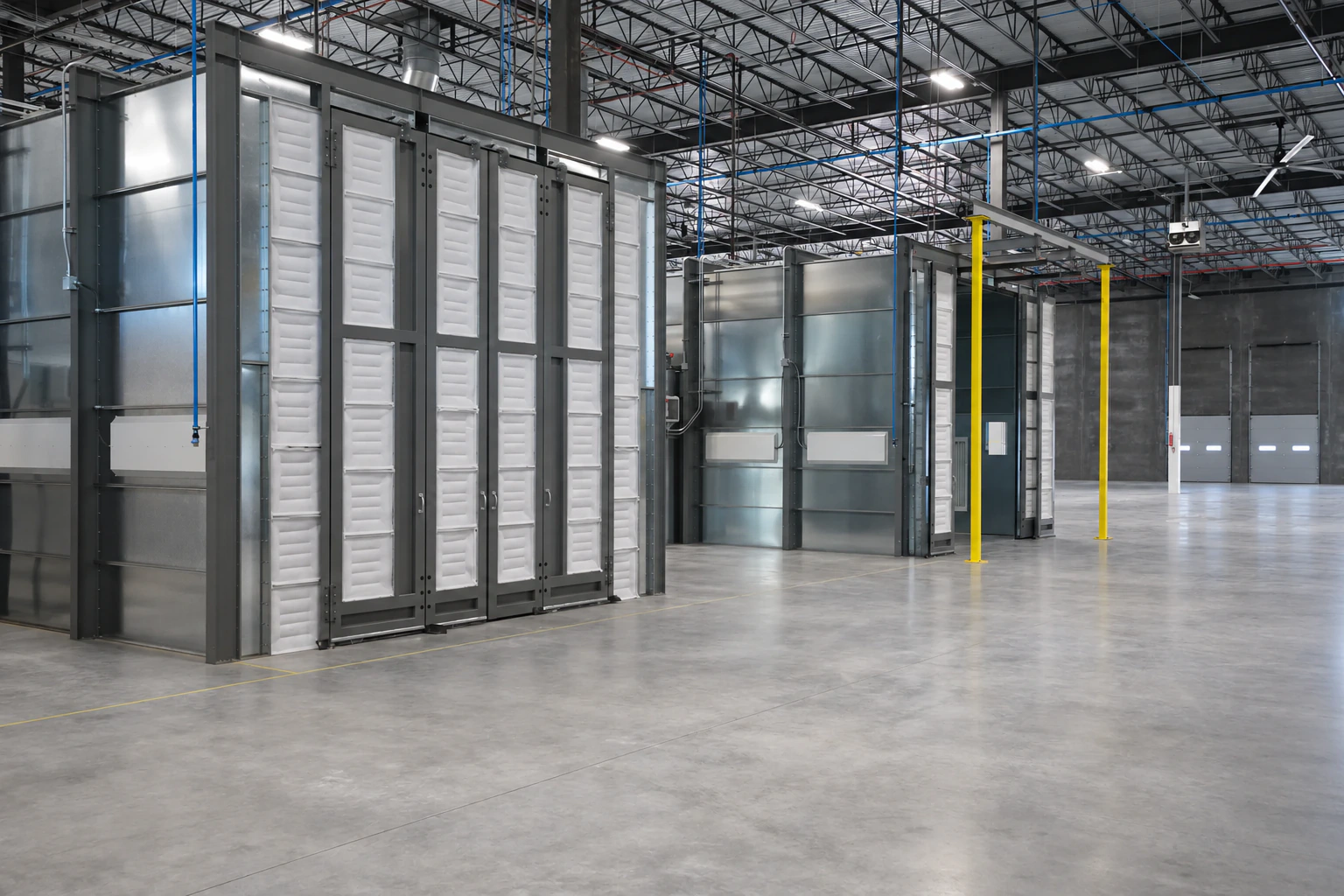
Engineered for Boats, Yachts & Large Marine Equipment
At Paintbooth.com, our engineering team understands the unique challenges involved in coating boats, yachts, hulls, decks, and oversized marine components. These applications require more than simply building a larger paint booth—they require careful consideration of airflow, filtration, temperature and humidity control, VOC loads, building constraints, and production requirements.
Our team can design a custom marine paint booth and finishing system around the size of your products, coating process, facility, and production goals.
With in-house engineering, CAD capabilities, project management, PE services, and mechanical and electrical installation teams, we can help take your project from initial concept and system design through installation, startup, and production.
When the product is too large for a standard paint booth, we engineer the booth around the product.
Key Considerations for RV & Marine Paint Booth Systems
- Sizing for Large Components – Properly size the booth for boat hulls, trailers, and oversized marine components while maintaining adequate working clearance and airflow.
- Managing High VOC Loads – Design ventilation and exhaust systems to handle coatings such as two-part urethanes, primers, clear coats, and antifouling coatings.
- Controlling Temperature & Humidity – Maintain consistent environmental conditions to support proper application, flash-off, drying, and curing of RV and marine-grade finishes.
- Supporting Multiple Workflows – Configure the finishing area to accommodate surface preparation, repair, priming, painting, and finishing without unnecessarily restricting production.
- Meeting Fire & Safety Requirements – Design the paint booth and associated systems around applicable requirements for spraying flammable and combustible coatings.
- Adapting to the Facility Environment – Account for the unique challenges of Marine production and repair facilities, boatyards, marinas, waterfront operations, and coastal environments, including space, corrosion, ventilation, and equipment-location considerations.