Marine Large Equipment Paint Booths
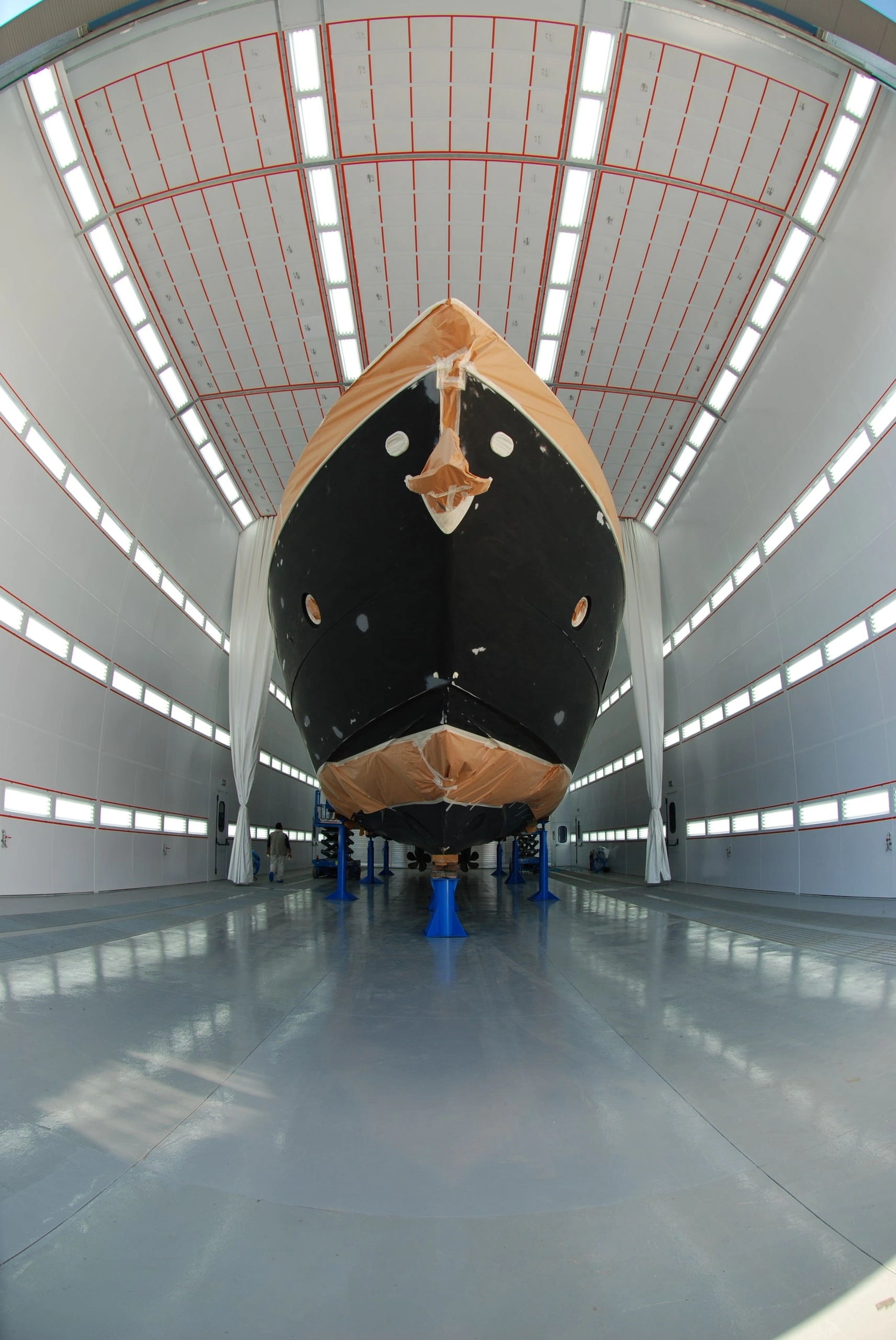
The Marine Industry covers a large market and serves a broad sector of the finishing industry. Not only with new Yachts & Boats but with repair and refurbishing units. Most applications require a Marine Booth Large Equipment Booth as they are typically larger than typical vehicles.
Engineered for Boats, Yachts & Large Marine Equipment
At Paintbooth.com, our engineering team understands the unique challenges involved in coating boats, yachts, hulls, decks, and oversized marine components. These applications require more than simply building a larger paint booth—they require careful consideration of airflow, filtration, temperature and humidity control, VOC loads, building constraints, and production requirements.
Our team can design a custom marine paint booth and finishing system around the size of your products, coating process, facility, and production goals.
With in-house engineering, CAD capabilities, project management, PE services, and mechanical and electrical installation teams, we can help take your project from initial concept and system design through installation, startup, and production.
Key Considerations for Marine Paint Booth Systems
Marine finishing presents challenges that go well beyond simply selecting a larger paint booth. Boat size, coating systems, environmental conditions, airflow, painter access, and facility layout all need to be considered when designing the right finishing system.
- Sizing for Boats & Large Marine Components – Properly size the booth around boat hulls, decks, trailers, molds, and oversized marine components while providing adequate clearance for painters, equipment, material handling, and airflow around the product.
- Managing High VOC Loads – Engineer ventilation, filtration, and exhaust systems around the coatings being applied, including primers, two-part urethanes, clear coats, gel coats, and antifouling coatings.
- Controlling Temperature & Humidity – Maintain consistent environmental conditions to support proper application, flash-off, drying, and curing while helping reduce finish problems caused by excessive temperature or humidity fluctuations.
- Providing Safe Painter Access – Large hulls and marine components can require painters to work at multiple heights and positions. Booth design should consider working clearances, platforms, lifts, and other access requirements needed to safely and efficiently reach the entire product.
- Supporting Multiple Finishing Workflows – Design the finishing area around the complete process, including surface preparation, sanding, repair, priming, painting, flash-off, drying, curing, and inspection, without creating unnecessary production bottlenecks.
- Selecting the Right Airflow Design – Evaluate Crossdraft, Semi-Downdraft, Side Downdraft, and Full Downdraft configurations based on product size, coating process, facility conditions, finish-quality requirements, and available floor space.
- Meeting Fire & Safety Requirements – Design the paint booth, ventilation, electrical systems, controls, and associated equipment around applicable requirements for spraying flammable and combustible coatings.
- Adapting to Marine Environments – Account for the unique conditions found in boat manufacturing plants, repair facilities, boatyards, marinas, waterfront operations, and coastal environments, including available space, ventilation, equipment location, moisture, and corrosion considerations.
- Planning for Large Product Movement – Consider how boats, trailers, hulls, and components will enter, exit, and move through the finishing operation. Large doors, drive-through configurations, overhead cranes, trailers, and material-handling systems may all influence the final booth design.
Engineer the Booth Around the Boat
Whether you're finishing small marine components, production boats, large yachts, or complete hulls, Paintbooth.com can engineer the system around your product, coating process, facility, and production requirements.
When the product is too large for a standard paint booth, we engineer the paint booth around the product.
Which Airflow Design Is Right for Your Application?
The airflow configuration can directly impact finish quality, overspray control, installation requirements, and overall booth performance. Common configurations include:
- Crossdraft
- Modified-Downdraft
- Side Downdraft
- Full Downdraft
The best airflow design depends on your finishing requirements, production goals, and facility layout.
Will the Booth You Need Fit Your Building?
Consider the available floor space, ceiling height, structural clearances, exhaust duct routing, roof penetrations, and equipment access. Larger booths may also require additional structural support or modifications to accommodate the booth, ductwork, and Air Makeup Unit.
Plan the Complete System Before You Buy
The right Marine or Large-Equipment Paint Booth should be designed around more than the size of what you are painting. Workpiece dimensions, airflow, production volume, building constraints, workflow, heating requirements, utilities, and future growth should all be evaluated before the equipment is specified.
Talk with a Finishing Systems Specialist before you quote, install, or expand. We can help evaluate your application and develop a complete system designed around your facility and production goals.
Select Your Booth Configuration:
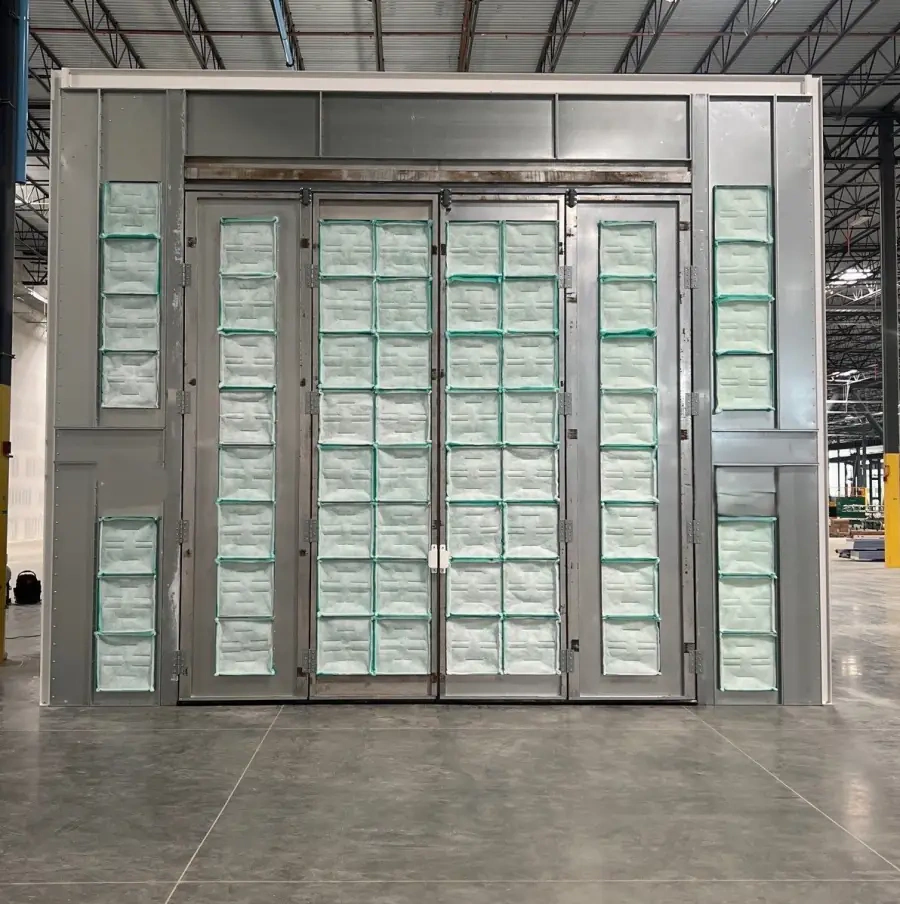
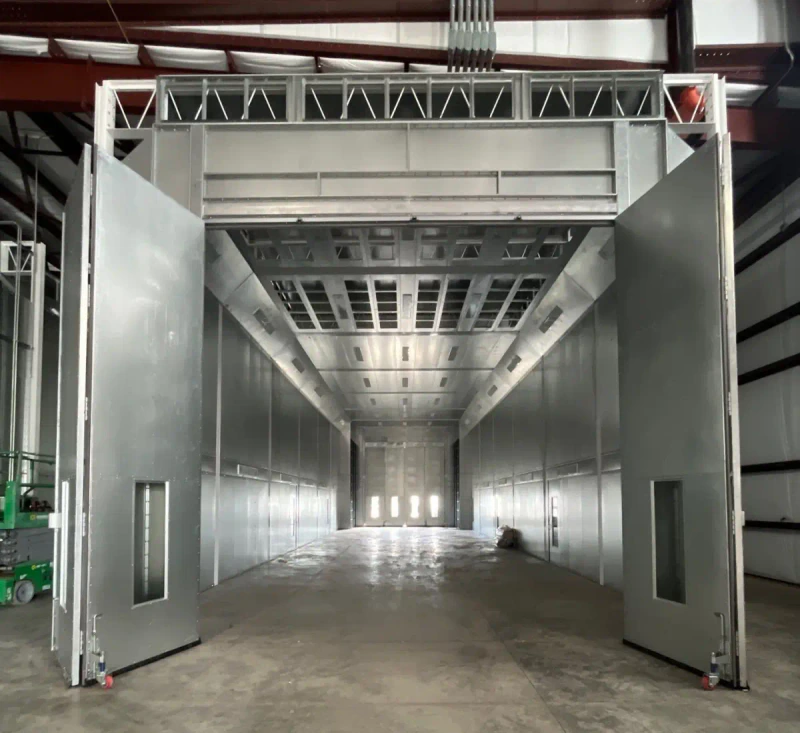
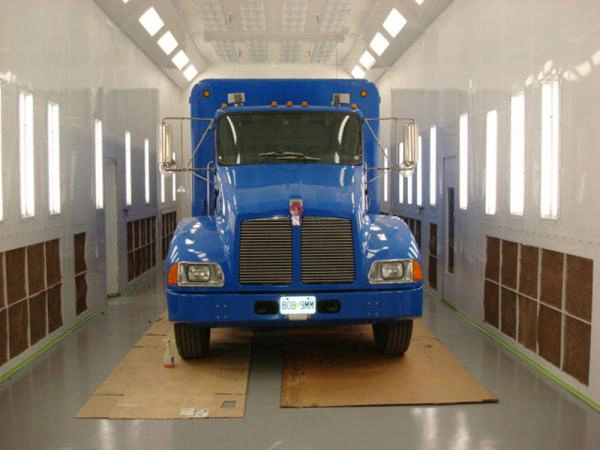
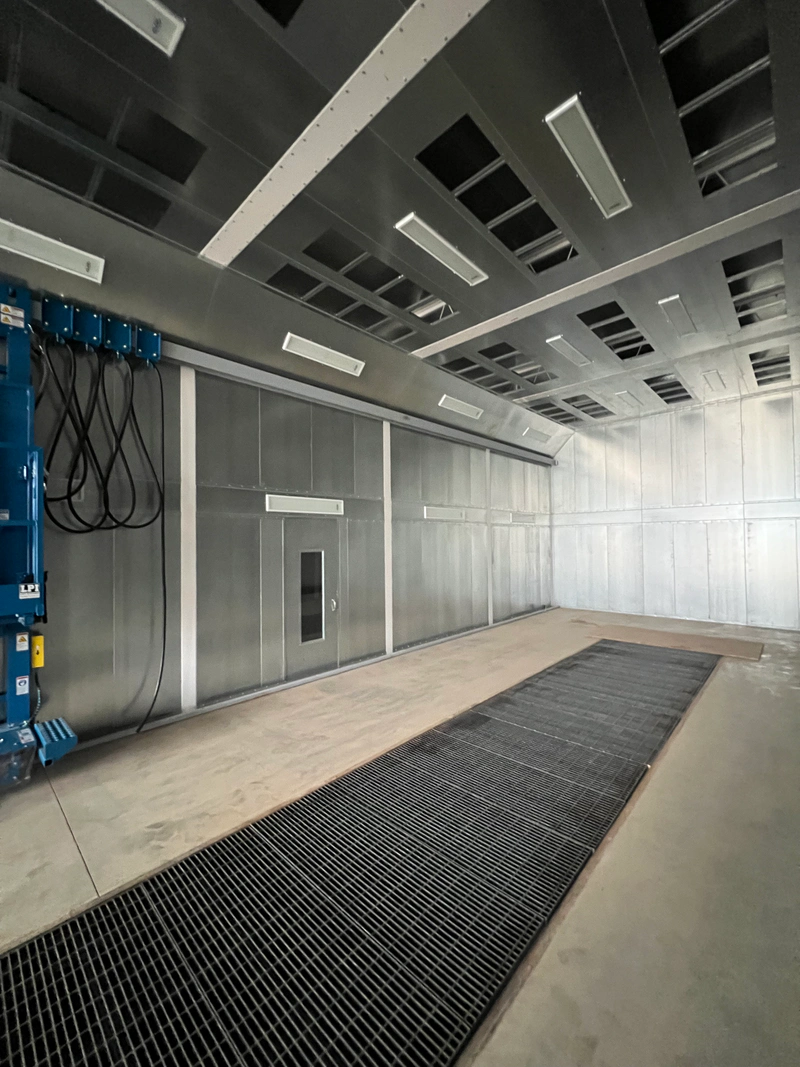
Size and configuration: Systems are available in both standard prefabricated and custom configurations, with a wide range of sizes.
Available options: Industrial Marine & RV Paint Booths can be customized with:
- Heated Air Make-Up Units (AMUs)
- Temperature-controlled AMUs
- Powder Coated Finish
- Roll-up doors
- Conveyor slots
- Drive-through configurations
- HEPA filtration
- Three-stage filtration
Overall value: The offering is positioned as a flexible, application-specific finishing solution, allowing the booth's airflow, filtration, access, heating, and configuration to be tailored to the customer's production requirements.
Crossdraft: Emphasizes simplicity, cost-effectiveness, consistent airflow, and contamination control:
- Cost-effective design: A straightforward configuration that provides effective airflow and filtration without the complexity of a downdraft system.
- Airflow direction: Clean air enters through an intake plenum or filtered doors at the front of the booth and moves horizontally through the working area before being exhausted through a rear plenum.
- Consistent air velocity: The intake and exhaust filter arrangement is designed to maintain relatively uniform airflow throughout the booth, supporting a consistent, high-quality paint finish.
- High-efficiency intake filtration: Intake filters remove dust and dirt before air enters the booth, helping maintain a cleaner painting environment.
- Pressurized operation: Air can be supplied directly from a heated air makeup unit (AMU) or intake fan to the intake plenum, reducing the possibility of contaminated shop air entering the booth.
- Filtration capacity: The system is designed with a maximized number of intake and exhaust filters to promote effective particulate filtration.
- Primary benefit: Provides a simple, economical, and controlled painting environment with consistent horizontal airflow and effective contaminant management.
Semi Downdraft-Modified Downdraft: A hybrid design that combines characteristics of Crossdraft and Downdraft systems:
- Hybrid airflow design: Combines elements of both crossdraft and downdraft airflow to provide an efficient and controlled painting environment.
- Intake location: Clean, filtered air enters through a ceiling-type intake plenum positioned within approximately the first 25–30% of the booth length.
- Airflow path: Air moves across the working chamber and over the vehicle before being drawn toward the filtered exhaust chamber at the rear of the booth.
- Consistent air velocity: The intake and exhaust filter arrangement is designed to maintain relatively even airflow throughout the working area, supporting a consistent, high-quality finish.
- High-efficiency intake filtration: Intake filters remove dust and dirt before air enters the booth, helping minimize airborne contamination.
- Pressurized operation: A heated air makeup unit (AMU) or intake fan can supply air directly to the intake plenum, reducing reliance on potentially contaminated shop air.
- Maximized filtration: The booth incorporates a high quantity of intake and exhaust filters to promote efficient particulate filtration.
- Primary benefit: Provides a balance between the airflow characteristics of crossdraft and downdraft booths, while offering improved contamination control through filtered, pressurized intake air.
Side Downdraft: Provides many of the airflow benefits of a traditional downdraft booth without requiring a floor pit:
- Economical installation: Designed for shops that cannot or do not want to install a below-floor exhaust pit, reducing installation cost and complexity.
- Airflow direction: Clean air enters through a ceiling-mounted intake plenum and moves vertically downward through the working area.
- Side exhaust: Instead of exhausting through a floor pit, contaminated air is drawn into filter chambers along both side walls that extend the length of the booth.
- Consistent air velocity: The intake and side-exhaust filter arrangement is designed to provide even airflow throughout the working area, supporting a consistent, high-quality finish.
- High-efficiency intake filtration: Intake filters remove dust and dirt before air enters the booth, helping create a cleaner painting environment.
- Pressurized operation: Air can be supplied directly from a heated air makeup unit (AMU) or intake fan to the intake plenum, minimizing the introduction of potentially contaminated shop air.
- Maximized filtration: The booth incorporates a high quantity of intake and exhaust filters to promote efficient particulate filtration.
- Primary benefit: Provides downdraft-style vertical airflow and contamination control without the expense and construction requirements of a floor pit, making it a practical option for many existing shops.
Pit Downdraft: Emphasizing airflow consistency, contamination control, and finish quality:
- Airflow direction: Clean air enters through a ceiling-mounted intake plenum and moves vertically downward through the booth toward a filtered exhaust pit in the floor.
- Overspray and contamination control: Downdraft airflow helps capture overspray and airborne contaminants, reducing the risk of particles settling on the painted surface.
- Consistent air velocity: The intake and exhaust filter arrangement is engineered to provide relatively uniform airflow throughout the work area, which is important for achieving a consistent paint finish.
- High-efficiency intake filtration: Intake filters remove dust and dirt before air enters the booth, creating a cleaner painting environment.
- Pressurized booth: Air can be supplied directly from an air makeup unit (AMU) or intake fan into the intake plenum, minimizing the introduction of contaminated shop air.
- Maximized filtration: The booth uses a high quantity of intake and exhaust filters to improve particulate filtration and maintain efficient airflow.
- Primary benefit: The overall system is designed to provide a cleaner, more controlled painting environment and a higher-quality finish while effectively managing overspray.
Example Marine Paint Booth Drawings
FAQs
What size paint booth do I need for a boat or yacht?
A marine paint booth should be sized around the largest boat, yacht, hull, deck, or marine component you plan to finish while providing adequate working clearance for painters, man lifts, scaffolding, hoses, and equipment. The Paint Booth design should also consider product access, ceiling height, exhaust duct routing, air makeup equipment, and future production needs. Paintbooth.com can engineer custom boat and yacht paint booths when standard booth dimensions are not large enough for the application.
What is the best airflow design for a marine paint booth?
The best airflow system for a boat or yacht paint booth depends on the size of the vessel, coating process, facility layout, finish-quality requirements, and available space. Marine booths can be designed as Cross Draft, Modified Downdraft, Side Downdraft, or Full Downdraft systems. At Paintbooth.com our process is to first evaluate your application process and recommend an airflow configuration based on the complete finishing process.
Do marine paint booths need temperature and humidity control?
Temperature and humidity control can be extremely important when applying marine primers, topcoats, clear coats, two-part urethanes, and antifouling coatings. Environmental conditions can affect application, flash-off, drying, curing, and final finish quality. A marine spray booth can be equipped with a heated or temperature-controlled air makeup unit (AMU) to provide conditioned replacement air and maintain more consistent booth conditions.
How are overspray and VOCs controlled in a marine spray booth?
A properly engineered marine spray paint booth uses controlled airflow, exhaust ventilation, and filtration to move overspray away from the workpiece and capture airborne paint particles before exhaust air is discharged. Marine applications use coatings with significant VOC loads, so ventilation and replacement-air requirements should be evaluated around the coatings being sprayed, booth dimensions, airflow configuration, and production process. Paintbooth.com offers high-efficiency intake and exhaust filtration along with air makeup systems for large marine finishing applications.
Our factory trained installation crew can get your new Marine Paint Booth installed correctly and quickly.
With experienced in-house mechanical and electrical installation teams, we make sure your new equipment is installed correctly, efficiently, and ready for production as quickly as possible.