Truck and Large Equipment Crossdraft Paint Booths
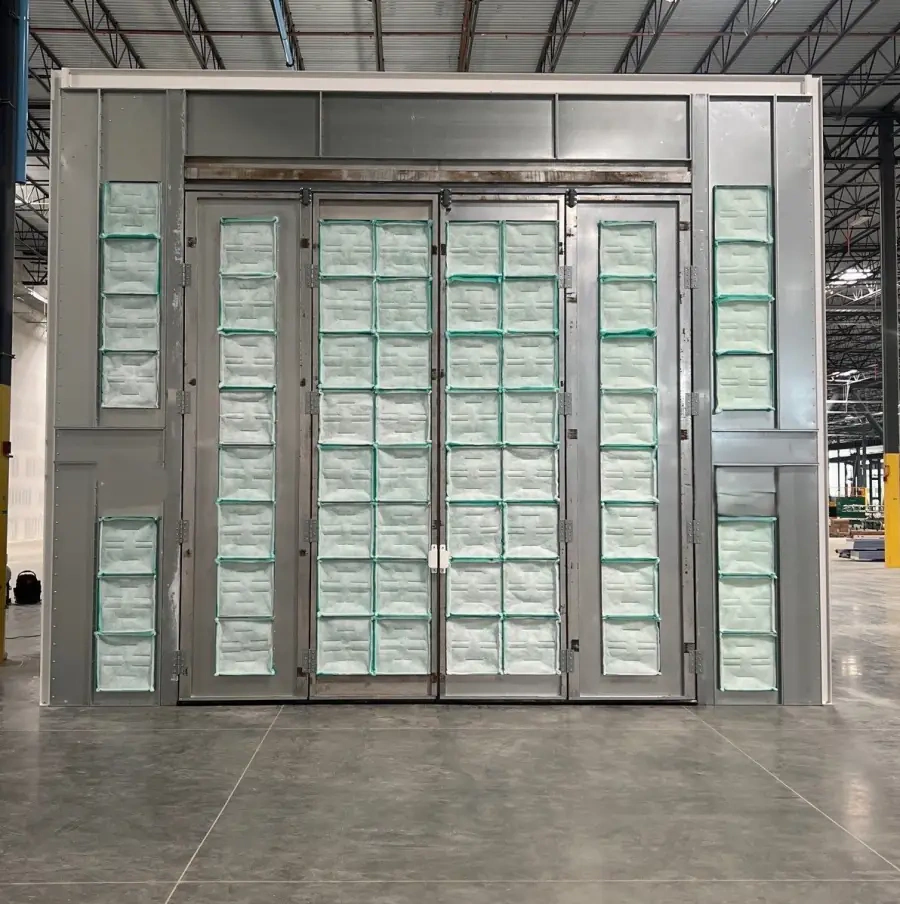
Paintbooth.com offers a comprehensive range of large equipment paint booth models engineered for large-scale industrial finishing applications across Rail, Aerospace, Marine, RV, Trucking and transportation, manufacturing and heavy equipment markets. These systems are designed to accommodate demanding production environments while providing controlled airflow, efficient overspray capture, and a safer, cleaner finishing workspace.
Crossdraft Paint Booths: Emphasizes simplicity, cost-effectiveness, consistent airflow, and contamination control:
- Cost-effective design: A straightforward configuration that provides effective airflow and filtration without the complexity of a downdraft system.
- Airflow direction: Clean air enters through an intake plenum or filtered doors at the front of the booth and moves horizontally through the working area before being exhausted through a rear plenum.
- Consistent air velocity: The intake and exhaust filter arrangement is designed to maintain relatively uniform airflow throughout the booth, supporting a consistent, high-quality paint finish.
- High-efficiency intake filtration: Intake filters remove dust and dirt before air enters the booth, helping maintain a cleaner painting environment.
- Pressurized operation: Air can be supplied directly from a heated air makeup unit (AMU) or intake fan to the intake plenum, reducing the possibility of contaminated shop air entering the booth.
- Filtration capacity: The system is designed with a maximized number of intake and exhaust filters to promote effective particulate filtration.
- Primary benefit: Provides a simple, economical, and controlled painting environment with consistent horizontal airflow and effective contaminant management.
Standard Features of Our Crossdraft Paint Booths
Booth Construction
- Galvanized steel construction: Booths use 18-gauge galvanized-steel panels for the enclosure.
- CNC-punched components: Panels and structural supports are CNC-punched for accurate alignment and straightforward nut-and-bolt assembly.
- Structural framing: Beams and columns are fabricated from formed 10-gauge galvanized steel.
- Optional structural beams: Structural I-beams such as W8×13 can be used with welded, formed-steel attachments.
- Support spacing: Structural supports are positioned at maximum 10-foot centers to increase booth rigidity and stability.
Product and Personnel Doors
- Adjustable installation: Product doors are field-hung on slotted hinges, allowing adjustment in two axes to accommodate uneven floors.
- Personnel access: A standard 36-inch-wide personnel door includes an observation window and is installed in a pre-assembled heavy-duty frame.
Booth Lighting
- Hazardous-location rating: Fixtures are rated for Class I, Division 2, Groups A, B, C, D and Class II, Division 2, Groups F and G applications.
- ETL listing: Fixtures are ETL listed and approved for their intended application and installation location.
- LED technology: Lighting uses high-efficiency LED T-8 Glass Free Tubes.
- Service life: Rated for up to 50,000 hours, significantly longer than conventional fluorescent lamps.
- Performance: Instant-on operation at full brightness with no flicker or buzzing.
- Power flexibility: Fixtures can operate on either 120 VAC or 277 VAC.
Fans and Motors
Uses U.S.-manufactured, brand-name tube-axial fans and motors for booth ventilation and exhaust applications.
Air Solenoid Valve
The air solenoid valve is interlocked with the exhaust fan and spray-equipment air supply, helping ensure that the appropriate ventilation conditions are established during spray operations.
Performance and Compliance
- Booth performance is designed to meet or exceed applicable OSHA and NFPA requirements.
- ETL-listed control panels are available as an option on many booth configurations.
Select Your Equipment Type :
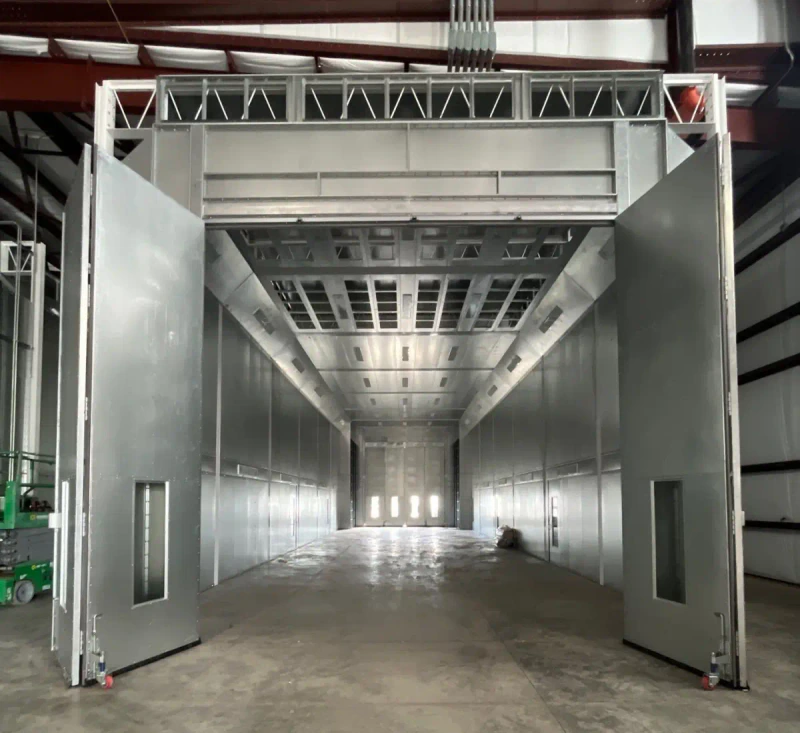
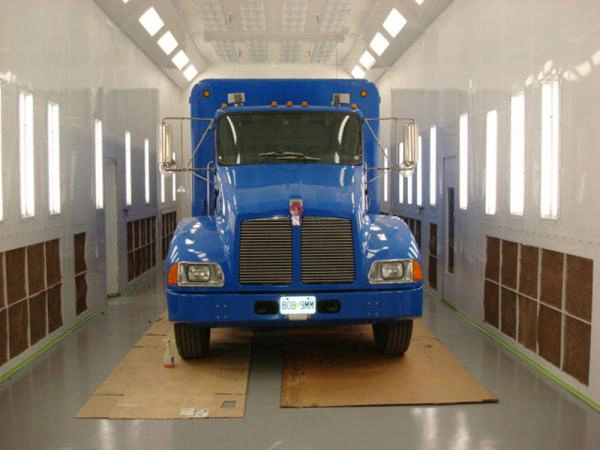
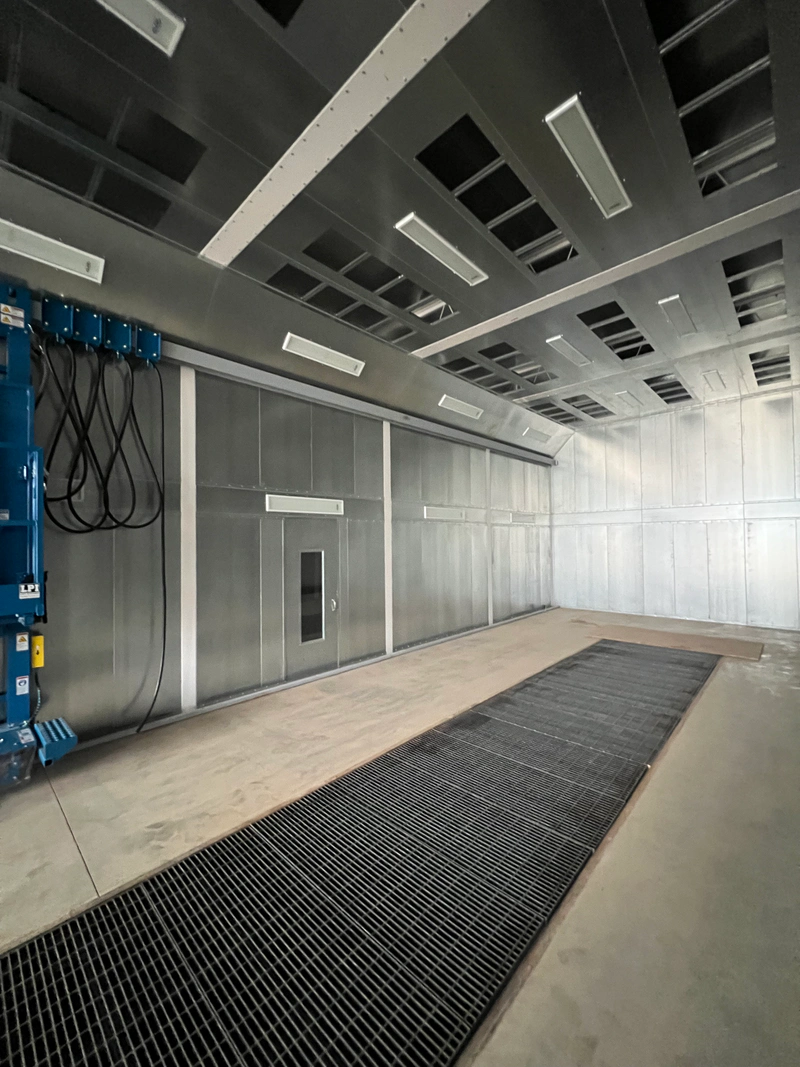
Crossdraft: Emphasizes simplicity, cost-effectiveness, consistent airflow, and contamination control:
- Cost-effective design: A straightforward configuration that provides effective airflow and filtration without the complexity of a downdraft system.
- Airflow direction: Clean air enters through an intake plenum or filtered doors at the front of the booth and moves horizontally through the working area before being exhausted through a rear plenum.
- Consistent air velocity: The intake and exhaust filter arrangement is designed to maintain relatively uniform airflow throughout the booth, supporting a consistent, high-quality paint finish.
- High-efficiency intake filtration: Intake filters remove dust and dirt before air enters the booth, helping maintain a cleaner painting environment.
- Pressurized operation: Air can be supplied directly from a heated air makeup unit (AMU) or intake fan to the intake plenum, reducing the possibility of contaminated shop air entering the booth.
- Filtration capacity: The system is designed with a maximized number of intake and exhaust filters to promote effective particulate filtration.
- Primary benefit: Provides a simple, economical, and controlled painting environment with consistent horizontal airflow and effective contaminant management.
Example Drawings
FAQs
How does a Cross Draft Truck Paint booth work?
A Cross Draft truck paint booth pulls filtered air into the front of the booth and moves it horizontally across the vehicle toward an exhaust chamber at the rear. Airborne overspray is captured by exhaust filters before the filtered air is discharged through the duct system. This straightforward airflow design is ideal for many truck, fleet and large-equipment refinishing operations.
Is a Cross Draft paint booth suitable for painting large trucks?
Yes. Cross Draft booths can be built for Large Semi Trucks, commercial vehicles, buses, RVs, trailers and heavy equipment. Their horizontal airflow design does not require a concrete wor for a pit, making them practical for shops that need a large paint booth without significant floor excavation or structural modifications.
What is the difference between a Cross Draft and Downdraft truck paint booth?
A Cross Draft booth moves air horizontally from one end of the truck to the other. A downdraft booth supplies air through the ceiling and pulls overspray downward through the floor. Downdraft booths provide greater separation between overspray and the vehicle, while cross draft truck booths generally cost less and are easier to install because they do not require an exhaust pit.
Can a Cross Draft truck paint booth be heated?
Yes. A Cross Draft truck booth can be equipped with a heated air makeup unit to supply filtered, temperature-controlled replacement air. Forced-dry and cure modes can reduce drying time, improve temperature consistency and increase production. The Air Make Up Unit CFM should be sized around booth airflow, climate and coating requirements.
How can I improve finish quality in a Cross Draft truck paint booth?
Always maintain clean intake and exhaust filters, keep the booth slightly positively pressurized with an AMU unit, this will control dust entering through doors and wall openings. Proper airflow balance, booth cleaning, vehicle preparation and filter replacement help reduce contamination and overspray buildup. An automatic balancing system with variable-frequency-drive controls can help maintain consistent airflow as filters load.
Our factory trained installation crew can get your new Truck and Large Equipment Cross Draft Paint Booth installed correctly and quickly.
This is our specialty! You can rest assured that your new equipment will be operational in no time.