
Industrial Exhaust Chambers
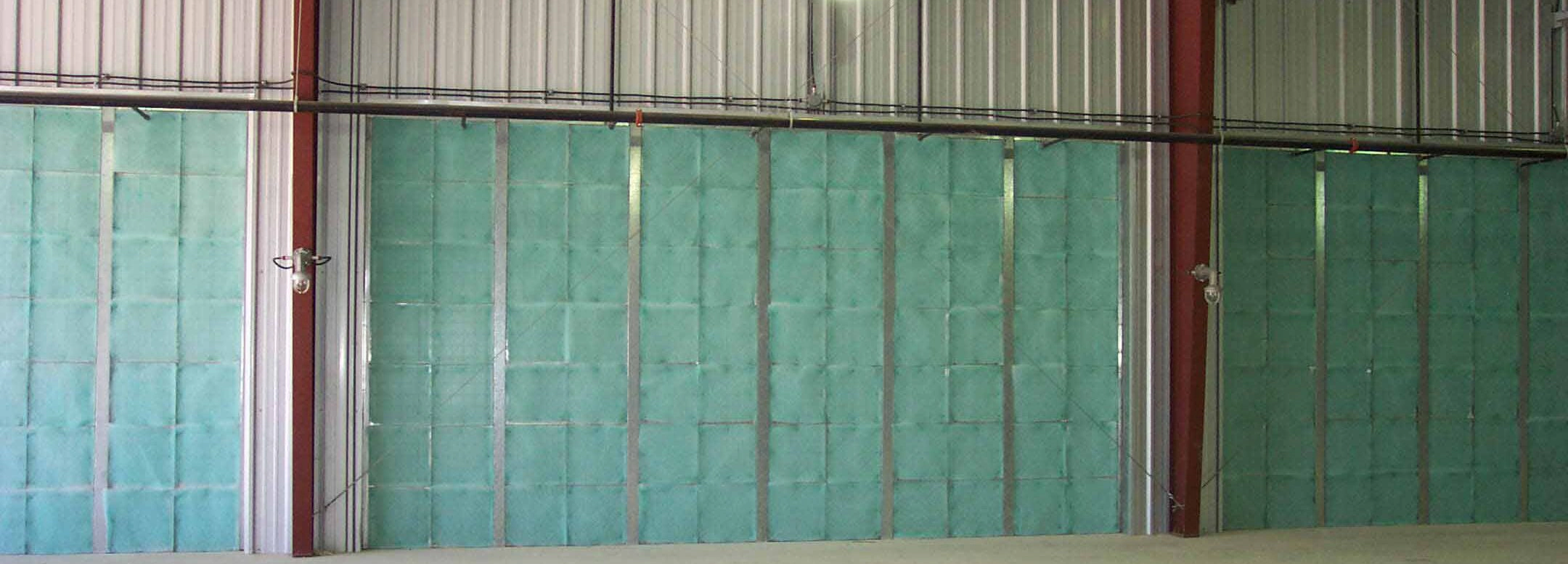
Industrial exhaust chambers are floor-model ventilation systems designed to capture and exhaust sanding dust, vapors, paint fumes, and airborne overspray generated during industrial finishing and preparation processes.
Air is drawn into the chamber, where dry exhaust filters capture airborne overspray particles before the filtered air is discharged through the exhaust duct system. This provides an effective solution for controlling airborne contaminants while maintaining a cleaner and more controlled work environment.
Available in a wide range of sizes and configurations, our industrial exhaust chambers can be designed to accommodate virtually any production requirement—from small maintenance applications to larger industrial finishing operations.
Standard Models Available
We offer a variety of standard open front paint booth models designed for quick delivery and installation.
Have questions about sizing, airflow, filtration, or configuration? Call 833-552-6684 and our team can help you select the right open front paint booth for your application.
Exhaust System Features
A tube-axial exhaust fan designed specifically for use in a paint spray industrial exhaust chambers power the airflow through the booth and exhaust stack. All exhaust fans are of non-sparking construction. The motor drive and bearings are sealed from the air stream of exhaust. Open drip proof (ODP) motors are provided with each unit.
Construction Features and Quality Standards
Chambers are constructed from heavy duty 18-gauge galvanized steel. Structural steel supports are used to add strength and rigidity as necessary.
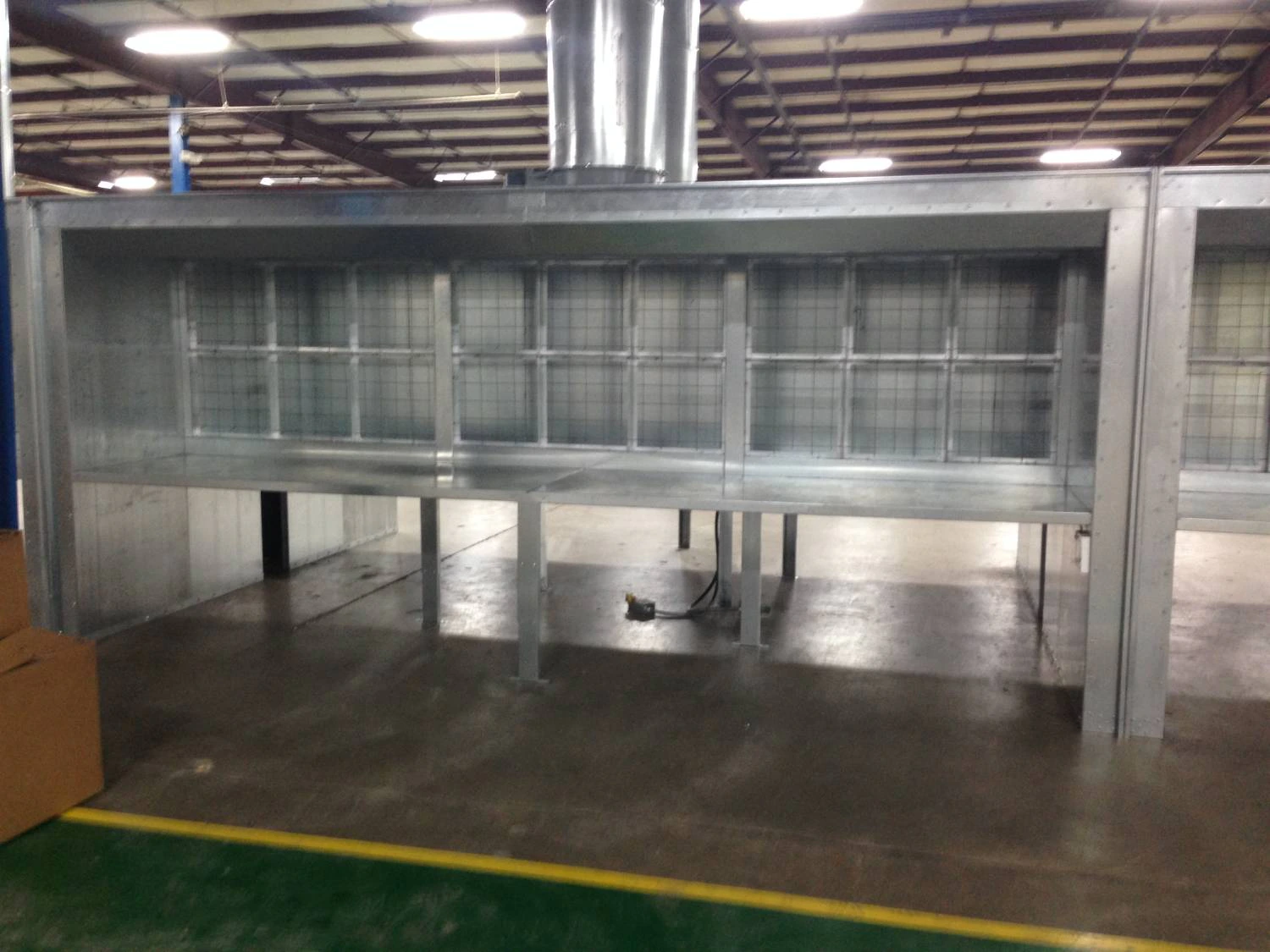
Exhaust Bench
This exhaust bench provides a very practical method for removing hazardous and contaminated air generated by refinishing, repair and other shop-related operations.
Booth Options
Available Options & Accessories
- Pre-coated white finish available
- Heated air replacement units and intake chambers
- Reduced airflow configurations for automatic spray systems
- Control panels and electrical components
- Complete exhaust duct packages for proper ventilation and installation
Select Your Industrial Paint Booth:
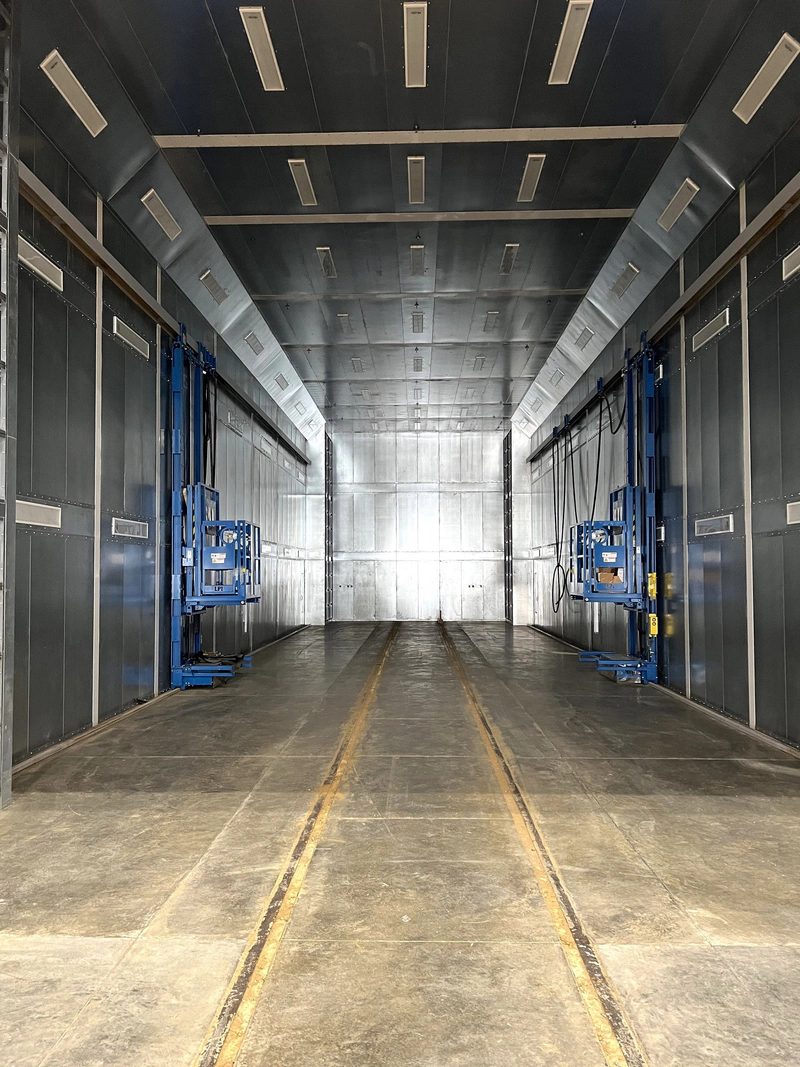
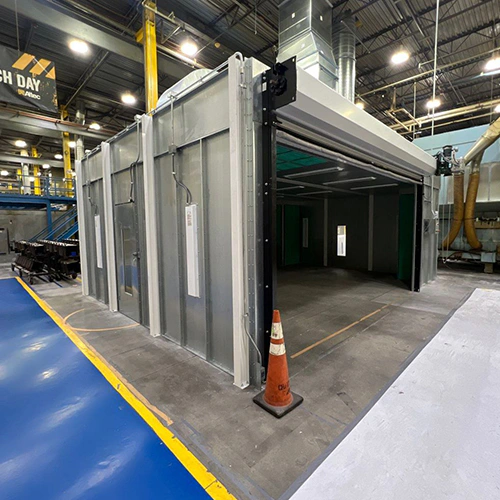
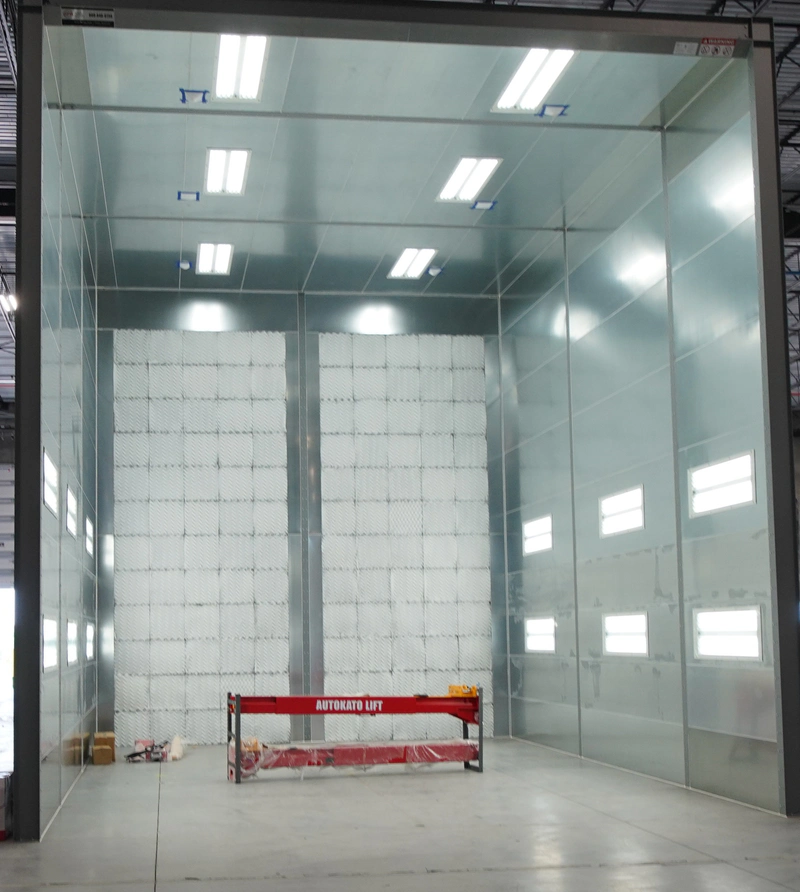
Example Drawings
FAQs
What is an industrial exhaust chamber?
An industrial exhaust chamber is an open-front ventilation enclosure designed to capture airborne dust with proper filters for dust control, vapors, paint fumes and overspray at the source. Contaminated air is drawn away from the operator, through dry exhaust filters and into an exhaust duct system for discharge outside the building.
What are industrial exhaust chambers used for?
Industrial exhaust chambers are commonly used for sanding, grinding, adhesive application, touch-up painting and other manufacturing processes that generate airborne contaminants.
What is the difference between an exhaust chamber and a paint booth?
An exhaust chamber typically has an open working face and draws air horizontally toward a rear filter bank. A paint booth may provide a fully enclosed, controlled spray environment with intake filtration, doors and more precise pressure management. The appropriate system depends on the coating, product, production rate and applicable safety requirements.
Can an industrial exhaust chamber remove sanding dust?
Yes, an exhaust chamber can capture many types of airborne sanding dust when properly sized and uses the proper filters for the process. However, combustible or explosive dust may require specialized collection equipment, controls and hazard mitigation. The dust characteristics and application should be evaluated before selecting the filtration and exhaust system.
Do industrial exhaust chambers need to vent outside?
Yes our industrial exhaust chambers discharge filtered air through exhaust ductwork to the outdoors. The required airflow, fan size, stack location and filtration depend on the chamber size of the opening and VOC’s being generated.
How often should industrial exhaust chamber filters be replaced?
Filter life depends on production volume, contaminant type and filter loading. Filters should be inspected regularly and replaced when airflow decreases, or the recommended pressure differential is reached. Operating with overloaded filters can reduce capture performance, change airflow and increase dust or overspray accumulation in the work area.