
A signature on an attendance sheet does not prove that an operator can safely control a blast nozzle. High-pressure abrasive blasting places lethal energy, aggressive airborne hazards, and tight engineering tolerances into an operator's hands. When training relies on passive observation or verbal walkthroughs, field errors follow immediately: ruined parts, accelerated equipment wear, and catastrophic safety failures.
Building an effective training and authorization program requires moving from time-based exposure to task-based demonstration. Supervisors must define exact operational boundaries, train workers to recognize compound hazards, establish measurable surface standards, and enforce strict stop-work protocols before granting independent machine access.
Define Roles and Authorized Tasks
Clear operational boundaries prevent cross-contamination of duties and keep untrained personnel away from high-hazard tasks. An abrasive blasting operation relies on three primary roles, each requiring distinct training, authorization, and boundaries:
| Role | Authorized Scope to Define |
|---|---|
| Blast Operator | Nozzle control, job outcomes, pre-use checks, and stop response |
| Pot Tender / Helper | Approved support, handling, boundaries, and communication |
| Qualified Maintenance | Required isolation, servicing, and verification within competence |
The Blast Operator
The blast operator holds direct physical control of the blast nozzle inside the containment area or cabinet. Their authorized scope includes:
- Pre-shift equipment inspections (nozzle, blast hose, couplings, deadman controls).
- Surface preparation according to engineering specifications.
- Dynamic standoff, angle, and dwell adjustments during processing.
- Immediate stop-work execution when system parameters drift or visibility drops.
The Pot Tender and Nearby Helper
The helper works outside the immediate blast zone to support continuous operation without entering the high-exposure environment. Their authorized scope includes:
- Monitoring pressure pot gauges and abrasive media levels.
- Managing blast hose runs to prevent kinks, pinch points, and traffic damage.
- Enforcing perimeter boundaries to stop unauthorized personnel from entering line-of-fire areas.
- Executing standard shutdown sequences from the pressure vessel controls upon signal from the operator.
The Qualified Maintenance Technician
System service requires dedicated mechanical and pneumatic competence. A training course or operating manual qualifies someone to run the blast machine, not overhaul pressurized systems. Authorized maintenance personnel handle:
- Hazardous energy control (Lockout/Tagout) across electrical, pneumatic, and pressurized lines.
- Pressure relief valve testing, certification, and replacement.
- Metering valve rebuilds, moisture separator servicing, and pressure vessel structural inspections.
- Breathing-air compressor maintenance, filtration changes, and line pressure regulator overhauls.
Operators and helpers must never perform pressurized repairs, bypass deadman safety switches, or alter regulator settings beyond established operating envelopes. Unauthorized modifications to pressurized lines introduce severe blast-whip and shrapnel risks.
Teach Site Hazards, Exposure Paths, and Control Systems
Effective safety training links theoretical hazards to physical controls. Workers must understand that the dust cloud inside a blast area is a dynamic combination of the breakdown of the abrasive media and the pulverized coating being removed.
Blast Hazard Sources: Abrasive Breakdown + Removed Coating + Substrate
Assess actual inhalation, impact, noise, and any fire/explosion hazards.
Process and Exposure Hazards
Assess dust from the actual abrasive, coating, and substrate. Slag or clean-looking work is not inherently harmless; use material information and the job exposure assessment.
Train workers to review the job hazards, material information, and authorized pre-use checks before blasting. Grounding, bonding, and controls must follow applicable requirements and equipment instructions; training does not authorize improvised work around flammable residues.
Protective Equipment and Ventilation Obligations
Supervisors must treat containment ventilation and respiratory protection as separate, non-interchangeable engineering controls. High-volume airflow clears airborne particulate to preserve visibility and minimize environmental escape, but it does not remove the need for positive-pressure breathing air.
- Ventilation Compliance: Facilities must design, operate, and balance containment airflow to satisfy OSHA’s abrasive blasting ventilation requirements. Operators must know the normal operating range of the differential pressure gauges on the dust collector and verify airflow before charging the blast pot.
- Respiratory Protection: Use approved abrasive-blasting respirators appropriate to the work. OSHA’s respiratory protection requirements include a written program, medical evaluations, training, and breathing-air quality; fit testing applies to tight-fitting respirators.
- Breathing Air Quality: Teach the approved air-source checks, required quality, flow, pressure, and alarm response. Oil-lubricated compressors require a high-temperature alarm, a CO alarm, or both under 1910.134(i); if temperature alone is used, CO monitoring intervals must prevent levels exceeding 10 ppm.
Detailed selection criteria for blast hoods, leather or heavy-canvas suits, blast gloves, and hearing conservation products are covered in our companion guide on sandblasting gear.
Teach Surface Outcomes Over Generic Technique
Generic instructions like "blast at a 45-degree angle" or "hold the nozzle 12 inches away" fail across diverse production requirements. Angle and distance must adapt to substrate thickness, alloy hardness, coating elasticity, and the required surface profile.
| Technique Variables | Verified Outcomes |
|---|---|
| Approved Distance, Angle, Dwell, Media Delivery | Required Cleanliness, Specified Profile, Substrate Preservation |
Operators must learn to balance three primary surface requirements:
1. Cleanliness Verification
Train workers against the job’s specified visual cleanliness requirements and any separate oil, salt, or dust limits. Common blast-cleaning designations include:
- Brush-Off Blast (SSPC-SP 7 / NACE No. 4): Removes loose mill scale, rust, and paint, retaining tight residues.
- Commercial Blast (SSPC-SP 6 / NACE No. 3): Removes specified visible rust, scale, and coating, with limited staining allowed by the standard.
- Near-White Metal Blast (SSPC-SP 10 / NACE No. 2): Requires removal with only the limited slight staining permitted by the standard.
- White Metal Blast (SSPC-SP 5 / NACE No. 1): Requires the specified removal of visible contaminants; it does not establish soluble-salt or other invisible-contaminant acceptance by appearance alone.
Training should incorporate physical comparator coupons or visual reference photographs directly at the workstation so operators can calibrate their progress against approved customer standards.
2. Anchor Profile Depth
Coatings rely on a mechanical tooth to bond to the substrate. An inadequate anchor profile causes premature delamination; an excessive profile can result in pinpoint rusting where coating valleys leave peaks exposed.
Operators must be trained to measure profile using replica tape (press-o-film) with a spring micrometer or a calibrated surface profile gauge. They must understand how changing media size, operating pressure, or dwell time directly shifts profile depth.
3. Substrate Preservation
Abrasive blasting can easily distort thin structural elements. Operators working on sheet metal, aluminum fabrications, or precision-machined faces must learn:
- Damage Management: Recognize distortion, erosion, retained-layer loss, and media embedment. Thin-section response depends on material, support, and approved process conditions; heat is not the only potential mechanism.
- Masking Integrity: Applying and inspecting resilient masking rubbers or metal blast templates to protect machined holes, threads, and sensitive sealing surfaces from direct impact and ricochet.
- Process Conditions: Demonstrate angle, distance, dwell, and media-flow control within the qualified job procedure rather than applying universal angles to scale or flexible coatings.
Verify Competence Through Field Demonstrations
Written tests cannot verify whether an operator can manage the physical forces of a high-volume blast nozzle. Practical authorization must occur on the actual production equipment using model-specific manufacturer instructions.
For example, Clemco’s Models 1028 and 1042 have model-specific operating and inspection instructions. A trainer must use the current manual for the actual equipment and authorized tasks; one pressure-pot procedure cannot be transferred to another model by habit.
Demonstration Stages
- Authorized pre-use inspection
- Approved start and communication under supervision
- Representative work within qualified process limits
- Safe abnormal-condition simulation, stop response, and handoff
Before an operator is authorized to blast independently, a qualified trainer must observe and sign off on four practical operational stages:
Pre-Shift Walkaround and Setup
The candidate inspects the entire system cold:
- Demonstrates the manufacturer’s authorized nozzle inspection and escalation or replacement criteria.
- Identifies and checks approved nozzle-holder and sealing components under the equipment procedure.
- Recognizes coupling, lock, hose, and restraint conditions that require escalation, using the specified assembly and inspection instructions.
- Demonstrates the prescribed remote-control check and recognizes bypass or malfunction as a stop-work concern.
Controlled Pressurization and Communication
The candidate demonstrates coordination with the pot tender:
- Explains the equipment-specific pre-start, isolation, and authorization requirements without improvising a pressurization sequence.
- Demonstrates only the approved start procedure under qualified supervision, with the designated roles and safeguards.
- Tests both primary and secondary communication signals (e.g., standard hand signals, air-horn blasts, or hardwired helmet comms) used to communicate through the noise envelope of the blast booth.
Live Operation and Surface Generation
The candidate blasts a representative production part or test panel under full operating conditions:
- Maintains the approved media-delivery conditions and identifies erratic feed without making unauthorized adjustments.
- Demonstrates stable stance, balance, and hose management while countering nozzle thrust.
- Produces the specified cleanliness and profile across inside corners, flat structural runs, and welded edges without gouging or over-blasting the metal.
Abnormal Condition Response and Stop-Work Execution
The trainer uses safe simulations or discussion scenarios; do not deliberately defeat protection or create live equipment faults:
- Loss of Airflow or Differential Pressure Shift: The operator notices falling enclosure sweep and immediately ceases blasting.
- Remote-Control Fault: The candidate follows the approved stop/emergency response, protects others, and reports the defect; they do not improvise pressure adjustments or troubleshooting.
- Hose Damage or Air Leaks: The candidate stops and follows the approved response, isolation, and qualified-maintenance handoff.
Developing systematic handoffs between operators, tenders, and maintenance helps stabilize daily work; for broader workflow defenses, read our operational review on reducing human error.
Competency Matrix and Training Triggers
Authorization is not a permanent status. Operators, helpers, and maintenance personnel must be re-evaluated as physical processes and materials change.
| Role | Must Understand | Must Demonstrate | Escalation & Stop-Work Points | Refresher Triggers |
|---|---|---|---|---|
| Blast Operator | Job cleanliness/profile limits, media/nozzle effects, and actual hazards. | Authorized pre-use checks, controlled work under the qualified procedure, and outcome verification. | Equipment-control faults, breathing-air alarms, exposure/visibility concerns, and unapproved process drift. | Required program intervals, relevant changes, competence concerns, or incidents. |
| Pot Tender / Helper | Authorized support tasks, control interfaces, boundaries, communication, and assessed PPE. | Approved support, handling, and communication procedures. | Defects, unauthorized access, loss of communication, or conditions outside their authority. | Relevant equipment, layout, task, or hazard changes. |
| Maintenance Tech | Actual equipment/manuals, hazardous energy, pressure-system and breathing-air limits. | Qualified servicing and verification within assigned competence and authority. | Unresolved structural, control, or air-quality faults. | Equipment modifications, updated procedures/requirements, and competence review. |
When to Trigger Reassessment and Retraining
Do not wait for an annual calendar review to refresh training. Any of the following process changes invalidates prior operating assumptions and demands formal reassessment:
- Abrasive Media Substitution: Moving from slag to steel grit, or from garnet to aluminum oxide, completely changes cutting dynamics, dust generation rates, static potential, and nozzle wear rates.
- Substrate or Coating Transition: Encountering lead, zinc primers, or rubberized topcoats introduces new exposure mechanisms and requires different blast techniques.
- Equipment Upgrades: Introducing larger-bore nozzles, different blast pots, or automated remote control lines introduces higher nozzle thrust forces and modified control schematics.
- Near-Miss or Safety Incidents: Any deadman control bypass, blown hose gasket, or breathing-air alarm event mandates immediate operational pauses and targeted crew recertification.
Aligning Equipment, Containment, and Operator Training
A well-trained operator cannot compensate for an undersized compressor, an inadequate dust collection system, or a poorly ventilated enclosure. High surface quality, predictable production schedules, and safe conditions occur only when operator skill matches the physical capacity of the blast facility.
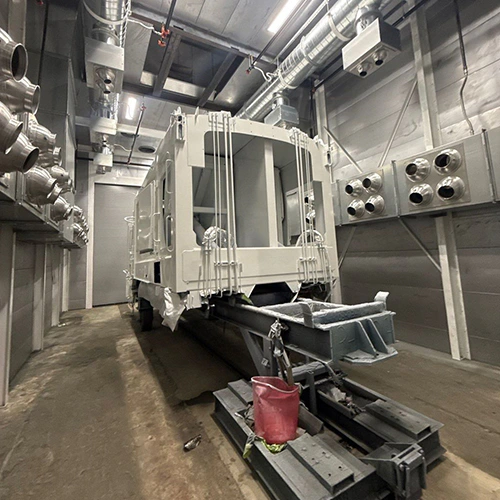
When updating training programs, review your physical facility parameters. If expanding throughput requires moving from small blast cabinets or outdoor operations into dedicated engineered containment, evaluate modern sandblasting booth options to ensure your enclosure ventilation, material recovery, and operator lighting systems match your operational scope.
To discuss specific engineering requirements for your parts, facility footprint, and production volume, reach out to our engineering team with your component dimensions, substrate alloys, and production targets to request a sandblasting booth quote.