
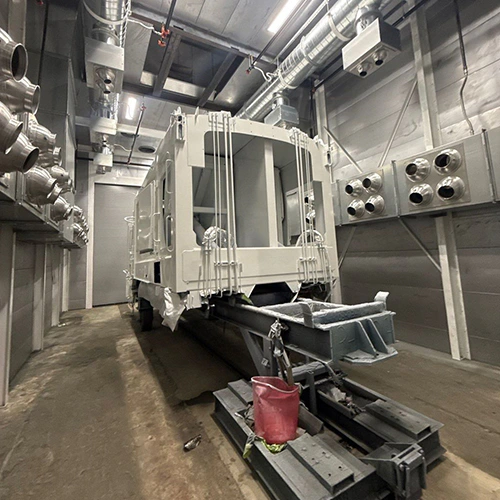
A sputtering blast nozzle, dust haze drifting past door gaskets, or an unexpected pneumatic line drop does more than delay a shift. These symptoms signal mechanical wear, process drift, or active safety risks. Production managers faced with unreliable surface preparation equipment often swing between two costly extremes: repeatedly rebuilding a fundamentally compromised system, or scrapping an entire capital installation when replacing a single valve assembly would restore factory specifications.
Making the right operational call requires separating primary components from peripheral wear parts, identifying genuine life-safety risks, and gathering data before committing capital. Here are ten critical warning signs, divided between protection failures that demand immediate escalation and chronic performance issues that point toward component rebuilds or system replacement.
Act on Warning Signs That Affect Protection
Any failure that compromises operator safety, structural pressure integrity, or toxic dust containment requires an immediate stop-work order. Do not permit improvised, pressurized troubleshooting or on-the-fly mechanical workarounds. Isolate the equipment under plant hazardous-energy control (lockout/tagout) procedures until a qualified technician completes an inspection.
1. Failed Operator Control (Deadman Mechanism and Remote Valving)
A control that fails its specified release/stop function is a safety-critical concern. Never tie, wedge, or bypass the held-open control; follow the approved stop response and qualified-service handoff.
When a deadman fails to disengage immediately, the fault usually lies within:
- Mechanical binding or grit contamination inside the lever assembly.
- Damaged or pinched pneumatic twin-lines that prevent the pilot air signal from exhausting.
- Contaminated or sticking rebuildable cartridges inside the inlet and outlet remote control valves.
Keep affected equipment out of service under the required site procedure. Qualified personnel should determine the fault, approved repair, verification, and any justified control replacement rather than substitute an unverified circuit.
2. Damaged Blast Hose, Couplings, or Pressure Vessel Deterioration
Hoses can wear internally despite a sound exterior. Report soft spots, damage, coupling movement, or other specified concerns and use the manufacturer’s inspection and replacement criteria. Do not improvise live pressure testing or repairs.
Vessel, hose, coupling, and restraint defects require assessment appropriate to that component. Qualified personnel should choose inspection methods and acceptance limits; a missing pin or worn gasket does not universally require vessel ultrasonic testing.
Do not weld, grind, or patch a pressure-vessel shell without the required qualified authority. Inspection and applicable manufacturer/code requirements determine whether approved repair, retirement, or replacement is appropriate.
3. Compromised Blast Enclosure Integrity
Blast cabinets and walk-in blast rooms exist to isolate aggressive abrasive impacts and fine particulates from the rest of your facility. When abrasive punctures the cabinet wall, door latches loosen under vibration, or perimeter seals split, containment is broken.
Inspect the interior sacrificial rubber curtains or wear plates first. If curtains are neglected, ricocheting media cuts directly through sheet metal seams, door frames, and window retainers. While re-hanging curtains and replacing closed-cell neoprene door gaskets falls under basic maintenance, deep structural warping, cracked cabinet floor hoppers, or breached framework that allows abrasive to shower neighboring work cells indicates structural fatigue. If structural rework exceeds the residual value of the enclosure, replacement is the more reliable investment.
4. Dust Escape or Lost Ventilation Velocity
Dust plumes escaping through cabinet armholes, booth entry doors, or exhaust duct flanges signal ventilation failure. This is not simply a housekeeping issue; fine particulates generated during blasting can carry severe health risks. The precise hazard profile depends on both the blasting media in use and the substrate coatings being removed, such as industrial primers containing lead, zinc, or hexavalent chromium.
Dust-Containment Review: Record observed escape and operating conditions; qualified personnel assess airflow, pressure baselines, openings, collector, and duct condition.
Airflow velocity inside containment must capture airborne fines without pulling reusable abrasive into the exhaust system. If your dust collector motor is running but negative pressure drops, look for:
- Blown, ripped, or blinded filter cartridges.
- Settled abrasive beds choking horizontal duct runs due to low transport velocity.
- An undersized or worn exhaust fan impeller.
OSHA’s abrasive blasting ventilation requirements address inward airflow at openings and prompt dust clearance, not one universal crossdraft or downdraft speed. Ventilation and required respiratory protection remain separate duties.
5. Compromised Breathing-Air or Operator Protection Systems
Supplied-air respirators (Type CE continuous-flow or pressure-demand helmets) represent the final boundary between an operator and hazardous atmospheric dust. Any disruption in this system mandates an immediate exit from the blasting zone.
Critical failure signs include:
- Breathing-air safeguard alarms or failures of the prescribed manufacturer checks.
- Unexplained odors, hot air, or oil mist in the operator’s helmet breathing tube.
- Degraded outer lenses, damaged helmet capes, or worn inner bibs that let dust bypass the positive-pressure air boundary.
Follow the approved response to a protection or air-quality fault and hold affected equipment for qualified evaluation. Use only approved components, inspection limits, maintenance, and verification; a generic filter change does not establish restored protection.
Investigate Recurring Performance Warning Signs
Process inconsistencies cost facilities thousands of dollars in wasted media, sluggish cleaning speeds, and uneven surface profiles. Rather than replacing a whole machine when blast rates fall, methodically trace the symptom to determine whether you are dealing with a localized worn part or systemic machine obsolescence.
| Performance Concern | Qualified Review |
|---|---|
| Unstable Delivery | Air, media, metering, controls, and moisture |
| Pressure Change | Supply, delivery losses, nozzle, and other demand |
| Media Loss | Process, contamination, handling, and recovery |
| Recovery Fault | Capacity, blockage, controls, wear, and media fit |
| Downtime / Support | Condition, approved repair, renewal, and total cost |
6. Unstable Air or Abrasive Delivery
Surging or inconsistent delivery can have several causes. Have qualified personnel investigate against the actual machine and process baseline.
Potential contributors to qualified diagnosis include:
- Moisture Intrusion: High humidity or poor compressed-air drying clumps media inside the valve throat and blast pot cone, creating intermittent bridging.
- Valve Component Wear: Plungers, urethane sleeves, and metering plates erode over time. If micro-adjustments to the valve knob no longer affect abrasive density in the blast stream, the internal metering seals or stems have channeled.
- Pneumatic Signal Leaks: Minor leaks in the control lines that actuate the abrasive valve can cause the internal piston to float rather than stay locked open.
Use the diagnosis to select the approved correction. A valve rebuild or separator installation does not universally resolve delivery issues.
7. Worn or Uneven Nozzle Performance
Blast nozzles wear out continuously as high-velocity particles pass through their internal venturi profiles. As the bore erodes, the internal geometry widens, requiring more compressed air volume (CFM) to maintain your target blasting pressure (PSI).
Inspect your nozzle using an orifice gauge:
| Nozzle Condition Record | Evidence for the Actual Model |
|---|---|
| Original Type / Bore | Manufacturer part and nominal size |
| Current Condition | Approved inspection measurements and damage observations |
| Acceptance Limit | Manufacturer’s replacement/inspection criteria |
| Air-Supply Fit | Actual consumption data, wear allowance, delivery conditions, and other demand |
When an orifice wears one size larger (a 1/16-inch increase), your compressor must deliver substantially more CFM to maintain working pressure. If the compressor cannot supply that volume, nozzle pressure drops, surface strip rates plunge, and production slows.
Clemco’s Models 1028 and 1042 manual provides model-specific nozzle inspection, air-demand, and hose/nozzle limits. Use the actual equipment’s manual and qualified assessment for liner defects rather than infer failure timing from appearance.
8. Excessive Media Losses
When blast media consumption spikes without a corresponding increase in square footage processed, evaluate your recovery and ventilation balance.
Include separation, media grade and condition, contamination, carry-out, leaks, and process changes in the investigation:
- Misadjusted Air-Wash Separator: The abrasive reclaimer uses a balanced air curtain to lift dust and fractured fines out of the media mix while dropping reusable grit back into the storage hopper. If the air damper is open too far, perfectly good, reusable media gets pulled directly into the dust collector.
- Incorrect Media Sizing for Airflow: Switching to a lighter abrasive without recalibrating dust collector dampers causes whole, unspent media to exhaust into the waste drums.
Separation faults may affect reuse and surface performance. Qualified personnel should verify the approved settings, media fit, capacity, and component condition before correction; generic damper changes are not a diagnosis.
9. Declining or Blocked Recovery System Flow
Whether your facility relies on a pneumatic vacuum recovery system, an underfloor screw conveyor, or a mechanical bucket elevator, recovery failures bring production to an immediate halt.
Common recovery bottlenecks include:
- Mechanical Recovery: Loose or slipping elevator belts, worn drive sprockets, bent auger flights, or mechanical jamming caused by oversized debris bypassing the floor grating.
- Pneumatic Recovery: Air leaks in floor ducting, worn pick-up boxes, or holes in duct elbows that destroy the vacuum velocities needed to transport heavy metallic or mineral media back to the classifier.
Repeated recovery faults can reflect capacity, media mismatch, blockages, controls, or wear. Qualified inspection should establish the cause and approved component/structural correction; one pipe material or drive replacement does not guarantee restored recovery.
10. Repeated Breakdowns or Unavailable Qualified Support
If your maintenance team spends more time troubleshooting recurring electrical faults, tracking down air leaks, and patching thin ductwork than your operators spend blasting, track your downtime metrics.
Specific red flags for equipment end-of-life include:
- Orphaned Hardware: The original equipment manufacturer (OEM) is out of business, leaving no path to source replacement valves, door seals, or control modules without custom machine shop fabrication.
- Cascading Subsystem Failures: Repairing the blast generator causes the old recovery system to choke; repairing the recovery system overloads the dust collector.
- Unpredictable Downtime: Blasting becomes an operational bottleneck because the equipment cannot reliably run through a single shift without mechanical intervention.
Compare documented repair, downtime, support, remaining condition, and installed replacement costs. A fixed40–50% annual repair threshold does not establish when replacement is the better investment.
Choose Repair, Component Renewal, or Replacement from Findings
Avoid diagnosing a system based on age or isolated symptoms alone. A three-decade-old structural blast room with sound containment panels, fresh ducting, and a modern blast pot can perform as reliably as a new installation. Conversely, a five-year-old blast cabinet subjected to poor maintenance, aggressive media, and no internal curtain protection can suffer structural failure.
Base your path forward on four documented parameters:
- Structural and Pressure Integrity: Does the pressure vessel meet code? Are the booth enclosure frames, hoppers, and duct channels structurally sound, or are they thinned out beyond safe parameters?
- Component Modularity: Can the failing subsystem (e.g., remote valving, air-wash separator, dust collector) be updated with modern industrial components without modifying the main structure?
- Production Alignment: Has your product mix changed? If your parts have outgrown the physical booth dimensions, or if your required throughput outstrips the current CFM and recovery volume, repair work will not solve the underlying bottleneck.
- Maintenance Trendlines: Do work order logs show stable maintenance cycles, or is unplanned downtime escalating?
| Evaluation Category | When to Maintain or Repair | When to Renew Subsystems | When to Replace the Full System |
|---|---|---|---|
| Containment Enclosure | Verified repair of seals or wear protection. | Approved renewal of a compatible damaged subsystem. | Significant unresolvable integrity, fit, or capacity issue demonstrated by assessment. |
| Pressure Equipment | Qualified approved component service. | Approved configuration renewal within applicable requirements. | Vessel/equipment condition cannot meet acceptance through an authorized repair or renewal. |
| Ventilation & Collection | Correct the verified localized fault. | Qualified compatible capacity/control/component change. | Demonstrated unmet requirements or condition with no suitable correction. |
| Recovery | Correct verified blockage, wear, or component fault. | Compatible transport/separation renewal. | Demonstrated condition or process mismatch justifying full replacement. |
Use the findings and total-cost comparison to choose repair, subsystem renewal, or replacement. Passing one inspection does not prove an overhaul is best, and several faults do not automatically make whole-system replacement cheaper or safer.
If you are unsure where your facility's current system falls, schedule a sandblasting booth checkup to benchmark structural wear, static airflow pressures, and valve performance against baseline specifications.
Prepare the Equipment Replacement Comparison
Moving toward an equipment replacement requires gathering empirical operating data rather than working from general life expectancy estimates. Gather these specific data points before speaking with equipment engineers:
- Air System Data: Document available supply at the proposed operating conditions, delivery losses, duty, and other plant demand rather than assume 100–120 PSI.
- Current Maintenance Logs: Total the cost of replacement parts, third-party service calls, and lost production hours over the past twelve months.
- Substrate and Media Profiling: Document the parts you process, maximum dimensions, weights, incoming surface contaminants (mill scale, multi-layer industrial paint, rust), and your required surface profile (mil depth).
- Current Media Consumption Metrics: Review your invoices for media and filter replacement over the past year to uncover hidden operating waste.
Replacement Assessment Workflow
- Actual air-supply and operating data
- Maintenance, downtime, and support history
- Parts, handling, and accepted-output needs
- Layout, exposure controls, and utilities
- Documented repair/renewal/replacement comparison
Compare proposed equipment using verified containment, control, handling, service, and accepted-throughput evidence. Newer equipment does not automatically provide lower fatigue, cost, or better output for every process.
When your parts catalog has outgrown your workspace, or you are redesigning facility workflows to boost throughput, look into modern sandblasting booth options to compare layout styles—from simple sweep-in floor recovery units to fully automated drive-through recovery systems.
Once you have your average production run times, part dimensions, and available facility footprint mapped out, you can request a sandblasting booth quote to review detailed technical specifications, ducting requirements, and capital layouts built around your exact operational needs.