
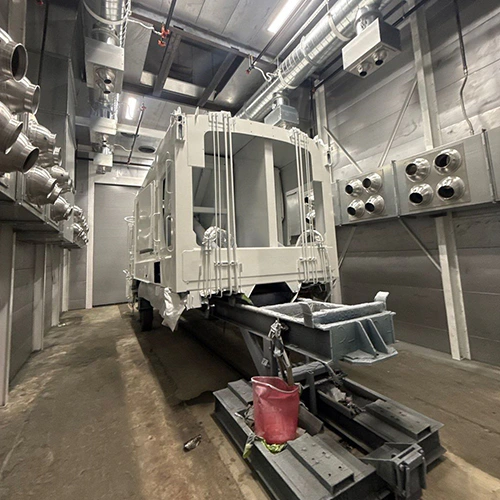
A generic replacement calendar cannot capture every blast booth’s condition. Follow required manufacturer inspections and service intervals, then use duty, media, operating history, and observed changes to identify additional review needs. Condition monitoring supplements scheduled requirements rather than replacing them.
Use operational trends alongside equipment-specific baselines and required inspections. Deciding when to call a specialist means distinguishing routine wear, unexplained process drift, and immediate stop-work concerns.
Anchor Your Baseline in Equipment Reality and Required Inspections
Each booth has a manufacturer-defined operating and maintenance scope. Wear also varies with the media, velocity, loading, and duty; combine required checks with condition and performance records.
To establish an effective baseline, start with the equipment’s operating documentation. For example, Clemco’s Models 1028 and 1042 manual emphasizes equipment-specific inspection routines, thorough operator training, and the direct mechanical relationships between compressed air supply quality, nozzle orifice enlargement, and blast performance. Numeric operating tolerances—such as minimum operating pressures, maximum nozzle throat expansion, and allowable motor amp draws—are model-specific metrics rather than universal industrial rules.
Your maintenance program must evaluate operational history against these manufacturer baselines:
- Duty cycle intensity: Track true arc-on hours rather than facility operating hours. A booth running four hours a week exhibits different failure modes than one cycling parts continuously across two shifts.
- Abrasive media characteristics: Record grade, shape, size, and operating conditions. Their effects on component wear depend on the equipment and process, not hardness or media family alone.
- Facility air supply stability: Blast pots and metering valves require clean, dry compressed air at stable volume. Moisture carryover from overloaded air dryers causes media clumping, erratic flow, and premature valve failure that operators often mistake for equipment defects.
Recognize Process Drift Across Core Subsystems
Performance trends can reveal some developing faults, although failures can also occur suddenly. Monitoring helps identify early equipment warning signs and supports the required inspections.
1. Visibility and Enclosure Integrity
Poor visibility or persistent dust can have several causes, including extraction, media breakdown, lighting, and process changes. Follow the site’s safe response and have qualified personnel assess openings, seals, collector conditions, and airflow; a symptom alone does not identify the fault.
Dust hazards depend on abrasive, coating, and substrate. Review actual composition and exposure rather than assigning every coating a higher hazard than clean steel. OSHA’s abrasive blasting ventilation requirements address continuous inward airflow and prompt clearance; room operators still have separate respiratory-protection duties.
2. Abrasive Metering and Recovery
Inconsistent abrasive delivery shows up as surging at the nozzle, pulsing blast patterns, or erratic surface profile depths. Look down at the recovery floor:
- Are mechanical augers, oscillating conveyors, or pneumatic sweeps leaving large drifts of spent abrasive on the floor?
- Is the reclaimer successfully removing fines and broken media, or is the working mix turning into dust that starves the blast pot?
A reclaimer that fails to balance air wash velocity against media density sends usable abrasive into the dust collector or returns dust fines to the storage hopper, choking metering valves and eroding blast hoses.
3. Nozzle Dynamics and Pressure Delivery
Nozzle wear can increase bore and air demand. A pressure change can also arise from supply, piping, valves, flow, or other demand. Compare recorded conditions and manufacturer limits before attributing it to the nozzle alone.
Nozzle-wear review: Compare bore, approved limits, delivered pressure/flow, and supply conditions. Greater bore can increase demand; it does not prove every pressure or production change is a nozzle fault.
4. Sacrificial Liners and Curtains
Wall curtains and ceiling baffles protect the structural steel envelope of the booth. Check for tears, loose hanging brackets, and localized curtain wear where direct rebound patterns strike the wall. When sacrificial rubber or polyurethane sheets fail, abrasive particles immediately begin scouring structural booth panels, rivet lines, and electrical conduits.
Triage: Routine Observation vs. Process Drift vs. Stop-Work Hazards
A symptom is an observable condition, not an immediate diagnosis. Production managers must triage booth abnormalities into clear categories: what stays in the routine logging system, what demands diagnostic verification, and what dictates an immediate halt to blasting operations.
Any covered servicing or troubleshooting that involves opening enclosures, unbolting inspection ports on recovery systems, or working on electrical drives requires the application of hazardous-energy control (lockout/tagout). Stored pneumatic energy and unexpected equipment startup pose severe crushing and injection hazards. Site stop-work procedures must supersede production quotas whenever personnel safety or containment barriers are compromised.
| Triage Level | Observable Symptoms | Operational Impact | Evidence to Gather for Service | Required Action |
|---|---|---|---|---|
| Routine Observation | • Normal nozzle orifice wear within manufacturer limits<br>• Expected dust cake build-up on collector cartridges<br>• Minor surface wear on sacrificial rubber curtains | Stable production rates; profile depth and media usage remain predictable. | • Operating hour logs<br>• Daily differential pressure readings<br>• Media top-off logs | Continue operations; order consumable replacements per schedule. |
| Unexplained Process Drift | • Persistent media surging or sputtering<br>• Media accumulating on booth floor recovery zones<br>• Blasting times climbing for identical part geometries<br>• Premature media breakdown or high media loss to the collector | Reduced throughput; erratic surface anchor profile; increased air and media consumption. | • Nozzle pressure readings under load<br>• Magnehelic gauge logs across pre-filters and collectors<br>• Sieve analysis of current media working mix | Schedule a qualified diagnostic service call; review operator blast technique. |
| Immediate Stop-Work Concern | • Dust plumes escaping doors, seams, or intake louvers<br>• Visible pinholes or wall thinning on the blast pot or piping<br>• Sudden drop in breathing air pressure or CO monitor alarm<br>• Violent vibration in the exhaust fan or reclaimer motor | Imminent risk of personal exposure, pressure vessel failure, structural damage, or fire/explosion. | • Specific location of structural or pressure breach<br>• Error codes and sensor trip logs<br>• Isolation lock tags and incident report details | Halt operations immediately; invoke site lockout/tagout procedures; call emergency service. |
Assemble an Actionable Service Request
Calling for qualified inspection without providing context leads to wasted diagnostic time and inconclusive visits. Service technicians need operational data before arriving on site to ensure they bring the right diagnostic tools, safety gear, and replacement assemblies.
Gather available records through safe, authorized observation and documented operating data. Any servicing or fault investigation must follow required isolation procedures; do not dismantle pressurized equipment or defeat controls to collect evidence.
Service Request Data Package
- Equipment Identification: Model, Serial, applicable vessel data
- Process Baseline: Abrasive, approved operating conditions, and air supply
- Substrate and Removed Coating
- Trend Logs: Collector/system readings and inspection history
- Symptom Timeline: Observable changes and authorized response
Compile the following technical dossier for your service provider:
- Machine Identity: Note the exact model, serial number, and year of manufacture for the booth enclosure, blast generator (pot), reclaimer, and dust collector. Locate the ASME data plate on the blast pot and record the maximum allowable working pressure (MAWP) and vessel serial number.
- Current Operating Variables: Document the specific abrasive media in use (type, brand, mesh size), manifold blast pressure, compressor capacity, and the ambient environment (temperature, relative humidity).
- Coating and Substrate Data: Detail the base metal and the exact coating system being removed. Heavy primers, mill scale, thermal spray coatings, and thick rubbers load reclaimers and dust collectors differently, changing service requirements.
- Logged Operational Shifts: Provide differential pressure readings from the dust collector’s Magnehelic gauge over the preceding weeks. Include nozzle orifice gauge measurements, daily blast run-time, and notes on when media and filter replacement was last performed.
- Traceable Symptom History: Describe the problem using timeline facts instead of guesses. State: "Differential pressure rose from 2.5 to 5.8 inches of water over three shifts, accompanied by visible particulate settling on the floor outside door seal #2," rather than "The vacuum isn't working."
Use Inspection Findings to Plan Maintenance or Capital Upgrades
A qualified service report should identify findings, supporting measurements, applicable limits, and recommended actions. The technician should choose pressure, electrical, thickness, or other checks appropriate to the equipment and suspected fault rather than perform every test on every booth.
Use these findings to update your standard operating procedures, establish accurate preventative maintenance cadences, and train operators on proper nozzle distance and media metering.
Where inspection finds significant degradation or a process no longer fits the equipment, compare qualified repair, component replacement, and suitable sandblasting booth options. Use remaining condition, support, performance, and total cost rather than assuming modernization is always necessary or cheaper.
If process drift is dragging down your production cycle times or your facility needs a comprehensive equipment evaluation, contact our engineering group to review your operational parameters or request a sandblasting booth quote.