
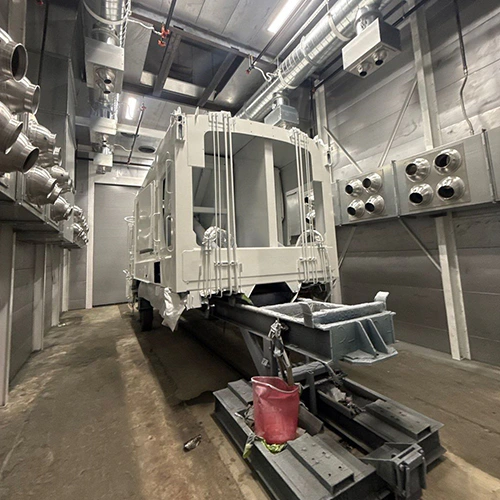
Installing an abrasive blast booth does not automatically reduce your facility's environmental footprint. It alters where, when, and in what form environmental burdens occur.
Uncontained blasting can release dust and spent material into nearby work or the environment. A suitably designed enclosure and collector can reduce those releases, but their performance must be verified. Assess the associated power demand, material use, collected waste, and any hazardous constituents from the actual process.
Evaluating whether a blast booth is genuinely "environmentally friendly" requires looking past equipment marketing. Facility managers must weigh fugitive airborne emissions against concentrated solid waste streams, continuous electrical draw, and virgin material extraction.
| THE ENVIRONMENTAL MASS BALANCE | Record |
|---|---|
| Inputs | Media, air-supply energy, ventilation energy, and coated substrates |
| Outputs | Accepted parts, collected dust, discarded media, and actual releases |
Evaluate containment, material use, waste, and energy together.
Defining the Baseline: Enclosure Reallocates Burdens
A blast room transforms uncontrolled environmental contamination into an engineered materials-handling process. It does not erase the mass of material removed from the substrate or eliminate the physical degradation of the abrasive itself.
Consider an open-yard maintenance blast setup using an expendable slag abrasive (such as coal or copper slag) to remove an industrial epoxy or primer. The baseline environmental impact here is characterized by high mass turnover:
- Record abrasive purchased, recovered, and discarded rather than assuming every expendable product loses all usable material on the first impact.
- Abrasive breakdown contributes particles of different sizes, including respirable dust.
- Removed coatings and substrates can contribute hazardous constituents; identify them from history, supplier data, and appropriate assessment.
Moving that operation into a blast room changes the balance sheet:
| Process Comparison | Evidence Needed |
|---|---|
| Field / Yard Blasting | Actual containment, recovery, waste, emissions, and energy |
| Enclosed Booth | Actual containment, recovery, waste, discharge, and energy |
Enclosure, collection, and compatible media recovery can reduce releases and fresh abrasive demand. Measure actual performance and losses for comparable accepted work; a room does not establish near-zero perimeter emissions.
Ventilation and recovery add equipment and energy demands. Collected dust contains the actual mixture of abrasive, substrate, and removed coating; neither toxicity nor chemical reactivity follows from enclosure alone.
A booth is not inherently low-impact. It is an engineering control that swaps uncontrolled external dispersion for an internal, energy-intensive waste-concentration process.
Dust Containment and Discharge: Collected Dust vs. Eliminated Pollution
Enclosing the blast zone provides process containment, but containment is not remediation. The fine particulate suspended in the blast air must be evacuated, separated, and either exhausted outside or returned to the workspace.
When assessing airflow, review OSHA’s abrasive blasting ventilation requirements for continuous inward flow at openings during blasting and prompt dust clearance afterward. They do not provide one universal air-change or face-velocity value. Worker exposure and external discharge performance require their own assessment.
Dust path: Generation → Extraction → Collection → Reviewed Discharge Arrangement
Verify particulate capture and failure conditions for the actual system.
A modern collector does not make its exhaust automatically benign. Review product-specific filter performance and these operating conditions:
- Cleaning Cycle: Check the collector’s actual performance during normal cleaning and production, using supplier data and any required monitoring.
- Filter Condition: Damaged filters, seals, or other faults can allow bypass. Select inspection, monitoring, and failure controls for the system and contaminants rather than assuming one universal detector or HEPA arrangement.
- Recirculation: Returning air to occupied space requires qualified review of actual contaminants, applicable rules, filtration, and failure conditions. A generic clean-exhaust claim does not establish suitability.
Match collection and discharge design to the process, dust, and site requirements. Our guide on industrial dust collection systems explains the equipment-review questions.
Recovery, Contamination, and the Disposal Reality
Marketing brochures frequently label media like garnet, steel grit, or crushed glass as "eco-friendly" because they are non-toxic in their virgin form and can be reused multiple times. This label can mislead facility managers responsible for environmental reporting.
Spent abrasive and dust must be evaluated using both the abrasive and the removed material. Virgin-product identity alone does not determine the waste classification.
Waste characterization: Abrasive + Removed Coating / Substrate → Collected Waste Streams → Documented Listed/Characteristic/Exclusion Determination
Use adequate knowledge or representative testing as applicable; not a universal TCLP rule.
When recyclable steel grit strikes a bridge girder coated with red-lead primer, lead shatters into microscopic fines. The booth's mechanical reclaimer—typically an air-wash separator paired with a bucket elevator—efficiently pulls off fractured media fines and coating dust to keep the working grit clean.
Collectors and separators gather different fractions of the spent mixture. Identify those streams and determine their classification; neither container size nor visible metal dust establishes RCRA hazardous status.
Under federal rules, abrasive identity alone does not classify a waste. EPA’s hazardous waste identification guidance distinguishes solid waste, exclusions, listed wastes, and hazardous characteristics. A qualified determination should include:
- Relevant process and material knowledge, with the basis for the determination documented.
- Representative testing where available knowledge is inadequate, using methods appropriate to the applicable characteristics and contaminants.
- Management under the applicable generator, accumulation, shipping, and receiving-facility requirements once the waste is classified.
Recovery may reduce discarded abrasive while concentrating different materials in separator or collector rejects. Compare actual waste mass and character for the same accepted output.
Generator category depends on the quantities of countable hazardous waste generated in a calendar month, with separate acute-waste thresholds. Concentration alone does not move a facility from VSQG to LQG; determine classification first, then count the applicable waste.
Review reducing abrasive waste alongside the quality and recovery data. For the characterization and management handoff, see sandblasting waste disposal.
Energy Demand vs. Material Throughput: The System Footprint
Comparing the environmental footprint of open blasting versus an enclosed booth requires evaluating the balance between material consumption and utility power demand.
Compare material supply, transport, recovery, and disposal for the actual process. Field work can also use containment and recovery; an enclosure does not by itself establish the lower lifecycle burden.
| Footprint Category | Compare Using Actual Data |
|---|---|
| Material | Supply, recovery, makeup, rejects, and disposal |
| Energy | Compressor, ventilation, recovery, and duty |
| Transport | Delivery and waste shipment assumptions |
To calculate the operational energy trade-off, evaluate the electrical components that run continuously during enclosed blasting:
Dust Collector Blower Motors
Record ventilation energy under representative duty, including any field containment or collection equipment. Use actual fan/system demand rather than assigning a standard CFM or horsepower range to every booth.
Mechanical Reclaim Drives
Measure recovery-system energy for the chosen mechanical or pneumatic design. Capacity, layout, media, separation, and duty affect the comparison; neither approach always consumes more power.
Blast Air Generation
Include compressor energy or fuel alongside measured nozzle demand, delivery losses, other users, and duty. A nozzle/PSI combination alone does not establish compressor power consumption.
A process that produces more accepted work per operating hour may reduce energy per part. Verify cycle time and surface acceptance in comparable trials rather than assuming steel grit always outperforms mineral media.
A booth that shortens compressor run times can lower net electrical usage per processed part, even while running its auxiliary fans and separators.
Environmental Tradeoff Analysis
The following matrix contrasts operational methods across containment, media demand, electrical draw, and waste outputs. Operational variables vary widely based on production schedules, nozzle size, and substrate geometry.
| Environmental Category | Uncontrolled / Open-Yard Blasting | Enclosed Booth (Single-Pass Media) | Engineered Booth (Recyclable Media Reclaim) | Key Tracking Metric |
|---|---|---|---|---|
| Fugitive Emissions | Measure releases and evaluate containment at the actual site. | Verify enclosure, collector, and discharge performance. | Verify the same functions with the selected recovery system. | Applicable release measurements and permit criteria. |
| Media Consumption | Record supplied, recovered, and discarded media. | Record actual single-pass consumption. | Record makeup, recovery, loss, and breakdown. | Media consumed per accepted area or part. |
| Waste Profile | Characterize separately collected spent material and dust. | Characterize floor and collector waste streams. | Characterize separator rejects and collector waste separately. | Waste mass and documented classification for accepted output. |
| Direct Energy | Include air supply, containment, collection, and handling actually used. | Include blast air, ventilation, and handling. | Include those loads and recovery equipment. | Total energy or fuel per accepted part. |
| Upstream Logistics | Record actual supply and waste transport. | Record actual supply and waste transport. | Record makeup supply and reject transport. | Delivered/discarded mass and transport assumptions. |
Match the parts, hazards, and workflow with available sandblasting booth options before choosing a recovery or floor configuration.
Building an Evidence-Based Facility Evaluation
Before investing in containment equipment to solve an environmental or permitting challenge, ground your decision in empirical facility data. A booth makes an operation more sustainable only if its structural dimensions, ventilation capacity, and media choices fit your specific production demands.
- ASSESS: Parts, Substrates, and Accepted Throughput
- PROFILE: Abrasive, Coatings, and Hazards
- CALCULATE: Power, Fuel, and Utility Demand
- AUDIT: Applicable Discharge and Site Requirements
- CLASSIFY: Waste Streams and Generator Category
- INTEGRATE: Handling, Recovery, and Facility Fit
To determine whether an enclosed blast booth will meet environmental, structural, and regulatory criteria at your facility, gather these operating details:
- Substrate & Part Envelope: What are the dimensions, weights, and geometries of the largest assemblies you process? What is the required production throughput per 8-hour shift?
- Current Coating Chemistry: What specific primers, intermediate coats, or topcoats will be removed? Are safety data sheets (SDS) or laboratory metal assays available for legacy coatings (particularly regarding lead, cadmium, and hexavalent chromium)?
- Facility Power & Utilities: What available three-phase electrical service (230V, 460V, or 575V) can be allocated to the dust extraction blowers and reclaim equipment? What is your dry, compressed air capacity (CFM at psi)?
- Air Permitting Constraints: What are your local environmental agency caps on stack emissions, opacity limits, and requirements for exhaust air monitoring or noise abatement?
- Existing Waste Handling: Is your facility operating as a VSQG, SQG, or LQG under hazardous waste regulations? What testing, storage, and manifesting agreements are currently in place with your waste-management haulers?
- Floor Infrastructure: Can the proposed loads and recovery/handling configuration fit the actual slab, height, access, and any required site work?
Provide these details so the equipment team can review recovery, ventilation, utilities, and site fit against the environmental evidence and production requirements. When ready, request a sandblasting booth quote for the proposed process.