
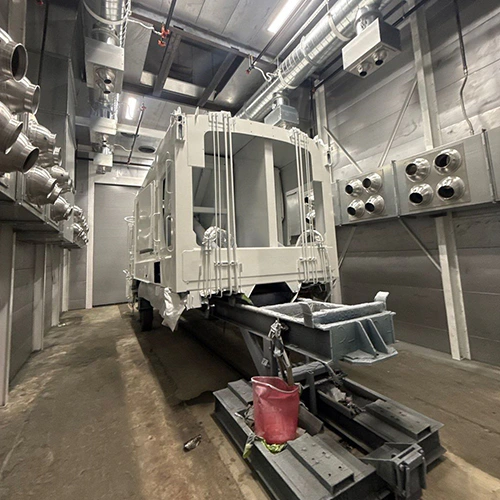
Every abrasive blasting operation balances three competing operational targets: cycle time, surface specification, and operational cost. Outdated supply catalogs frequently simplify this balance into misleading claims about "universal" media, "zero-damage" plastic beads, or "dust-free" minerals. In production environments, those simplifications cause failed coatings, plugged reclaimers, damaged substrates, and unexpected downtime.
Selecting the right abrasive is an engineering decision based on substrate metallurgy, coating type, and surface profile specifications. To choose the right media, you must look past trade names and evaluate physical properties: hardness, density, particle shape, and size distribution.
Aligning Surface Objectives with Substrate Integrity
Abrasive selection begins with defining the specific mechanical objective on a specific substrate. Blasting tasks fall into four distinct operational categories, each requiring different abrasive behaviors:
- Cleaning: Removing rust, mill scale, or other surface material to the required cleanliness standard. Oil, grease, and soluble contaminants may need separate cleaning; blasting alone does not establish their removal or preserve dimensions.
- Stripping: Removing elastic or brittle coatings (e.g., polyurethanes, epoxies, powder coats) from the substrate. Media, grade, equipment settings, and coating behavior together determine removal performance.
- Profiling (Anchor Pattern): Cutting or deforming a substrate to create the surface texture required by the coating specification. Use its specified measurement method; average roughness and peak-to-valley profile are different quantities.
- Finishing and Peening: Using appropriate media to produce a cosmetic texture, deburr a surface, or carry out a controlled peening process. Dimensional change and peening performance require their own acceptance checks.
Mismatching the abrasive to the task can create severe quality defects. Angular mineral media can alter a precision-machined surface, while rounded glass beads may not produce the profile required by a coating specification. Detailed job-by-job scenarios are covered in our companion guide on abrasives for different applications, but the starting point is always the substrate's mechanical limits and the coating manufacturer's surface profile specification.
Physical Properties: Shape, Size, Hardness, and Density
Abrasive performance is governed by four basic physical properties. There is no single "aggressiveness ranking" because changing any one of these four properties fundamentally changes how energy transfers to the work surface.
Kinetic Energy per Particle: Ek = (1) / (2)mv2
- m = particle mass (governed by density and size)
- v = impact velocity (affected by nozzle and operating conditions)
| Particle Interaction at the Surface | Typical Mechanism |
|---|---|
| Angular (Grit) | Shearing, cutting, and micro-machining |
| Spherical (Shot) | Compression, dimpling, and peening |
1. Shape (Angular vs. Spherical)
- Angular and Sub-Angular Grit: Features sharp edges and multifaceted cleavage planes. Upon impact, angular grit acts like microscopic cutting tools, shearing coatings and gouging angular anchor profiles into hard surfaces.
- Spherical Bead and Shot: Round or sub-rounded media generally produce a dimpled rather than sharply cut texture. Finishing and controlled shot peening are different processes; fatigue benefits require a qualified peening specification and process control.
2. Hardness (Mohs vs. Rockwell C)
Hardness influences whether an abrasive cuts the substrate, deforms, or fractures, alongside its toughness, shape, and impact conditions. Mineral and non-metallic media are often described on the Mohs scale, while metallic media may use Rockwell or other specified hardness scales. Read the product grade rather than assigning one range to every metallic abrasive.
- Rule of thumb: Relative hardness helps screen profiling candidates, but does not determine removal performance on its own.
- Softer media may remove coatings from harder substrates with less substrate cutting; particle breakdown depends on the media and process conditions.
- Hard particles can embed in some substrates. Assess contamination risk from the media chemistry, substrate, and acceptance standard; hardness alone does not establish galvanic corrosion.
3. Density and Specific Gravity
Density influences particle mass (m). At equal particle volume and impact velocity, a denser particle has greater kinetic energy (Ek = (1) / (2)mv2). Actual impact velocity and removal performance also depend on the equipment and operating conditions.
- Dense media (e.g., steel grit) are candidates for demanding scale-removal and profiling work when the equipment and surface specification permit them.
- Low-density media (e.g., agricultural shells or plastics) are candidates for selective cleaning or stripping. Lower density does not guarantee dimensional preservation.
4. Size and Mesh Distribution
Media size is classified by standardized screen mesh numbers (e.g., 16-mesh coarse down to 325-mesh ultra-fine).
- Coarse particles generate fewer impacts per pound of media, but each particle carries high kinetic energy, resulting in a deeper, wider surface profile.
- Fine particles provide more particles per unit mass. Finer grades can improve coverage and cleaning speed for suitable tasks, but the result depends on coating, substrate, media flow, and equipment conditions.
When balancing cut rate, profile depth, and media longevity, reviewing GMA’s abrasive selection criteria provides a framework for matching the substrate, removal task, surface profile, and preparation standard to a product candidate.
Abrasive Media Families: Performance and Role Comparison
To read a supplier's Technical Data Sheet (TDS) effectively, you must understand where each material family fits on the spectrum of hardness, recyclability, and application intent.
| Media Family | Material Type | Particle Shape | Typical Role | Qualification Before Selection |
|---|---|---|---|---|
| Natural Minerals | Almandine Garnet | Sub-angular | General steel fabrication profiling, maintenance blasting | Product grade, target profile, dust generation, and reclaim fit |
| Natural Minerals | Staurolite | Sub-angular | Rust, mill scale, and coating removal | Supplier data and a substrate-specific trial |
| Manufactured Minerals | Brown/White Fused Aluminum Oxide | Sharp angular | Alloy profiling, specified aerospace prep, glass etching | Product purity, process approval, equipment wear, and grade |
| Manufactured Minerals | Silicon Carbide | Sharp angular | Hard materials, ceramics, stone carving | Substrate risk and compatible equipment |
| Byproduct Slags | Coal / Copper / Nickel Slag | Angular, irregular | Structural stripping, tank maintenance | SDS, dust hazards, grade, and disposal assessment |
| Recycled Minerals | Crushed Glass | Angular | Cleaning and coating removal | Product composition, substrate trial, and equipment fit |
| Ferrous Metals | Cast Steel Shot | Spherical | Foundry descaling, specified peening, wheel blasting | Contamination restrictions, hardness grade, and recovery system |
| Ferrous Metals | Cast Steel Grit | Angular | Blast room profiling, coating removal | Profile specification, hardness grade, and recovery system |
| Metallic Abrasives | Stainless Steel Shot/Grit | Round or Angular | Selected stainless and non-ferrous applications | Alloy, contamination specification, and trial approval |
| Engineered Glass | Soda-Lime Glass Beads | Spherical | Satin finishing, light deburring, cosmetic blending | Required texture, dimensional limits, and grade |
| Soft / Agricultural | Crushed Walnut Shell | Angular, faceted | Selected cleaning and deflashing tasks | Substrate trial, combustible-dust review, and approved equipment |
| Specialty Salts | Sodium Bicarbonate (Soda) | Crystalline | Selected cleaning and stripping tasks | Residue removal, coating compatibility, and dedicated equipment |
Mineral Abrasives for Cleaning and Profiling
Mineral abrasives dominate general fabrication, field maintenance, and structural fabrication. However, distinct chemistry and sourcing dictate their profile behavior and regulatory footprints.
| Raw Stock Entry | Material Family |
|---|---|
| Natural Minerals | Garnet, Staurolite |
| Byproduct Slags | Coal, Copper Slag |
| Manufactured Oxides | Aluminum Oxide, Silicon Carbide |
- Almandine Garnet: A natural mineral used for cleaning and profiling. Product grade and operating conditions affect profile, dust generation, and recycling potential. Confirm reuse performance with the supplier and the actual reclaim system.
- Manufactured Aluminum Oxide: Used in specified industrial surface-preparation and cabinet applications. Its hardness can increase wear on components contacting the abrasive. Review product purity and contamination limits; a low-iron grade does not by itself prevent rust.
- Byproduct Slags (Coal, Copper, Nickel Slags): Common expendable abrasives for structural and field work. Product composition, particle distribution, breakdown, and dust generation vary; review the specific SDS and supplier data.
- Crushed Glass (Amorphous Silica): Often made from recycled glass and used for cleaning or coating removal. Confirm recycled content, crystalline-silica content, product grade, and substrate suitability from current supplier documents rather than assuming zero contamination or a universal reclaim life.
Critical Safety Note on Crystalline Silica: Clemco advises against silica sand as a blasting abrasive because crystalline silica exposure can cause serious, irreversible lung disease (silicosis). Select an appropriate substitute using the equipment manual, SDS, and exposure assessment; substitute abrasives and removed coatings can still create hazardous dust.
Metallic Grit and Shot
Metallic abrasives can be economical in compatible closed-loop blast facilities and wheel-blast machines because they can withstand repeated use. Compare actual media loss, breakdown, recovery, and operating costs before judging lifecycle cost.
- Cast Steel Shot: Spherical steel pellets used for descaling and specified peening processes. Shot generally imparts a rounded texture; fatigue performance depends on a controlled peening process rather than ordinary blast cleaning alone.
- Cast Steel Grit: Angular metallic media offered in different hardness grades:
- Softer grades tend to round in service; check how the working mix affects cleaning and profile.
- Harder grades may retain cutting edges longer, with different breakdown and wear behavior. Confirm performance for the specified product and operating conditions.
- The Ferrous Contamination Hazard: Carbon steel media can introduce free-iron contamination on stainless steel and non-ferrous parts. Follow the component’s process and contamination specification. Stainless media or suitable non-metallic media may be candidates, but their grade, purity, and prior use also require review.
Rounded and Lightweight Finishing or Stripping Media
When base dimensional limits require tight tolerances, or when cosmetic uniformity takes priority over anchor profiling, rounded or lightweight media may be candidates:
- Glass Beads: Used in suitable cabinets for selected cleaning, light deburring, and satin finishing tasks. They produce a different texture from angular grit; confirm profile and dimensional limits rather than assuming zero etch.
- Plastic Media (Urea, Melamine, Acrylic): Available for selected coating-removal tasks on sensitive parts. The media grade and approved process determine whether anodized layers, cladding, composites, or soft substrates can be preserved.
- Agricultural Media (Walnut Shells, Corn Cob): Soft media used for selected delicate cleaning tasks. Confirm dimensional effects and combustible-dust compatibility; organic abrasives that are combustible are limited to automatic systems under OSHA’s general-industry abrasive-blasting rule.
- Sodium Bicarbonate (Baking Soda): A water-soluble medium used for selected cleaning and stripping tasks. Confirm equipment compatibility, residue-removal needs, and coating acceptance. It does not provide a universal no-damage or ignition-safety guarantee.
Equipment Compatibility: Reclaim Systems, Airflow, and Cross-Contamination
Abrasive selection influences machine configuration. Loading an abrasive outside your equipment's operating envelope can cause flow problems, accelerated wear, or poor performance. Confirm the exact machine, metering valve, nozzle, and recovery system with their manufacturers.
| Recovery Approach | Qualification |
|---|---|
| Pneumatic Lift | Verify media density, particle size, and approved system configuration |
| Mechanical Lift | Verify media compatibility, transport capacity, and separation performance |
Both approaches require separation of reusable abrasive from fines and debris before return to the blast machine.
Reclaim Mechanics (Pneumatic vs. Mechanical)
Recovery systems return spent media to the blast machine while separating reusable grain from broken dust and paint chips:
- Pneumatic Recovery: Uses an air stream to transport spent abrasive to a reclaimer. Clemco’s abrasive recovery guidance offers pneumatic systems for a range of recyclable media, with density and particle-size limits that vary by configuration. Verify the specific system’s operating envelope, particularly for dense metallic media.
- Mechanical Recovery: Uses equipment such as floor screws, conveyors, and bucket elevators to transport abrasive. It can suit dense metallic media, but compatibility with softer media and expected breakdown depends on the particular design.
Machine and Nozzle Air Balance
Air pressure influences media velocity, particle fracture, and productivity. According to Clemco’s blast-machine air and media guidance for Models 1028 and 1042, air requirements vary with nozzle bore and pressure. Its consumption figures are approximate, refer to new nozzles under stated conditions, and are not a compressor-sizing recommendation.
A nozzle change can increase air demand or fall outside a machine’s supported configuration. The Models 1028 and 1042 manual, for example, does not recommend nozzles larger than 1/4 inch for its supplied 1/2-inch blast hose. It also notes that exclusive use of plastic or some lightweight media requires a different machine-bottom configuration. Use the actual equipment and media guidance for the proposed process.
- CFM Demand = f(Nozzle Bore, Operating Pressure)
- Wear Rate = f(Abrasive Hardness, Particle Velocity, Media Angle)
Media Stream Dedication and Facility Setup
Mixing media or running different alloys through a shared reclaim system can undermine quality control:
- Cross-Contamination: Residual abrasive and removed material can contaminate later parts. Establish a dedicated stream or an approved changeover process when the component specification requires it.
- Airwash Imbalance: Reclaim separators must distinguish usable abrasive from fines and debris. Mixing media with different densities or particle distributions can interfere with separation; confirm the approved media and settings with the supplier.
- Media Degradation Monitoring: Watch for media replacement signals—such as rising dust, falling blast speed, or a changing surface profile. Investigate abrasive breakdown alongside equipment, ventilation, and process conditions rather than attributing every symptom to spent media.
When planning capital investments, evaluating your sandblasting booth options early helps match recovery equipment and dust collection to the intended media, removed material, and production demands.
Taking a Material Shortlist to a Controlled Shop Trial
Before committing to production quantities, arrange a supplier-supported controlled trial on representative material. Confirm that the trial equipment, exposure controls, and media are suitable for the proposed process.
Gather the following four technical baselines before running your test:
1. Documentation Packet
- Current Technical Data Sheet (TDS): Verify bulk density, sieve distribution curves, Mohs/HRC hardness, and specific gravity.
- Safety Data Sheet (SDS): Review composition and hazards alongside the coatings and substrates being removed to plan ventilation, personal protection, and waste assessment.
2. Operational Substrate Data
- Base metal alloy, heat treatment state, and structural wall thicknesses.
- Pre-blast surface condition: scale thickness, rust grade (SSPC/NACE levels), oil presence, or existing dry film thickness (DFT) of the target coating.
3. Machine Configuration Baseline
- Operating pressure and media-flow conditions documented by qualified personnel using the equipment manufacturer’s approved methods.
- Nozzle size, nozzle profile (straight bore vs. wide-throat Venturi), and internal air volume (CFM) availability.
4. Measurable Acceptance Criteria
Replace subjective impressions ("looks clean") with quantifiable quality thresholds:
- Anchor Profile: Measure peak-to-valley profile using surface replica tape (e.g., Testex) and a calibrated spring micrometer.
- Surface Cleanliness: Audit against recognized visual standards (e.g., SSPC-SP 10 / NACE No. 2 Near-White Metal).
- Process Time: Record cycle time per square foot or component.
- Media Breakdown Rate: Record clean media added, usable media recovered, and discarded fines using comparable measurements over a defined trial period.
Evaluating Your Blast Process
Optimizing your blasting process requires balancing substrate tolerances, target cleanliness specifications, and material handling systems. Abrasive selection dictates your capital requirements, dust collection demands, and overall production speed.
If you are standardizing a new finish, updating legacy media specifications, or reviewing enclosure equipment for an operational expansion, share your substrate alloys, target profile requirements, and facility layout to request a sandblasting booth quote or receive an application-specific equipment review.