
Selecting an abrasive by reputation alone can lead to rework, slow production, or substrate damage. One media type is not "best" across an entire facility: a process suited to a coated structural beam may damage a thin panel or fail a stainless component’s contamination limits.
Process buyers, shop owners, and production managers need a repeatable method to narrow dozens of commercial blast media down to two or three trial candidates. That selection starts with your job parameters—removal burden, substrate tolerance, and coating acceptance specs—rather than vendor catalogs.
Define the Job Parameters Before Selecting Media
Specifying an abrasive without clear targets increases the risk of an unsuitable process. Media selection depends on what is coming off, what must remain, and what the next operation requires.
JOB PARAMETER EVALUATION
- Removal Load: Mill scale, Multi-coat, Thin flash
- Substrate: Yield strength, Thickness, Chemistry
- Profile / Spec: Depth, Cleanliness, Recoat spec
Use these requirements for Media Shortlist Selection.
Before reviewing media types, define these four variables:
- Removal Burden: Identify the coating system, rust condition, and scale. Their thickness, adhesion, and mechanical behavior influence the suitable media and process; do not infer one removal rate from the coating family alone.
- Substrate Limits: Document the alloy, temper, wall thickness, and part geometry. Heavy plate steel can absorb aggressive mechanical impact, but cold-rolled sheet, cast aluminum, and fiberglass yield or distort under high impact forces.
- Cleanliness Standard: Identify the required preparation standard, such as SSPC-SP 10 / NACE No. 2 or SSPC-SP 6 / NACE No. 3 where specified, and any separate oil, salt, or dust limits.
- Anchor Profile Requirements: Check the coating manufacturer’s product data sheet and project specification. A visually clean surface can still fail the required texture or profile; verify it independently.
While particle hardness, shape, and density determine impact behavior—details detailed in our guide on abrasive material properties—your immediate task is identifying which media classes meet your job requirements.
Shortlist for Cleaning and Profiling Robust Metal
Carbon steel, heavy iron castings, and thick structural weldments handle high-energy impact. Here, the primary objectives are surface cleanliness, profile generation, and stripping rate per hour.
FERROUS PROFILING MEDIA
Compare suitable Slag, Steel Grit, Garnet, and Aluminum Oxide products using actual cutting, breakdown, recovery, contamination, and cost data.
Media Comparison for Heavy Fabrication
| Abrasive Family | Typical Trial Role | Qualification |
|---|---|---|
| Garnet | Cleaning and profiling steel or other approved substrates | Product grade, target profile, dust, contamination, and recovery fit |
| Steel Grit | Profiling and cleaning in compatible systems | Hardness grade, component contamination limits, recovery fit, and actual reuse performance |
| Aluminum Oxide | Specified alloy preparation or profiling | Purity, size, substrate risk, and equipment wear |
| Coal / Copper Slag | Selected structural and field jobs | SDS, particle grade, dust generation, waste handling, and trial acceptance |
Balancing Productivity and Profile Depth
GMA’s abrasive selection criteria uses the substrate, removal task, profile, and preparation standard to identify product candidates. Grain size affects coverage and profile, but grade and operating conditions must be tested against the actual job.
Steel grit may offer favorable lifecycle costs in a compatible recovery system. Hardness grades differ in rounding, fracture, cutting, and equipment wear; confirm the supplier’s designation and performance rather than assigning universal hardness labels or reuse counts.
Aluminum oxide is a candidate for some hard-material or specified surface-preparation tasks. Compare cutting rate, contamination limits, equipment wear, and recovery economics in a controlled trial.
Mineral slags are common expendable candidates for field work. Their composition and breakdown vary by product; assess dust, visibility, collector loading, and waste rather than assuming a universal performance ranking.
Shortlist for Stripping Sensitive Parts or Finishing
Blasting non-ferrous metals, thin-gauge panels, rotating equipment, threads, and machined surfaces shifts the priority from cutting speed to substrate preservation. High-density, sharp abrasives can quickly peen critical dimensions, gall bearing faces, or work-harden metals to the point of dimensional distortion.
SUBSTRATE SENSITIVITY
Compare approved finishing or selective stripping candidates—such as Glass Bead, Plastic Media, or Walnut Shells—against the actual part’s dimensional, surface, and contamination limits. No family guarantees zero substrate cut.
The media in this category are conditional candidates—not guaranteed harmless solutions. Operator technique, standoff distance, and blast pressure ultimately govern part safety, as outlined in our guide on avoiding damage when blasting painted surfaces.
- Glass Bead: A candidate for specified satin finishing, selected cleaning, or light deburring. Rounded media produce a different texture from angular grit. Limitation: Grade and operating conditions affect breakdown, embedment, dimensions, and profile; there is no universal safe-pressure threshold.
- Plastic Media: Available in product-specific resin types and hardness grades for selected coating-removal tasks. Limitation: Verify substrate and retained-layer integrity under an approved process; plastic does not guarantee zero etch or no damage.
- Walnut Shells: A candidate for selected soft-media cleaning and deflashing tasks. Limitation: Confirm dimensions, residue, and equipment suitability. Organic abrasives that are combustible are limited to automatic systems under OSHA’s general-industry abrasive-blasting rule.
- Sodium Bicarbonate / Soda: A water-soluble medium used for selected cleaning or stripping processes. Limitation: Confirm equipment fit, residue removal, and coating acceptance with the suppliers; do not assume a no-heat, no-etch, or universal neutralization process.
Rounded or softer media can still damage a part. Pressure, media flow, angle, distance, exposure time, grade, and part support interact; validate the process against the actual acceptance criteria.
Check Contamination, Reclaim, and Next-Coating Compatibility
A medium that excels on test panels can create significant operational problems if your blast machinery and downstream processes cannot accommodate it.
| EQUIPMENT & PROCESS COMPATIBILITY CHECKS | Review |
|---|---|
| Equipment Fit | Valve metering; Booth ventilation; Static grounding |
| Air & Reclaim Match | Pneumatic vs Mechanical; Blower CFM sizing; Air-wash balance |
| Coating Compatibility | Embedment tolerance; Soluble salt limits; Chemical residues |
Media Density and Reclaim Mechanics
Media density and particle size affect transport and separation. Confirm the proposed product against the recovery system’s approved operating envelope:
- Pneumatic Reclaim Systems: Transport media in an air stream. Product density and size limits vary by system; some configurations support metallic media while others do not.
- Mechanical Reclaim Systems: Use conveyors or elevators. Verify media compatibility, breakdown, and separator performance for the particular design rather than assuming every lightweight medium is unsuitable.
Review Clemco’s abrasive recovery guidance when configuring air-wash separators and cyclonic drop-out chambers to prevent dumping good media into the waste drum.
Air Consumption and Delivery Calibration
According to Clemco’s blast-machine air and media guidance for Models 1028 and 1042, consumption varies with nozzle bore and pressure under stated conditions. Its figures are approximate references for new nozzles, not a universal air-capacity rule.
Match metering valves and machine configuration to the approved abrasive. The cited small-machine manual, for example, notes limitations with steel media and a different bottom configuration for exclusive use of plastic or some lightweight media.
Chemical and Mechanical Compatibility
Downstream adhesion failures often stem directly from using the wrong media chemistry:
- Ferrous Contamination: Carbon steel media or a contaminated shared media stream can introduce free iron on sensitive parts. Follow the component specification for media chemistry, purity, dedicated streams, and approved changeover controls.
- Soluble Salts: Confirm the abrasive and prepared surface against specified contamination limits. Test-method standards do not themselves establish a universal acceptance limit; use the applicable product, project, and coating requirements.
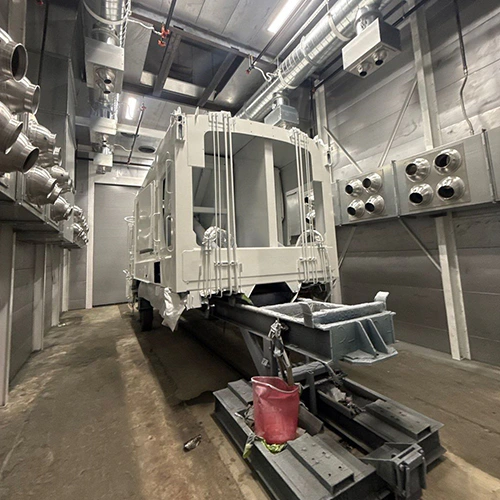
- Dust and Surface Cleanliness: Friable media generate dust clouds that coat freshly blasted metal. If the blast room's ventilation velocity is too low to clear airborne fines before they settle, paint-to-steel adhesion drops sharply. Evaluate your operational layout and sandblasting booth options to ensure adequate cross-draft or downdraft airflow for your chosen media.
Make the Decision with a Representative Trial
Before committing to production quantities, have qualified personnel arrange a controlled trial on representative parts with suitable equipment and exposure controls. Evaluate the result against agreed acceptance criteria.
MEDIA TRIAL FLOW
- Qualified personnel document approved machine and process conditions.
- Run a representative Test Part and time the process.
- Log profile, removal rate, dust, media use, and substrate acceptance.
- Calculate True Run Cost.
Trial Setup Matrix
Use the matrix below to match common industrial blasting jobs with appropriate trial candidates and critical inspection checkpoints:
| Target Component / Job | Trial Candidates to Consider | Acceptance Questions |
|---|---|---|
| Structural Steel Plate / Weldments | Suitable steel grit, garnet, or other approved angular abrasive | Does cleanliness and measured profile meet the actual coating specification? |
| Hot-Rolled Pipe Spools (Mill Scale) | Suitable mineral or manufactured abrasive grades | Does removal meet the specified cleanliness at an acceptable cycle time? |
| Machined Aluminum Housing | Approved plastic or other selective process | Are bores, threads, dimensions, and retained layers within the component specification? |
| Stainless Process Tank (Food/Pharma) | Approved non-ferrous-contaminating media for the required finish | Does the specified texture and contamination assessment pass? |
| Automotive Body Panels (Sheet Metal) | Qualified selective stripping process or an alternative method | Are panel geometry, dimensions, and surface condition acceptable after stripping? |
Media Trial Record Sheet
Track these parameters during trial runs to calculate the true cost of blasting rather than just upfront media expenses:
TRIAL RECORD SHEET
- Identity: Date, Operator, Part ID, Abrasive Brand/Type, Mesh / Grade
- EQUIPMENT SETUP: Nozzle Type, Orifice Size, Operating Pressure, Blast Hose ID, Approved Media-Flow and Separator Conditions
- PERFORMANCE METRICS: Surface Area, Total Blast Time, Stripping Speed, Media Added/Recovered, Waste Collected
- QUALITY ACCEPTANCE: Specified Visual Cleanliness, Surface Profile Readings/Method, Substrate Condition, Residual Dust/Contaminant Assessment
- Decision: Accepted process, adjustments by qualified personnel, or rejected candidate
Evaluating Whole-Cycle Blasting Economics
A lower bag price may not produce a lower cost per accepted part. Include the actual consumption, labor, recovery, disposal, and rework data:
True Cost = Media Consumption + Labor + Disposal + Rework Risk
- Labor Productivity: Compare measured preparation rate and whole-cycle labor for each acceptable candidate.
- Breakdown and Reclaim Life: Measure usable media recovery, makeup consumption, discarded fines, and waste handling over the trial.
- Coating Rework: Include the risk and cost of failed preparation or coating acceptance rather than assuming one fixed rework multiplier.
Select media that provide a reliable, repeatable process. Once your trial data proves a specific abrasive grade delivers the required profile and production speed within your equipment’s operating envelope, lock in that exact product specification.
If you are upgrading an existing facility, matching media to recovery ductwork, or installing a new production cell, our engineering team can help you evaluate your part profiles and equipment configuration. Contact our specialists to discuss your substrate, coating, and volume requirements, or request a sandblasting booth quote to review purpose-built enclosures, ventilation, and media reclaim systems for your shop floor.