
Start with the job, not the collector
Dust collector sizing goes off track when a buyer starts with one question: "What CFM unit do I need?" That sounds practical, but it skips the harder part. A sandblast room and a paint bay support area can both need dust collection, yet the airborne load, capture method, filter demand, and maintenance burden may be nothing alike.
The better starting point is the job itself. What creates the particulate? How often does that work run? Is the collector meant to pull from one enclosed area, one sanding station, or several dry-prep points across the building? Will the system return filtered air to the space, or will it discharge outdoors?
Those answers shape the quote more than room dimensions by themselves. Paintbooth.com offers industrial dust collectors for blast work, sanding, surface preparation, powder handling, and other dry particulate applications. The right size depends on how dust is created and how you plan to capture it.
Two buyers can ask for "dust collection" and need very different systems
Picture a steel fabricator building a blast room for heavy parts. Operators spend long stretches blasting weldments, rust scale, and old coatings from large pieces. The room sees a high debris load, media breakdown, and daily cleanup. That buyer needs to define enclosure size, blast media, part handling, run hours, and where the collector can sit without turning filter service into a ladder-and-forklift problem.
Now picture a finishing shop with a prep bay next to coating operations. Technicians sand filler, feather edges, and grind small defects before parts move into paint. The dust source is local, dry, and recurring, but it is not spray booth exhaust. That buyer needs to define how many work points run at once, whether the collector should stay close to the bay, and how to keep prep dust from drifting into nearby finishing work.
Both buyers are sizing a dust collector. They should not expect the same answer.
What you should define before anyone talks model numbers
Dust collector quotes get sharper when the buyer can describe six things clearly.
First, name the process. Abrasive blasting loads a system differently than sanding, deburring, or bulk powder handling. "General dust" is too vague to be useful.
Second, describe the capture method. Are you collecting from a blast room, a bench, a table, a hood, an enclosure opening, or a short run behind a prep station? A collector sized for room-level capture may be a poor fit for source capture, and the reverse is just as common.
Third, map the duty cycle. A station used for an hour here and there does not place the same demand on filters and cleaning cycles as a blast room that runs most of the shift.
Fourth, show the layout. The supplier needs to know where the collector can sit, how duct runs would reach the work area, whether doors or cranes cross the path, and how a technician will change filters or empty dust drawers without shutting down half the shop.
Fifth, explain the dust itself. Heavy particulate, abrasive fines, and mixed debris can call for a different approach than lighter prep dust.
Sixth, decide whether this system handles dry particulate only or whether someone is trying to fold paint booth airflow into the same request. If the project touches booth ventilation, keep that discussion separate and review paint booth exhaust system basics on its own terms.
Why CFM alone is not enough
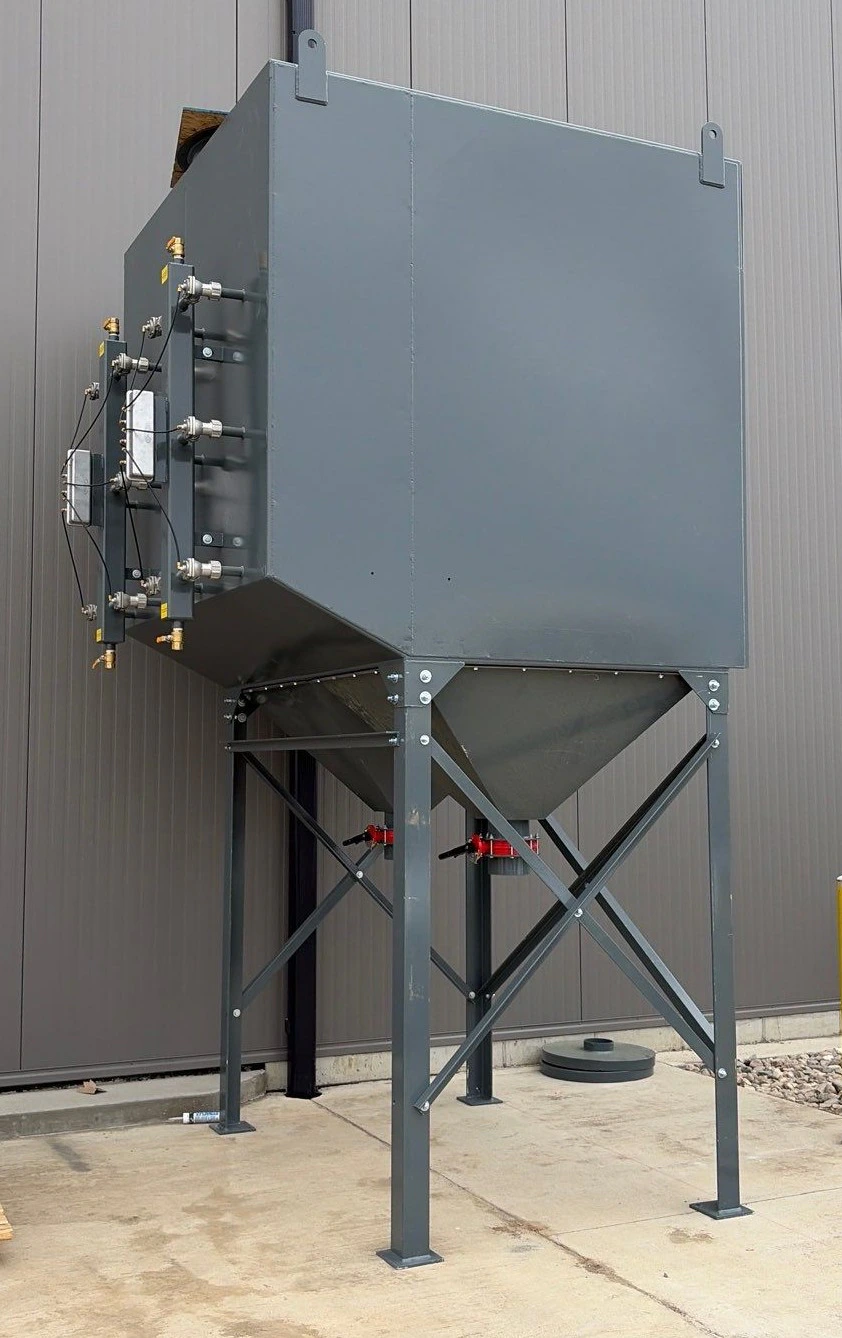
CFM matters, but it only means something when tied to the pickup method, filter area, and dust load. Paintbooth.com's cartridge collector family runs from compact shop systems to very large industrial units; current listings reach 350 HP and 143,400 CFM. That spread tells you one thing fast: there is no useful "standard size" for a sandblast room or prep bay.
If a quote starts and ends with airflow, you still do not know whether the collector has enough filter media, whether dust will load the cartridges too quickly, or whether the inlet arrangement makes sense for the way material enters the system.
This is where air-to-cloth ratio earns a place in the discussion. Buyers do not need to calculate it on their own, but they should expect the supplier to think about it. A collector can move air and still struggle if the filtration section is working too hard for the particulate load. That tends to show up later as short filter life, more cleaning cycles, and capture that fades as the system loads up.
Local module or central collector?
For some shops, a compact dust collector placed directly at the work area is the cleanest answer. The ACTion Booth material describes a rear-positioned module with an oversized inlet, vertical louvers, pulse cleaning, and removable dust drawers. The layout is aimed at small-to-medium work areas where floor space is limited and the dust source is predictable, such as sanding, blasting, deburring, or powder-related cleanup.
That kind of arrangement makes sense when one bay does the work and you want to keep the collection path short. It can also simplify maintenance because the collector stays close to the process it serves.
Other shops need one collector tied to several points. Maybe the blast room is on one side of the department, two sanding benches run nearby, and a separate dry-prep station comes online during second shift. In that case, the question is no longer "Which small collector fits the bay?" It becomes "Should this facility have a central cartridge collector sized around simultaneous use, duct routing, and service access?"
Neither choice is automatically cheaper in the long run. A local module that is too small or too isolated can leave the rest of the department dirty. A central system can add duct cost, floor planning headaches, and maintenance complexity if the work really belongs in one contained area.
The sandblast room scenario: what changes the quote
In a blast room, the collector is tied to a rougher environment. Buyers should be ready with room dimensions, the type of parts being blasted, how operators move inside the enclosure, and whether dust collection is tied to room airflow, point collection, or both.
Maintenance access matters more here than many first-time buyers expect. Heavy debris loads can turn a good collector into a nuisance if cartridge access is cramped or dust discharge is awkward. Ask where filters are serviced, how pulse cleaning is handled, and what collected material will drop into: drawers, hoppers, or another discharge method.
You should also tell the supplier whether the room runs in short batches or for long daily stretches. A blast room used for occasional restoration work is a different sizing problem than a production blast operation running through the week.
If your project is still sorting out enclosure airflow, this sandblasting booth airflow guide is a useful companion read. It helps frame the room-side questions while the collector quote focuses on equipment selection.
The paint bay support scenario: keep dry prep separate from booth exhaust
A prep bay near paint work creates one of the easiest buying mistakes in this category. Because the space sits next to coating operations, teams sometimes describe the whole area as "paint bay ventilation" even though the collector is really there for sanding, grinding, or other dry surface prep.
That distinction matters. A dust collector can be a strong fit for dry prep support; it is not a substitute for spray booth exhaust. The cleaner the buyer keeps those scopes, the better the quote.
For this type of project, buyers should note how many technicians work at once, whether sanding stays in one zone or moves around the bay, and whether the collector should be tucked behind the work area to save floor space. A compact cartridge unit may fit well if the bay handles recurring localized dust and the shop wants easy access to filters and dust drawers. If several prep points run across the department, the supplier may push the conversation toward a larger cartridge collector strategy instead of one small module.
The practical question is simple: where is the dust born, and how far should it travel before capture? Shorter is usually better.
Filter cleaning, service access, and returned air
Buyers tend to focus on first cost. Operators live with service access.
If a collector uses cartridge filters and pulse cleaning, ask how those filters are inspected, how often dust is discharged, and whether routine service happens from a comfortable working height. The ACTion Booth material stresses vertical cartridge access and removable drawers for a reason. Dust collection equipment that is awkward to maintain usually gets maintained late.
Air return deserves the same level of attention. Characterize the contaminant and set the exposure criteria before choosing recirculation. Returned air needs reliable filtration, filter-integrity and performance monitoring, and a defined response to filter, seal, or bypass failure.
For carcinogenic contaminants, begin with no recirculation. Any different approach belongs with qualified industrial-hygiene and code review. Decide the air path early so the quote includes the right monitoring, controls, and outdoor-exhaust or makeup-air work.
What to send with your quote request
You do not need a formal engineering package to start. A one-page application brief usually gets the job moving in the right direction.
Include the process, the work area dimensions, the number of active stations, run hours, dust type, preferred collector location, and a simple sketch or phone photos. Mark where doors, conveyors, cranes, or part carts move through the area. Note whether you expect local capture, room collection, or a central ducted layout.
Then ask the supplier to size around those facts, not around a generic room label.
If you're planning dust collection for a blast room, prep bay, sanding station, or other dry finishing support area, Paintbooth can review your layout and help narrow the right collector approach. Start with your dimensions, photos, process notes, and maintenance constraints, then request guidance through the cartridge dust collector team or the main Paintbooth quote process. A better quote starts with a clearer job description.