
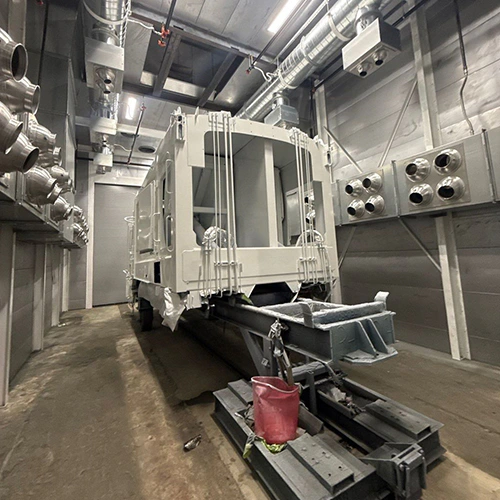
Abrasive blasting propels granular media against a substrate using compressed air, hydraulic pressure, or centrifugal force. Depending on the process, it removes unwanted surface layers—such as mill scale, corrosion, or failing coatings—and creates the texture required for the next operation. The air-blast system is the focus here.
Achieving a coating-ready surface is not a matter of simply scouring a part until it looks clean. Blasting changes the surface condition and physical texture, but it does not establish every cleanliness requirement. An unsuitable profile or damage to the substrate can undermine the finish. Moving reliably from a removal task to an accepted surface requires understanding media behavior, equipment, and the separate checks for cleanliness, profile, and substrate integrity.
The Physics of Abrasive Blasting: Impact, Removal, and Anchor Pattern
Abrasive blasting relies on kinetic energy transfer. High-velocity particles strike a surface, converting kinetic energy into shear stress, micro-cutting, and plastic deformation at the point of impact.
Kinetic Energy = (1) / (2)mv2
Particle mass and velocity both influence impact energy. Air supply, nozzle design, media flow, and abrasive properties interact to determine performance. When the abrasive grain hits the target:
- Brittle materials (like thick scale or aged epoxies) shatter under compressive stress waves.
- Ductile materials (like mild steel or aluminum) undergo plastic deformation, displacing metal upward and outward around the impact crater to form peaks and valleys.
- Contaminants and corrosion break their adhesive bond with the substrate and release as airborne dust.
Blasting differs from chemical cleaning and coating application. Degreasing removes oil and grease; blasting can create surface texture but does not reliably replace that cleaning step. The coating specification determines the required anchor pattern or other preparation. Blasting does not apply the coating, and residual dust or abrasive must meet the specified acceptance criteria.
The System Circuit: Air Delivery, Media Metering, and Dust Separation
A production air-blasting setup connects air delivery, media metering, containment, recovery, and dust collection. Reusable media may circulate through a recovery loop, while ventilation air follows a separate extraction path.
| System Path | Components |
|---|---|
| Blast delivery | Air Compressor → Blast Machine / Pot → Nozzle → Enclosure / Booth |
| Ventilation | Enclosure / Booth → Exhaust / Dust Collector |
| Reusable media | Enclosure recovery → Abrasive separation → Blast machine |
1. Air Generation and Conditioning
The compressor delivers air flow (CFM) at working pressure (PSI). Specify clean, dry air and the conditioning equipment required by the blast system and process. Moisture can impair media flow, and oil contamination can compromise surface preparation.
2. The Pressure Vessel (Blast Pot) and Metering Valve
In a pressure-blast system, the vessel supplies abrasive through a metering valve into the air stream. Media flow affects cleaning performance: too little or too much can reduce efficiency. Clemco’s blast-machine air and media guidance provides model-specific information on air consumption, compatible abrasive, and operating conditions.
3. The Blast Nozzle
The nozzle accelerates and directs the air-media mixture. Air demand depends on nozzle bore, pressure, and operating conditions. As the nozzle wears, its larger bore can increase consumption; use the equipment manufacturer’s data and allowance for wear when planning air supply.
4. Containment and Recovery
Blasting inside an enclosure isolates flying media and airborne particulates from the surrounding shop environment. Heavy abrasive drops to the floor or falls into a recovery hopper, where mechanical screws, bucket elevators, or pneumatic vacuums move it to an air-wash separator. The separator cleans reusable media by stripping out dust, paint chips, and broken, undersized fines before returning sound abrasive to the storage hopper.
5. Dust Collection
The collector extracts dust-laden air to support containment and visibility. It separates particulate from the exhaust stream. Discharge routing and any proposed return air require review against actual contaminants and applicable requirements; filtered air is not automatically suitable for occupied space.
Cleanliness vs. Surface Profile: Why "Visually Clean" Fails Inspection
A surface can be entirely free of visible contaminants and still fail an adhesion pull-off test. Cleanliness and surface profile are independent engineering properties.
- Surface Cleanliness concerns remaining rust, scale, coating, oil, salts, dust, and other contaminants. Visual standards assess visible conditions; oil, soluble salts, and dust may require separate specified checks.
- Surface Profile concerns the texture of the prepared substrate. Average roughness and peak-to-valley profile are different measurements; use the method and acceptance limits specified for the coating or process.
| Surface Condition | Acceptance Question |
|---|---|
| Profile below the job requirement | Will the prepared texture meet the coating specification? |
| Specified profile | Does the measured profile meet the agreed range and method? |
| Profile above the job requirement | Can the coating cover it, and is the substrate undamaged? |
A part finished with glass beads may look bright and uniform while having a texture unsuitable for the intended coating. Check the required profile rather than treating appearance as evidence of coating readiness.
Conversely, a clean surface can have too much profile or suffer distortion from an unsuitable blast process. Confirm both the profile specification and the part’s dimensional limits, then verify the coating can adequately cover the prepared surface.
| Metric | Cleanliness | Surface Profile |
|---|---|---|
| What It Measures | Removal of foreign matter (scale, rust, oil, coatings) | Physical geometry and depth of the substrate's anchor tooth |
| Primary Evaluation Method | Visual comparators (SSPC-VIS 1), Bresle salt patches | Replica tape (ASTM D4417 Method C), digital depth micrometers |
| Common Standards | SSPC-SP 10 / NACE No. 2 (Near-White), SP 5 (White Metal) where specified | Job-specific profile range and measurement method |
| Consequence of Underspecification | Osmotic blistering, chemical undercutting, paint release | Mechanical shear failure, paint peeling off smooth base |
| Consequence of Overspecification | Excessive blast time, wasted media, higher operating costs | Pinpoint rust, thin paint over peaks, warped substrates |
The Quality Chain: From Work Order to Coating Handoff
Achieving an accepted, inspectable surface is an operational process. It begins with engineering documents and ends with a validated handoff to the paint crew.
- Review Spec
- Select Media
- Qualified Test Patch
- Visual/Profile Check
- Environmental Handoff
1. Specification Review
Inspect the contract documents before touching the machinery. Identify the required substrate cleanliness standard (e.g., SSPC-SP 6 Commercial Blast vs. SSPC-SP 10 Near-White Blast), the acceptable profile range in mils or micrometers, and any limits on chemical contaminants, such as maximum allowable chloride levels.
2. Media and Pressure Strategy
Select media type, grade, and operating conditions from the substrate and required finish. Angular and rounded media produce different surface textures; neither is universally appropriate. GMA’s abrasive selection criteria begins with the substrate, removal task, surface profile, and preparation standard to help identify a product candidate.
3. The Qualified Test Patch
Have qualified personnel arrange a representative trial before releasing a production process. Use an approved sample or test area and appropriate exposure controls. Validate three variables:
- Cleaning Rate: How many square feet per hour the setup yields.
- Surface Topography: Confirm the specified profile using a suitable measurement method.
- Substrate Integrity: Ensure the operating pressure and particle mass do not cause localized warping, edge rounding, or gouging.
4. Objective Inspection
Systematic post-blast quality assurance involves verifying three distinct layers of acceptance before the part leaves containment:
- [ ] Visual Cleanliness Check: Use suitable lighting and the job’s specified visual standard or comparator to verify the required removal condition.
- [ ] Profile Verification: Measure profile depth using ASTM D4417 protocols. Log multiple readings across the part to verify that peak-to-valley measurements fall entirely within the job specification window.
- [ ] Dust and Residue Check: Use the specified dust assessment, such as ISO 8502-3 where applicable. If soluble salts are relevant, use an appropriate sampling and analysis method against the job limits.
5. Environmental Transfer Window
The transition between blasting and coating is time-sensitive because prepared metal can deteriorate or become contaminated. Follow the coating specification for humidity, substrate temperature, dew-point margin, hold time, and any approved holding primer or environmental control. Recheck surface acceptance before coating rather than assuming one universal transfer window.
Environmental Health, Safety, and Containment Obligations
Abrasive blasting generates immediate physical, respiratory, and environmental safety obligations. Operators and facility managers must treat dust as a dual-source hazard: risk stems from both the abrasive media itself and the material being pulverized off the workpiece.
Total Process Dust = Fractured Media Fines + Pulverized Surface Coatings & Contaminants
An abrasive marketed as low-toxicity can still create hazardous dust when removing contaminated coatings or substrates. Silica-containing media or surfaces, such as some concrete, can release respirable crystalline silica. Clemco advises against silica sand; select suitable blasting media using the equipment guidance, SDS, and exposure assessment.
Engineering controls and personal protection involve distinct duties. OSHA’s abrasive blasting ventilation requirements under 1910.94(a) require inward airflow at enclosure openings during blasting and prompt dust clearance afterward. Qualified designers must determine the actual system performance needed for the process.
Containment alone does not protect the person holding the nozzle. Operators inside blast-cleaning rooms require approved abrasive-blasting respirators. Select sandblasting gear, breathing air, impact protection, and hearing protection through the applicable requirements, hazard assessment, and manufacturer instructions.
Facility design also governs how dust and debris are managed once the blast cycle stops. Dust collector waste hoppers must be emptied under controlled procedures to prevent re-entraining settled dust, and the spent media must be evaluated—often through Toxicity Characteristic Leaching Procedure (TCLP) testing—to determine whether paint residue classifies the waste stream as hazardous before disposal.
Equipment Architecture and Production Planning
Scaling from intermittent maintenance blasting to consistent, multi-shift production requires equipment tailored to parts, processes, and factory envelopes.
Cabinet or blast-room suitability depends on part size, handling, access, production volume, and hazards. A larger part does not create a universal four-foot cabinet cutoff. A compatible integrated room can support containment, recovery, and repeat production when it fits the workflow.
Choosing the right production architecture requires balancing several interdependent operational parameters:
- Substrate Compatibility: Media and operating conditions must meet the surface specification while protecting the actual part. Detailed guidance on matching abrasives for different applications helps define candidates for qualified trials.
- Air System Capacity: Use the actual machine and nozzle manufacturer’s consumption data, accounting for pressure, nozzle wear, other demand, and continuous duty. A generic nozzle/CFM rule does not establish compressor or piping suitability.
- Facility Footprint and Workflow: Parts must enter, stage, blast, clean-off, and exit into paint bays without crossing dirty plant paths. Evaluating dedicated sandblasting booth options lets facilities integrate roll-in carts, overhead monorails, or drive-in crane systems that fit their specific material-handling routines.
Abrasive blasting can support consistent coating preparation when managed as a technical discipline. Cleanliness, profile, substrate integrity, dust containment, and equipment capacity each require verification. Balancing the specification, throughput, and facility fit helps keep preparation from becoming a production bottleneck.
If your facility is upgrading its surface preparation infrastructure or planning a new production line, share your part dimensions, production volumes, and facility footprint to request a sandblasting booth quote.