Most filter mix-ups start the same way: someone in the plant says they need “filters for the paint area,” purchasing searches that phrase, and two very different products end up in the same spreadsheet. One belongs in the spray booth. The other belongs in a dust collector. They both affect airflow, and they both get replaced on a maintenance cycle, but they are not built for the same equipment or the same contaminant.
A paint booth filter serves the spray booth system. Depending on where it sits, it may help manage incoming air or catch overspray before material loads the exhaust side of the booth. A dust collector filter serves a dust collection machine pulling dry particulate or fume from a source such as sanding, grinding, welding, laser cutting, powder handling, or another dry process. The names overlap. The job does not.
If your facility runs both finishing and dry prep, you need both conversations. Paintbooth’s page on paint booth exhaust system basics helps frame the booth side, while its dust collector category covers equipment meant for dry particulate capture. Once those categories get blurred, buyers start comparing the wrong products and maintenance teams chase the wrong fix.
Start With The Equipment, Not The Word “Filter”
The quickest way to sort this out is to ask one plain question: where does the filter live?
If it installs in a spray booth, intake plenum, or booth exhaust section, you are dealing with booth filtration. If it installs inside a cartridge collector or another dust collection unit tied to dry prep or fume capture, you are dealing with dust collector filtration.
That sounds simple, yet mixed facilities make it messy. A finishing plant may have a spray booth on one wall, sanding or grinding in prep, a weld station across the aisle, and a cartridge collector serving one or more of those dry processes. Since all of that work supports production in the same building, people start using broad language. “Paint filters.” “Shop air filters.” “Dust filters.” None of those phrases tell a vendor enough.
The better approach is specific:
- spray booth intake filters
- spray booth exhaust filters
- cartridge filters for the sanding dust collector
- replacement cartridges for the weld fume collector
Paint Booth Filters Manage A Spray Environment
Spray booths have their own airflow logic. Air moves through a controlled finishing space, and the filters inside that system support clean air movement and overspray control. The booth side of the decision usually comes down to booth type, filter location, coating process, and the symptom you are seeing.
Suppose a manufacturer runs a batch paint booth for metal parts and starts seeing heavier overspray loading at the exhaust stage. The question is not whether a dust collector cartridge might have a stronger media spec on paper. The real question is whether the booth is using the right booth filter arrangement for its spray load and maintenance routine. Booth filters have to make sense inside the booth’s designed airflow path. That is a booth decision first.
Now take another shop where finish defects show up even though spray technique has not changed. Maintenance may be tempted to search for “better filters” in general, but the fix still begins with the booth: what filter position is involved, what contamination is entering the space, and what part of the booth system is affected? A dust collector cartridge from a dry-process collector does not answer those questions.
Dust Collector Filters Handle Dry Particulate Or Fume
Dust collector filters belong to equipment built around dry particulate capture. That includes sanding dust, grinding dust, weld fume, laser or plasma cutting fume, powder-related dust, thermal spray particulate, and other dry manufacturing contaminants. Those filters are part of a collection machine, not part of a spray booth exhaust path.
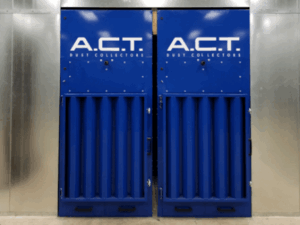
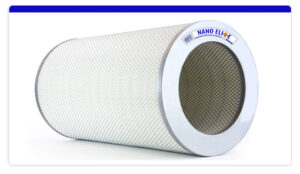
On the collector side, ACT cartridge filters are described around round cartridge construction, nanofiber media, and applications tied to dry particulate and fume. Those details are useful in the right setting because they explain how the cartridge works inside a collector, especially where dust release and airflow stability matter during service. Those are collector concerns.
Buyer scenario number one makes the distinction clear. Picture a shop with two sanding benches feeding a compact cartridge dust collector beside the prep area. The collector cartridges load with sanding dust, and the maintenance lead wants replacements. Even though that prep area supports painted parts later in the operation, those replacement filters are still dust collector cartridges. The booth is not the machine in question. The collector is.
Buyer scenario number two goes the other way. A finishing line has a spray booth plus a separate collector serving dry touch-up sanding nearby. Purchasing gets one request for “paint department filters” and assumes all replacements can come from the same product family. That creates avoidable confusion. The booth exhaust filters and the collector cartridges belong to two different systems, with different shapes, loading behavior, and service expectations.
Why Mixed Shops Get This Wrong
A single facility can create both overspray and dry dust in the same shift. That is what trips people up.
Parts may be sanded before they enter the booth. Welded frames may get coated later. A powder-handling area may sit close to finishing support space. Since the same product line moves through each area, people assume one filtration answer can stretch across all of it. It usually can’t.
Dry prep contamination often calls for source capture and collector maintenance. Booth contamination often points back to spray booth airflow, booth cleanliness, or booth filter loading. Those are different diagnostic paths.
Imagine a plant manager chasing dirt in a painted finish. The first complaint lands on the booth because that is where the bad part is visible. After a walk-through, the bigger issue may be sanding dust drifting out of prep because the nearby collector is overdue for cartridge service or the capture point is weak. In that case, changing booth filters alone may treat the symptom and leave the actual dust source alone.
The reverse mistake happens too. A supervisor sees dirty filters in a booth and assumes the facility’s central dust collector should solve it. That misses the point. Booth overspray control belongs inside the booth system. A dust collector is not a universal patch for every air problem near finishing.
MERV Numbers And Similar Specs Don’t Solve The Category Problem
This is where buyers lose time online. They find a dust collector cartridge with a strong media description or a MERV rating and start comparing it to booth filters as if higher filtration language automatically means a better option. It doesn’t work that way. A filter can look impressive in a product sheet and still be wrong for the equipment opening, loading pattern, airflow design, or service method of a spray booth.
The same caution applies in reverse. Booth filters are not generic substitutes for collector cartridges simply because they are cheaper, flatter, or easier to picture. Dust collectors may rely on cartridge geometry, gasket fit, and media behavior that support collector operation. Booth filters serve another purpose entirely.
Once you know the equipment category, specs become useful. Before that, specs just create false confidence.
What Buyers Should Gather Before Ordering
A rushed order causes most of the trouble. The cleanest filter conversations start with four pieces of information.
First, identify the equipment. Send a photo of the whole unit, not only the dirty filter. A booth photo tells a very different story than a collector photo.
Second, identify where the filter sits. Intake side, exhaust side, collector housing, replacement cartridge bank, or another spot. Position matters.
Third, describe the material the filter sees. Overspray, sanding dust, grinding dust, weld fume, powder dust, or a mix. “Dirty air” is too vague to be useful.
Fourth, capture any existing markings. Part numbers, dimensions, cartridge style, gasket details, or filter labels can keep a replacement search from drifting into the wrong equipment family.
Separate The Maintenance Conversation Too
Facilities often make a second mistake after the wrong order: they manage booth filters and collector cartridges as if they age the same way.
Booth filters load according to booth use, overspray conditions, and booth airflow behavior. Collector cartridges load according to the dry process feeding the collector and the way the system handles particulate over time. A sanding collector near prep may face a different service pattern than a spray booth running liquid coatings, even when both sit in the same department.
That is why maintenance storage, labeling, and replacement tracking should stay separate. If your shelves simply say “paint filters,” someone on a busy shift can grab the wrong box and lose half a day before anyone catches it.
One practical fix is plain labeling in purchasing and storage. Keep booth filters listed by booth and filter position. Keep collector cartridges listed by collector model and application. A little discipline there saves a lot of scrambling later.
A Better Way To Talk To Vendors
The best filter quote requests are specific and short.
Say what the machine is. Say what the process is. Say where the filter installs. Attach a few photos. That is enough to move the conversation in the right direction.
For booth filters, include the booth type, filter location, and the problem you are trying to solve, whether that is overspray loading, airflow concerns, or contamination showing up in the finish. For collector filters, include the collector model, the kind of dust or fume being captured, and any part numbers or cartridge dimensions already on hand.
If you are not sure which category you need, say that too. It is better to admit the uncertainty than to lock the request to the wrong product family before anyone reviews the equipment.
Where Paintbooth Can Help
If your shop is comparing booth filters with collector cartridges, stop before placing a generic reorder. Start by separating the equipment list.
Use Paintbooth’s cartridge dust collector page when the issue involves a collector serving sanding, grinding, weld fume, or another dry process. Use the booth airflow resources, including paint booth exhaust system basics, when the question lives inside the spray booth itself. If your team also needs help planning maintenance timing for booth media, the filter change schedule guide gives that discussion its own place.
For a live buying decision, the practical move is a quote request with photos, equipment details, filter location, and a short process note. Send that through Paintbooth’s quote page. A clean description of the booth or collector usually gets you to the right category faster than any broad search for “better filters.”