
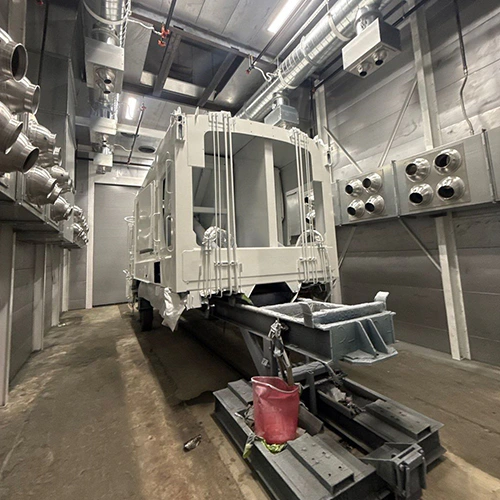
Uneven paint is rarely an accident; it is the visible record of a shifting variable. When a finish looks patchy, banded, or mottled, painters often adjust their spray gun fluid knobs or blame the coating batch immediately. Yet an uneven finish can stem from gun mechanics, lighting illusions, or disturbed air patterns inside the cabin.
Before touching a regulator or re-mixing material, isolate what kind of unevenness is actually appearing on the substrate.
Distinguishing Color Variation, Film Build, and Texture Discrepancies
"Uneven paint" describes three distinct physical failures that require different corrective paths: optical color variation, uneven film thickness, and mechanical surface texture. Treating an optical color defect as a film build issue often leads painters to over-apply clearcoat or flood basecoat, compounding the problem.
| Defect Category | Visual Appearance | Physical Mechanism | Common Primary Driver |
|---|---|---|---|
| Color & Shade Variation | Light and dark bands, cloudy patches, tiger stripes | Irregular pigment or metallic flake orientation | Gun angle variations, improper overlap, inconsistent flash times |
| Film Build Discrepancies | Runs and sags on lower edges; dry, dull zones on flats | Highs and lows in total dry film thickness (DFT) | Inconsistent travel speed, arching the spray gun, incorrect tip size |
| Surface Texture Shifts | Heavy orange peel next to smooth zones; localized dry spray | Droplets failing to atomize, coalesce, or level uniformly | Rapid solvent flash, turbulent cabin air eddies, excessive standoff distance |
Optical Variation: Mottling and Striping
Optical variation is most evident in metallics, pearls, and high-pigment solids. The coating may possess a uniform physical thickness across the panel, but light reflects off the suspended flakes at erratic angles. Alternating dark and light stripes ("tiger striping") can result from irregular application density, overlap, or gun technique.
Film Build Variation: Wet vs. Dry Zones
Film build variation is a matter of deposited material volume. A suitable film-thickness measurement can help establish whether material deposition varied; visual appearance alone does not determine DFT. Low or excessive film build can affect appearance and performance; evaluate it against the coating’s specified range.
Texture Shifts: Orange Peel and Dry Spray
Texture variation occurs when the paint droplets dry prematurely before they can flow together, or when they hit the surface too wet and pool unevenly. A panel may carry an acceptable basecoat color match while exhibiting smooth gloss in the center and rough, dry peel along the edges.
Application Consistency: Controlling the Spray Envelope
Application consistency requires maintaining identical distance, speed, overlap, and atomization across every square inch of the target. When manual technique drifts, the finish records every hesitation.
- Keep the spray gun at the specified distance and orientation across the pass rather than arcing it toward and away from the surface.
Standoff Distance and Gun Angle
Tilting the spray gun introduces a wedge-shaped fan pattern. The edge close to the panel gets flooded with wet material, while the far edge receives partially atomized, half-dry overspray. Keep the gun perpendicular to the work surface across the entire sweep, stepping with the stroke rather than pivoting the wrist.
Fan Overlap and Travel Speed
Follow the coating and spray-equipment instructions for overlap and application technique. If a painter lets overlap drift from 30% to 60% across a single panel, film build or appearance can vary. Similarly, accelerating the gun at the edges of a stroke thins the film, creating dry margins.
Material Viscosity and Reducer Selection
Coating formulation directly impacts how a wet film levels. If a reducer flashes too quickly for the ambient cabin temperature, the droplets skin over before flowing flat, leaving a sandpaper-like or patchy texture.
Irregular basecoat density often drives visual patchiness in metallics. PPG’s mottling guidance notes that automotive metallic color variation and patchiness can involve irregular basecoat application density; this specific mechanism is a recognized factor in color drift, though it is not a blanket diagnosis for every coating type or uneven surface. Always confirm the coating manufacturer's mix ratios, pot life limits, and viscosity cup measurements before spraying.
Cabin Environment: How Airflow, Loading, and Lighting Skew Results
Even flawless spray gun technique cannot overcome an unstable booth environment. The cabin must deliver clean air at a predictable velocity and uniform lighting so the painter can accurately monitor the wet edge.
- Crowded part staging can divert designed airflow and create sheltered or turbulent zones.
- Keep extraction pathways clear and stage parts according to the booth’s approved loading requirements.
Air Velocity and Loading Geometry
Spray booths rely on designed airflow paths—crossdraft, semi-downdraft, side-downdraft, or full downdraft—to sweep overspray away from the part before it settles.
- Overpacking racks: Crowding parts too close together blocks the design air path. Air diverts around the cluster, creating low-pressure pockets and turbulent eddies behind components.
- Overspray re-deposition: These turbulent eddies trap atomized paint fog, dropping it back down onto freshly sprayed surfaces that are flashing off, creating rough, dull patches.
- Loading and balance: Clogged intake or exhaust filters starve the cabin or create uneven velocity lanes. Watch for air-balance warning signs like doors pushing open, drafts whistling through seals, or overspray lingering suspended in the workspace instead of clearing smoothly.
Cabin Visibility and Glare
Painters gauge film build visually by observing the reflection of light in the wet edge. If lighting is poor, coverage fails:
- Shadow zones: Low-mounted panels, wheel arches, and lower cabinet sections fall into shadows if side-wall lighting is absent or dimmed by overspray buildup.
- Visual compensation: Painters naturally lay down extra material in dark spots because the paint looks dry, leading to runs. Conversely, harsh glare from unshielded fixtures can make a thin, dry pass look glossy, tricking the painter into under-applying.
- Upgrades: When evaluating the workspace environment, proper paint booth lighting upgrade planning helps assess coverage, glare, and color-rendering requirements.
Controlled Troubleshooting: Isolating One Variable at a Time
When confronted with an uneven finish, never adjust the spray gun settings, change reducers, and alter booth controls simultaneously. Sweeping adjustments obscure the real cause and often introduce secondary defects.
-
Verify the Spray Pattern Off-Part: Before spraying production parts, perform the spray-equipment manufacturer’s approved pattern check in the properly operating spray area, using its specified material, distance, and procedure. Examine the pattern:
- Is it symmetrical?
- Is it heavy in the center (a possible fluid-flow, atomization, or equipment issue)?
- Is it split or hourglass-shaped (a possible air/fluid balance or equipment issue)?
- Is it crescent-shaped (a possible air-cap contamination or damage issue)?
-
Hold Environmental Controls Steady: Do not attempt to compensate for poor fluid atomization by manually overriding unapproved cabin heat or damper positions. Booth airflow profiles are engineered systems; unverified damper adjustments can turn a balanced cabin into an unstable environment that pulls dust from floor grates or introduces violent cross-drafts.
-
Run a Controlled Test Panel: Prepare a flat test panel using the substrate, primer, and preparation methods specified on the coating TDS. Spray the panel using standard overlap and speed. Compare the panel with the production result to narrow the investigation; a repeated defect does not exclude an environmental cause, and a uniform panel does not prove a single production-part cause.
Gathering Data Before Requesting Technical Support
If adjustments to basic application technique and TDS settings fail to eliminate uneven finishes, the underlying issue may involve deeper fluid delivery faults, air handling imbalances, or coating incompatibilities. Solving these complex issues requires hard operating data.
Before escalating the issue to a technical representative:
- Log the Pattern Geometry: Photograph the unevenness under diffuse light. Note whether the failure is directional (banding across the path of the stroke), localized to one side of the part (airflow eddy or thermal variation), or random (pigment flotation or contamination).
- Record Application Baseline Data: Document the spray gun make, air cap model, fluid tip size, dynamic inlet air pressure (measured with the trigger pulled), and fluid needle position.
- Document Environmental Metrics: Note the ambient temperature, relative humidity, coating viscosity (recorded with an approved cup and timer), batch numbers, and cabin differential pressure readings.
For deeper investigations into complex surface phenomena—ranging from solvent entrapment and fish eyes to micro-blistering—consult dedicated paint finish defect diagnosis procedures to evaluate chemical and physical mechanisms across the full finish lifecycle.
When cabin airflow profiles, pressure shifts, or facility equipment configurations appear to be destabilizing your finish quality, talk with a finishing systems specialist with your observations and equipment details for a useful support inquiry.