
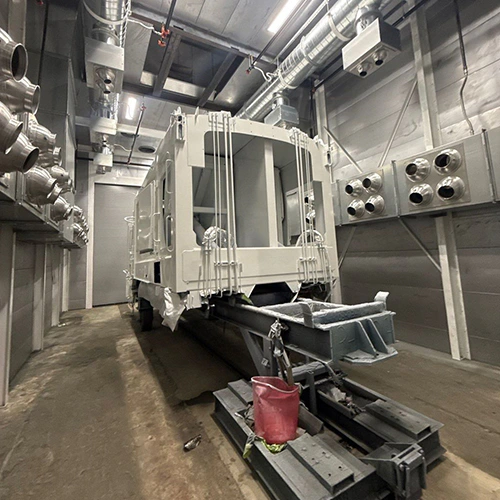
Paint booth installations can stall even when the equipment arrives on time. Projects may sit idle when mechanical, electrical, structural, and regulatory assumptions are developed in isolation. No single misstep accounts for every delay, and administrative timelines vary significantly across jurisdictions.
Preventing costly delays requires treating booth procurement as a multi-trade facility project rather than a standalone equipment delivery. By resolving critical cross-discipline dependencies early, shop owners and facility managers can align engineering, permitting, and site readiness long before the first freight truck arrives.
1. Differentiating the Equipment Quote from the Project Scope
An equipment proposal defines its included scope; it may cover only equipment or include broader project services. Check it against all work and approvals needed for the actual project. Treating a vendor bill of materials as a turnkey construction plan creates immediate gaps in budget and site responsibility.
When you request a paint booth quote from suppliers like Paintbooth.com, the package frequently includes equipment engineering, layout drawings, manufacturer permitting support packages, and options for installation or startup coordination. However, the purchase order defines the exact boundary of work. Do not assume that electrical tie-ins, roof penetrations, structural supports, gas piping, slab verification, or fire protection are included without a clear scope agreement.
Before finalizing the purchase order, review the vendor’s proposal line items against trade responsibilities:
- Primary utilities: Identify whether the electrician, mechanical contractor, or plumber is responsible for pulling main power, running compressed air, and setting gas regulators to booth connection points.
- Roof and wall penetrations: Clarify who handles duct curbs, roof flashing, counterflashing, and wall penetrations to maintain structural integrity and building envelope warranties.
- Fire protection infrastructure: Determine whether the quote includes pre-engineered dry chemical cylinders and heads, or if a local fire suppression contractor must pipe, wire, and certify an automatic system tied to facility alarms and booth exhaust interlocks.
2. Identifying Reviewing Agencies and Document Requirements Early
Permitting authorities evaluate industrial installations through distinct, non-synchronous safety and environmental frameworks. Locking down equipment dimensions or utility connections before knowing what local regulators require risks costly engineering revisions.
Different authorities focus on distinct operational risks:
- Local building and safety departments: Agencies such as Brevard County's permitting and inspection services evaluate structural building loads, wind resistance on roof stacks, foundation requirements, and local electrical and mechanical code compliance.
- Environmental regulators: State and regional air quality boards review volatile organic compound (VOC) emissions, hazardous air pollutants (HAPs), and exhaust dispersion. In Texas, for example, TCEQ's painting authorization guidance outlines rules for permits by rule (PBR) or standard air permits, operating on a timeline completely separate from municipal building reviews.
- Fire prevention bureaus: Local fire marshals focus on NFPA 33 compliance, booth clearance to combustible walls, automatic shutdown interlocks, sprinkler coverage, and hazardous area electrical classifications.
Review the governing paint booth permit requirements in your jurisdiction before ordering equipment. Connect with your local building and fire departments to verify their specific list of required permit application documents—such as sealed structural drawings, mechanical riser diagrams, and manufacturer cut sheets—so you assemble compliant submittals on the first pass.
3. Verifying Building Readiness for the Proposed Layout
A facility must be able to support a spray booth's spatial, utility, and airflow demands without compromising adjacent shop operations. Verifying your facility's physical and mechanical baseline early prevents discovering structural clashes while crates sit on your shop floor.
OSHA's spray-finishing ventilation requirements include scoped ventilation, air-velocity, and vapor-dilution provisions that must be evaluated for the actual process. These ventilation rates demand substantial exhaust ductwork, roof penetrations, and adequate replacement-air systems to avoid drawing unconditioned air, dust, or negative pressure into the shop.
Your facility review should engage your plant engineer or general contractor using a practical paint booth design checklist:
- Access and clearances: Confirm truck access to the unloading area, roll-up door clearances, and forklift capacity for crate dimensions. Ensure planned aisleways around the booth leave sufficient room for operator access, filter changes, and equipment maintenance.
- Utility availability: Verify incoming building power against booth motor horsepower and heater loads. For gas-fired heated make-up air units, have qualified personnel verify supply capacity and pressure against the equipment’s requirements.
- Structural and roof interfaces: Have a structural engineer evaluate roof joists or truss capacities to ensure they can support hanging exhaust ducts, make-up air units, or intake stacks without overloading the frame.
4. Coordinating Project Revisions Across Trades
Field adjustments happen on every construction project, but uncoordinated adjustments can create design conflicts and compliance gaps. When a booth location moves or an equipment model changes, those modifications must flow to every trade and submittal drawing.
Relocating a booth just three feet to avoid a building column or floor drain changes the location of the roof stack penetration, the length of electrical conduit runs, and the location of any applicable electrical classified boundaries. If your electrical contractor wires the perimeter using original drawings while the mechanical contractor installs ductwork from an updated layout, you risk code violations that fail rough-in inspections.
Maintain revision discipline through straightforward project habits:
- Maintain a single drawing set: Establish a clear revision history for all architectural, mechanical, electrical, and fire protection plans. Discard or mark superseded prints clearly on site.
- Recalculate trade impacts: If equipment changes (such as switching from a standard exhaust to a heated make-up air cycle), immediately notify the mechanical, plumbing, and electrical trades to confirm pipe sizing and breaker configurations.
- Update permit submittals: When revisions alter duct discharges, building penetrations, or electrical loads, confirm with your design team whether the changes require plan revisions with the local building department before inspections occur.
5. Aligning Equipment Delivery with Real Approvals and Site Gates
Scheduling equipment delivery solely around factory manufacturing lead times risks costly storage, site congestion, and damaged materials. A crate of galvanized panels sitting outside exposed to rain or moved repeatedly across an active floor can damage components or controls and may affect warranty coverage according to the actual terms.
Delivery dates should track actual project milestones, not optimistic assumptions. Administrative turnaround times fluctuate based on municipal review queues, regional development volume, and reviewer staffing. Rather than guessing when a permit will clear, monitor application statuses directly through the local portal.
Tie the delivery release date to measurable milestones:
- Permit issuance: Confirm which approvals and site-readiness gates should precede shipment, considering the authorized installation sequence and storage plan.
- Slab prep and clearance: Confirm that concrete modifications, pit curing, or anchor drilling areas are accessible, dry, and clean.
- Trade rough-ins: Schedule arrival when the floor is cleared of other trade staging materials, allowing the assembly crew to uncrate panels directly at the footprint.
6. Separating Equipment Delivery from Operational Handover
Receiving freight and bolting panels together does not constitute an operational spray booth. Handover involves assembly, multi-trade connections, functional commissioning, operator safety training, and formal regulatory closeout.
Before operating the booth, confirm completion of the required installation, verification, and approval steps for the actual project:
- Trade interlocks and balancing: Qualified, authorized personnel should complete required utility and control connections and verify the specified airflow and safeguards. Filter-pressure readings support maintenance but do not by themselves prove all design airflow conditions.
- Commissioning and documentation: The installation team or qualified technician should complete startup verification using manufacturer testing procedures, document baseline operating pressures, and deliver manuals to plant operations.
- Inspections and sign-offs: Confirm which offices must inspect or approve the project under the issued permits and applicable requirements. Depending on your jurisdiction, this leads to a certificate of occupancy, a certificate of completion, or a specific fire department operating permit.
Project Readiness Matrix
Use this matrix to identify unresolved dependencies, the confirmation required to resolve them, and which project team member owns the next step.
| Dependency Area | Confirmation Needed | Party to Ask |
|---|---|---|
| Trade Scope Allocation | Explicit list of inclusions/exclusions for slab work, roof penetrations, utilities, and fire suppression tie-ins. | Equipment vendor & General Contractor |
| Local Code Approvals | Specific building, mechanical, and electrical drawing packages required for commercial plan check. | Local Building Department / Expediter |
| Environmental Authorization | Determination on whether standard exemptions, PBRs, or site-specific air permits apply to the actual materials, process, and projected emissions. | Environmental Engineer / State Air Agency |
| Facility Capacity | Available electrical service (amps/voltage), gas supply (CFH/pressure), and structural ceiling/roof load capacity. | Plant Facilities Manager, Electrician & Plumber |
| Physical Layout & Flow | Clearances for door swings, material handling paths, and the applicable access, fire-separation, and electrical-location requirements. | Project Architect / Equipment Layout Specialist |
| Revision Control | Verification that current site conditions match the active permit drawings and trade bid sets. | General Contractor & Lead Drafter |
| Delivery Staging | Confirmation of freight access, offloading equipment availability, and dry indoor staging space. | Warehouse/Site Operations & Freight Carrier |
| Operational Commissioning | Scope agreement on airflow balancing, safety interlock testing, burner setup, and staff operation training. | Qualified Installer / Commissioning Tech |
| Final Operating Sign-off | Completion of required inspections and any applicable closeout or operating approvals. | Local Fire Marshal & Building Inspector |