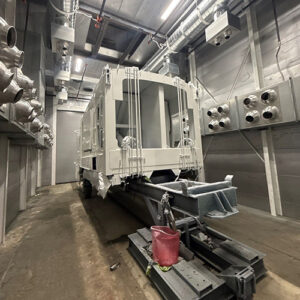
Sandblasting is one of those processes that looks straightforward from the outside: abrasive goes in, rust and coatings come off, and the surface comes out clean and ready for finishing. But anyone who runs a blast room, blast cabinet, or open blasting setup knows the real story: your results depend heavily on the condition of your equipment. When key parts wear out, performance drops fast, media consumption spikes, dust control suffers, and the entire finishing workflow slows down.
Many shops try to “stretch” sandblasting equipment life with repairs, and maintenance absolutely matters. But there’s a line where repairs become expensive band-aids on a system that’s no longer safe, productive, or reliable. If you’re seeing the signs below, it may be time to stop patching and replace before a breakdown costs you jobs, damages parts, or puts people at risk.
The Clear Warning Signs You Shouldn’t Ignore
When sandblasting equipment starts failing, it rarely happens all at once. Small issues show up first, pressure changes, extra dust, inconsistent cleaning and then they become “normal.” The list below covers the most common red flags that usually mean replacement is the safer and smarter option.
1) You can’t maintain consistent blasting pressure
Stable pressure is the heart of consistent surface prep. If your blast pressure fluctuates during normal operation, especially after you’ve checked basic items like moisture control, media levels, and obvious leaks, it’s a red flag.
You might notice the blast stream “pulsing,” the nozzle losing bite, or the system taking longer to reach profile. In many cases, the problem isn’t a simple adjustment anymore. Worn metering valves, damaged regulators, failing pressure vessels, or aging compressor systems can cause pressure instability that keeps coming back. If you’ve repaired the same pressure-related issue multiple times and the symptoms return quickly, replacement often becomes the most cost-effective answer.
2) Excessive leaks air, media, or dust keep showing up
A little maintenance is normal. But repeated leaks are a sign the system is past its prime. Watch for:
- Air leaks at hoses, couplings, and fittings that reappear even after tightening or replacing seals
- Media leaks around valves and connections that create mess, waste, and inconsistent flow
- Dust escaping into the workspace, especially around doors, seams, or duct joints
Leaks don’t just waste money. They reduce blasting efficiency, overload dust collectors, and can create safety issues. If you’re constantly chasing leaks, you’re spending labor hours on a losing battle.
3) Your blast pattern is uneven, even with “new” consumables
Nozzles and liners wear that’s expected. But if you install a new nozzle and still get an uneven blast pattern, you likely have deeper issues. Worn internal piping, damaged hose interiors, poor media control, or misaligned cabinet guns can cause a scattered stream that doesn’t clean evenly.
Uneven blasting leads to uneven coating adhesion later. That shows up as premature failures, rework, or customer complaints. If the blast stream cannot be tuned back to a steady, predictable pattern, it’s often a sign the system’s core components are worn beyond practical repair.
4) You’re burning through abrasive faster than normal
Abrasive usage is a quiet indicator of equipment health. When equipment wears, it becomes less efficient, and shops compensate by blasting longer or increasing pressure. That can make media consumption jump.
You might also see more media breaking down into fines because the system is rough on the abrasive, or because moisture and contamination are forcing you to dump batches more often. If your media costs have climbed and you can’t trace it to a job mix change, your equipment may be the reason.
5) Dust collection can’t keep up anymore
Dust control isn’t just about cleanliness; it’s about visibility, safety, and finish quality. If your dust collector struggles to maintain clear sight lines inside a cabinet or blast room, production suffers immediately. Operators slow down, mistakes increase, and you lose the clean “white metal” or near-white finish you’re aiming for.
Sometimes the dust collector itself is the culprit. Other times, the real issue is that the blasting equipment is generating dust in ways it shouldn’t due to air leaks, poor separation, worn seals, or failed reclaim components. If you’re constantly changing filters, dealing with dust clouds, or seeing dust settling throughout the facility, it may be time to replace major components or upgrade the entire system.
6) Frequent breakdowns and “mystery downtime” are becoming normal
Downtime has a cost far beyond the repair bill. It delays throughput, forces schedule changes, and can even interrupt your painting and curing sequence. When sandblasting equipment is nearing end-of-life, you’ll often see breakdowns that don’t follow a clear pattern: one week it’s a valve, the next it’s a hose, then it’s the controls, then it’s the reclaim system.
A good rule of thumb: if you’re repairing critical failures often enough that you keep spare parts “just in case,” your system is telling you something. Planned replacement beats emergency replacement every time.
7) Safety issues are becoming harder to manage
Sandblasting is demanding work, and safety has to be non-negotiable. If your equipment is contributing to unsafe conditions, replacement should move to the top of the list. Watch for:
- Hoses that stiffen, crack, or show bulges
- Couplings that loosen, leak, or fail to lock properly
- Doors and latches that don’t seal or secure the cabinet/room
- Electrical controls that behave unpredictably
- Pressure vessel concerns (corrosion, dents, questionable history)
If you’re unsure about the condition of a blast pot or pressure-containing component, it’s not worth the risk. Pressure systems require confidence, not guesswork.
8) Your surface prep quality is slipping, and coatings aren’t performing like they used to
In finishing work, surface prep is everything. When blasting performance drifts, your coating results follow. You may notice:
- Rust bleed-through appearing sooner than expected
- Coatings peeling, chipping, or failing adhesion tests
- Inconsistent surface profile across the same part
- Bare spots or shadowed areas because blasting isn’t reaching evenly
If your prep quality is falling and you’ve already verified media quality, operator technique, and correct air settings, the equipment itself may be the weak link. Replacement can restore the consistency that your paint booth process depends on.
9) Your system can’t support your current workload
Sometimes equipment isn’t “broken”, it’s just too small or outdated for today’s jobs. If your business has grown, you may be blasting larger parts, running longer shifts, or needing faster turnarounds. Older sandblasting systems can become bottlenecks even if they still function.
This can show up as long cycle times, slow reclaim, poor visibility at higher production rates, or dust collection limits that force you to pause. When equipment holds back the entire workflow, it’s not really serving you anymore. Replacement, especially with an upgraded system, can pay for itself through higher throughput and fewer delays.
10) Repairs are costing more than progress
This is the simplest sign of all. If you’re repeatedly paying for repairs, operator frustration is increasing, and performance never fully returns, it’s time to step back and do the math.
Consider the hidden costs:
- Lost hours during downtime
- Extra media use
- More rework and rejected parts
- Higher energy usage due to inefficient blasting
- Increased maintenance labor and parts inventory
Replacement isn’t just an equipment decision, it’s a production decision.
What to Do Next If You’re Seeing These Signs
If a few of these issues sound familiar, start with a structured evaluation. Document your pressure stability, abrasive consumption, downtime frequency, and dust collector performance over a couple of weeks. Compare those numbers to your “normal” baseline (or to what you’d expect for your workload). Patterns show up quickly. From there, a professional inspection can help you decide whether replacing specific components is enough or whether the system has reached the point where a full replacement is the smarter move.
In many facilities, sandblasting and paint booth performance are linked: when blasting becomes inconsistent, painting becomes unpredictable. That’s why it’s worth treating sandblasting equipment health as a core part of your finishing operation, not an afterthought. A strong replacement plan doesn’t just solve today’s problems. It can improve visibility, reduce dust, cut media waste, and deliver the consistent surface preparation your coatings need to last. When your sandblasting equipment is doing its job well, everything downstream, from primer to topcoat gets easier, faster, and more reliable.
At Paint Booth, we specialize in providing top-tier paint booths and finishing equipment tailored to your business requirements. Whether you need a standard-size paint booth or a custom solution designed for your unique projects, our expert team is here to assist you every step of the way. From design to installation, we ensure that your equipment meets the highest industry standards, enhancing both your productivity and the quality of your finishes. Contact us today to find the perfect paint booth solution for your business!