
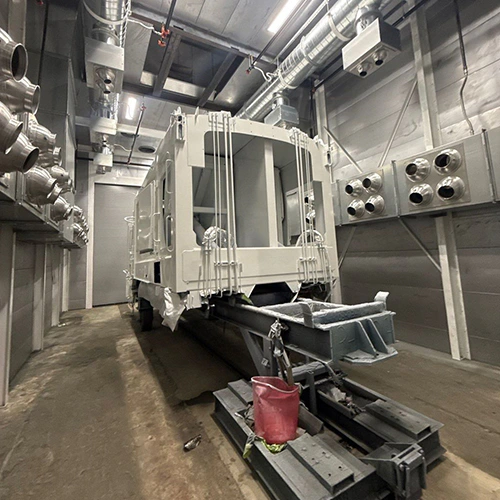
In any professional paint finishing operation, the quality of the final surface depends on more than just the paint and the skill of the painter. What happens between coating layers plays a huge role in whether a finish looks smooth and durable or ends up with defects that cost time and money to fix. This is where the flash-off zone comes in. A flash-off zone is often misunderstood or overlooked, especially by businesses upgrading equipment or designing a new paint booth layout. Yet it is one of the most important parts of a modern finishing system. Understanding what a flash-off zone is and why it matters can help you improve finish quality, reduce rework, and run a more efficient operation.
What Happens to Paint During the Flash-Off Stage
During flash-off, several important changes occur within the paint film. First, solvents begin to rise to the surface and evaporate. This reduces the risk of bubbles, blistering, or popping later in the process. At the same time, the paint starts to level itself, which helps minimize texture issues like orange peel or streaking.
The coating also becomes more stable. It reaches a point where it can be safely moved or exposed to the next process without sagging, dripping, or being disturbed by airflow. This stage is especially important when applying multiple coats, as proper flash-off helps each layer bond correctly to the one below it. Without enough flash-off time, paint may look fine initially but develop defects during curing or even days later. That is why this stage is not just about appearance, but also about long-term durability.
Why Flash-Off Zones Matter for Finish Quality
One of the main reasons flash-off zones are so important is their direct impact on finish quality. Many common paint defects can be traced back to poor solvent evaporation. Issues like solvent pop, pinholing, bubbling, and uneven gloss often occur when paint is rushed into curing before it is ready. A dedicated flash-off zone helps prevent these problems by maintaining consistent conditions . Temperature is kept warm enough to encourage evaporation but not so hot that the paint surface dries too quickly. Airflow is gentle and even, allowing solvents to escape without disturbing the coating. This controlled approach results in smoother finishes, better gloss retention, and stronger adhesion between layers. Over time, this means fewer customer complaints, less rework, and a more professional-looking product leaving your facility.
The Role of Temperature, Airflow, and Time
The effectiveness of a flash-off zone depends heavily on three factors: temperature, airflow, and time. These elements work together to support proper solvent evaporation . Temperature in a flash-off zone is typically lower than in a curing oven but slightly warmer than the spray booth. This moderate warmth helps solvents evaporate steadily rather than being forced out too quickly. If the temperature is too low, flash-off takes longer and slows production. If it is too high, the surface can skin over and trap solvents underneath. Airflow is another key element. Unlike spray booths that use strong airflow to remove overspray, flash-off zones rely on soft, uniform air movement. This ensures that solvents are carried away evenly without drying the surface too fast. Time, of course, ties everything together. Different coatings require different flash-off durations, and a good flash-off zone allows these times to be adjusted as needed.
How Flash-Off Zones Improve Efficiency and Reduce Rework
While finish quality is the most obvious benefit, flash-off zones also improve operational efficiency. Paint defects lead to sanding, repainting, or even stripping parts completely. This rework costs money, wastes materials, and slows down production schedules . By allowing paint to stabilize properly before curing, flash-off zones reduce the likelihood of these costly mistakes. Parts move into the oven in a better condition, allowing curing to happen more efficiently and consistently. This often results in shorter overall cycle times and higher throughput. For facilities with high production volumes, flash-off zones also improve workflow. Instead of parts waiting in uncontrolled open areas, they move through a predictable, repeatable process. This makes scheduling easier and helps maintain consistent output even during busy periods.
When a Flash-Off Zone Becomes Essential
Not every small operation starts with a dedicated flash-off zone, but as production grows or coating systems become more advanced, it quickly becomes essential. Modern paints, especially waterborne and high-solid coatings, are more sensitive to environmental conditions and rely heavily on controlled flash-off. If your operation experiences inconsistent finishes, frequent surface defects, or delays between spraying and curing, the absence of a proper flash-off zone may be a major factor. High-volume manufacturing, automotive finishing, and industrial coating applications all benefit significantly from having a dedicated area designed specifically for flash-off.
Final Thoughts
A flash-off zone may seem like a small part of a paint booth system, but its impact is substantial. By giving paint the time and environment it needs to release solvents properly, flash-off zones protect finish quality, improve durability, and reduce costly rework. In the long run, investing in a well-designed flash-off zone is not just about better-looking finishes. It is about creating a more efficient, reliable, and professional paint finishing process that supports consistent results day after day.